
The European Union is considering giving certain forms of online censorship protection to media outlets it approves of.
Contained within the proposed European Media Freedom Act, the reforms include handing approved outlets additional rights when dealing with censorship from so-called very large online platforms (VLOPs) such as TikTok and X.
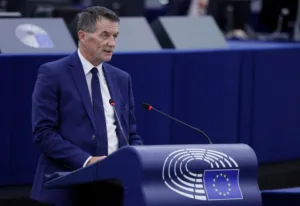
Speaking at a press conference on September 26, senior centrist MEPs backed the additional protections as necessary for preventing European discourse from being controlled by Big Tech firms or non-EU countries.
Sabine Verheyen, the rapporteur or chief negotiator for the bill, in particular described the Media Freedom Act as necessary to ensure EU media was not controlled by “persons like Elon Musk, Zuckerberg or others,” nor by “Americans” or “American companies”.
The EPP politician added that only certain approved media outlets would be allowed to benefit from the proposed extra protections. That was to ensure that outlets that publish “disinformation” or “propaganda from China, from Russia [and] from other third states” could not benefit.
As such, EU censorship rules mandating such content be stripped from VLOPs will remain unaffected.
“Platforms can continue to take action against disinformation through downgrading, labelling, or blurring [content],” Verheyen said, insisting that the new bill “does not provide a loophole for propaganda media and third-country influence”.
Emphasis was also put on using the bill against Poland and Hungary, both of which have been accused by Eurocrats of trying to control their own local media.
"1984 was not a manual, it was a warning!" Czech MEP Mikuláš Peksa tells Brussels Signal Head of News Justin Stares that the European Commission should not have the right to shut down social media platforms.@vonpecka | @EuropeanPirates | @ThierryBreton pic.twitter.com/XlEOs2KdNE
— Brussels Signal (@brusselssignal) September 26, 2023
According to the mandate for negotiation outlining the provisional contents of the bill, approved media organisations are set to be given a number of additional rights in relation to the EU’s new Digital Services Act.
Many of these pertain to attempts to censor such media outlets by VLOPs, a technical designator that includes the likes of X, Instagram and TikTok.
Under the proposed rules, such social media firms would be required to jump through additional hoops to censor news outlets with EU approval.
The platforms will also be obliged to publicly report the number of times they censor approve media content or accounts, as well as to provide detailed information on the reasoning behind each instance of censorship.
These protections will not be available to normal EU social media users, nor media outlets that do not reach the threshold for EU approval.
According to Verheyen, any such approval will be contingent on the EU judging an outlet to be editorially independent and as having a transparent ownership structure.
Efforts to censor the internet in Europe must be left to the European Union and its Digital Services Act, the European Commission has told France. https://t.co/C6RmyA6Swa
— Brussels Signal (@brusselssignal) August 3, 2023