A politician of the right-wing Alternative for Germany party (AfD) has been elected vice mayor of the German industrial city of Gelsenkirchen (North Rhine Westphalia) in a surprising vote by the local city council.
In the secret ballot on 11 December, AfD councilman Norbert Emmerich received three votes from councilmen of other parties – bringing his vote count up to 23, which was enough to secure the vice mayorship.
The result was a crushing defeat for Social Democrats (SPD) and Conservatives (CDU), who had joined forces to keep the right-wingers out of power and get their two candidates for vice mayor through – one SPD councilman and one CDU councilman.

Gelsenkirchen’s city council has 66 members. AfD and SPD both have 20 seats, the Conservatives have 12 seats. The remaining 14 seats are shared by nine small parties with one to three councilmen each.
It was not known which councilmen from other parties voted in favour of Emmerich.
The 72-year-old former bank employee Emmerich said he was positively surprised by the result.
“I am at a loss for words. I would never have thought that we would get three more votes than we [the AfD] have in the council”, Emmerich told state broadcaster WDR.
In reference to the machinations of SPD and CDU he added: “Again we see that you can cut deals behind closed doors as much as you like. There are still honest people who say: We won’t let ourselves be swayed.”
SPD and CDU were quick to criticise the three rogue councilmen. Local SPD leader Dominic Schneider said: “Those three really should ask themselves whether they are democrats.” Schneider added that the Gelsenkirchen AfD was “partially fascist” and said the day of the vote was “bad day for Gelsenkirchen”.
CDU representative Sascha Kurth echoed the sentiment, telling WDR that the three unknown councilmen had “gravely harmed political work for the coming years”.
AfD councilman Norbert Emmerich had run for mayor of Gelsenkirchen at the communal election in September 2025. He got 30 per cent of the vote in the first round, necessitating a runoff election against SPD candidate Andrea Henze – that Emmerich lost 33 to 67 per cent.
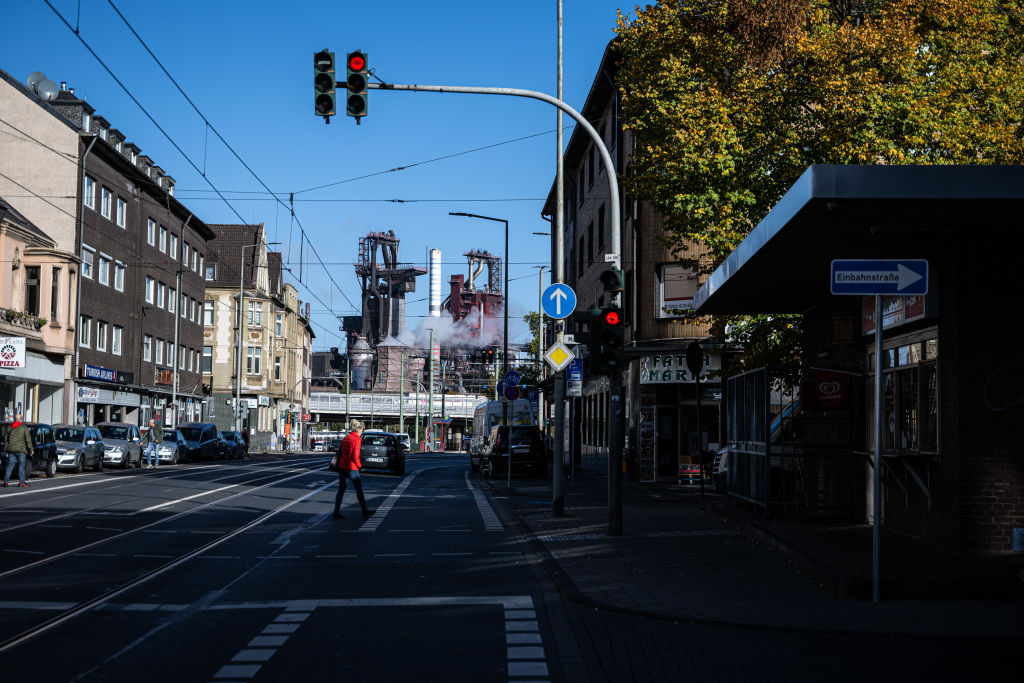
Gelsenkirchen, once a booming industrial town during the heydays of coal and steel in Germany’s Ruhr area in the 20th century, is now one of Germany’s poorest cities. As the structural crisis worsens the right-wing AfD has increasingly been making inroads because of the city’s migrant population.
After the vote Emmerich said he wanted to represent all Gelsenkircheners: “The people want to have a different type of town back, that is friendlier and where you feel at ease.”