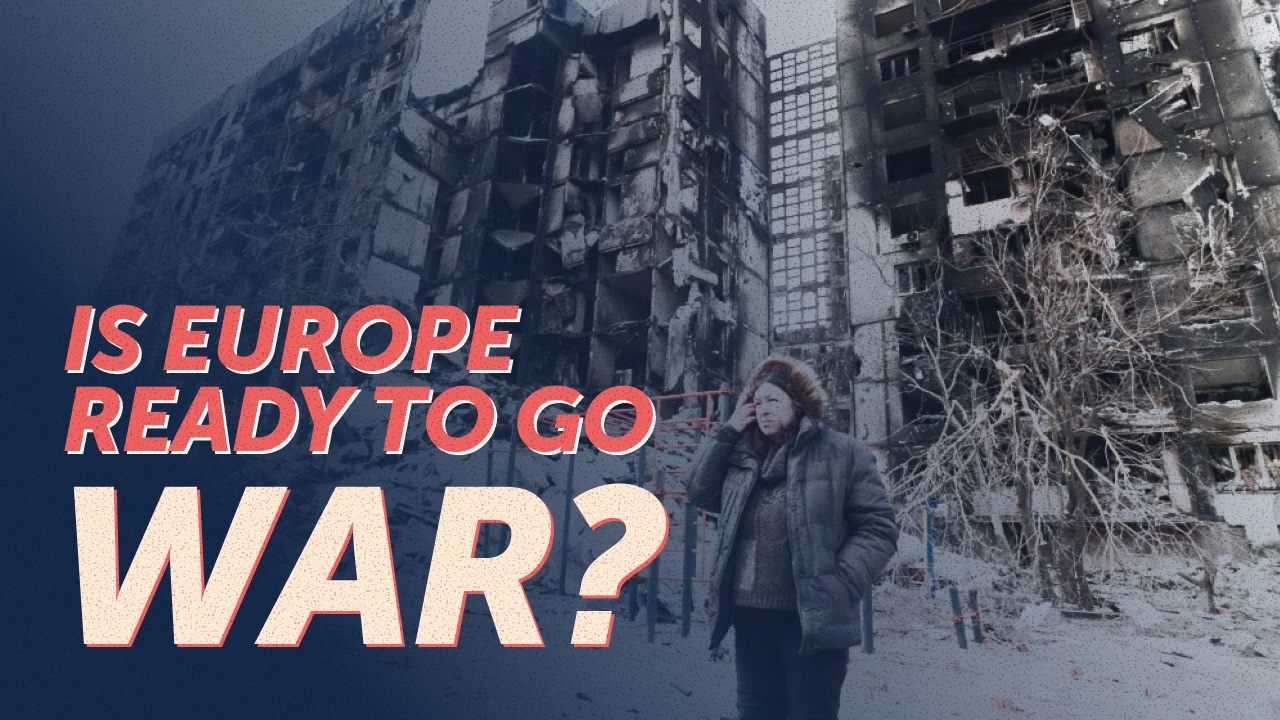
Are we already living through the opening chapter of World War III, or at least the early phase of a new Cold War that could eventually turn hot?
In this long-form analysis, we explore why many experts believe the era of stable, predictable geopolitics has ended and why the great-power competition of the 20th century is making a dramatic return. Over the past four to five years, a series of global shocks has shattered the belief that the world was safely running on “autopilot”:
- Russia’s invasion of Ukraine (2022)
- Putin’s 2007 Munich Security Conference speech
- The annexation of Crimea
- The 2008 global financial crisis and the collapse of the “solid foundation” myth
These events mark a transition into a new geopolitical stage, raising the central question: Who are the actual players shaping global history and who is merely a piece on the board? Your podcast host argues that the United States, Russia, China, and emerging actors like India, Turkey, and parts of the Middle East hold real agency. In contrast, Europe, particularly the EU, is increasingly treated as a geopolitical object rather than a geopolitical actor. Its rhetoric, economic policies, and industrial capacities no longer align with the demands of today’s harsh realities. We also investigate the tension between moral arguments and realpolitik in foreign policy.

History shows that, despite moral posturing, great powers have repeatedly rewarded aggressors when geopolitical interests demanded it whether with Stalin after WWII, China after Tibet, or Turkey after Cyprus.
The video examines the legacy of the Colour Revolutions, the role of Western NGOs and U.S. interventionism, and how these movements are perceived from the viewpoint of Russia and China not as democratic awakenings but as encroachment into their spheres of influence. In the final section, we discuss what Europe must do to survive in a world returning to power politics:
- Rebuild industrial capacity and abandon de-industrializing policies
- Strengthen hidden advantages like high-tech and pharmaceutical leadership
- Achieve energy and resource independence
- Realign foreign policy based on Realpolitik, not wishful thinking
- Move from being a “chess piece” to becoming a player in global affairs
This is a frank, unsentimental assessment of where global politics is heading and what Europe must do if it wants to shape its future instead of being shaped by it.