Transatlantic tensions flared again as European Union leaders reacted sharply to the new US security strategy.
Accusing Washington of crossing a line into Europe’s internal politics, several capitals said the document released on December 5 reads less like a policy outline and more like pressure on European voters and governments.
António Costa, President of the European Council, where all EU member countries are represented, was among the first to respond.

“What we cannot accept is this threat of interference in Europe’s democratic life,” he said today at the Jacques Delors Institute. “The United States cannot replace Europeans in deciding which parties are good or bad.”
The anger was sparked by the White House’s release of its updated National Security Strategy. Each new US administration publishes one early in its term but this edition goes further than usual.
It paints a bleak picture of Europe, warning of a coming “civilisational decline” driven by falling birth rates, migration, limits on free expression and weakening national identities. It also suggests Europe could look “unrecognisable” in two decades if trends continue.
On the other hand, the spokesperson for Ursula von der Leyen, President of the European Commission, the executive arm of the EU, said: “We’re not yet in a position to comment on any of it.”
The document offers little on Russia’s responsibility for the war in Ukraine but urges a quick end to the conflict. Talks continue, including the latest meeting between Ukrainian officials and US negotiators in Florida, although no deal has been struck.
Costa doubled down later on X: “Allies must act as allies. We must respect each other’s sovereignty … What we cannot accept is interference in Europe’s democratic life.”
Germany also bristled at the document, which gives the country its own section. Foreign minister Johann Wadephul said Berlin does not need “outside advice”. He added that while the US remains Germany’s most important ally in NATO, the alliance is meant to handle security — not political coaching inside Europe.
His irritation is tied to the strategy’s tone towards Berlin. In the document, Germany is singled out for its trade with China and its past purchases of Russian energy, a familiar pressure point from the previous US administration.
The same chapter praises “Germany’s patriotic parties”, and criticises what it calls “unstable minority governments”, placing Germany’s economic choices and Europe’s political landscape side by side as part of the continent’s “drift”.
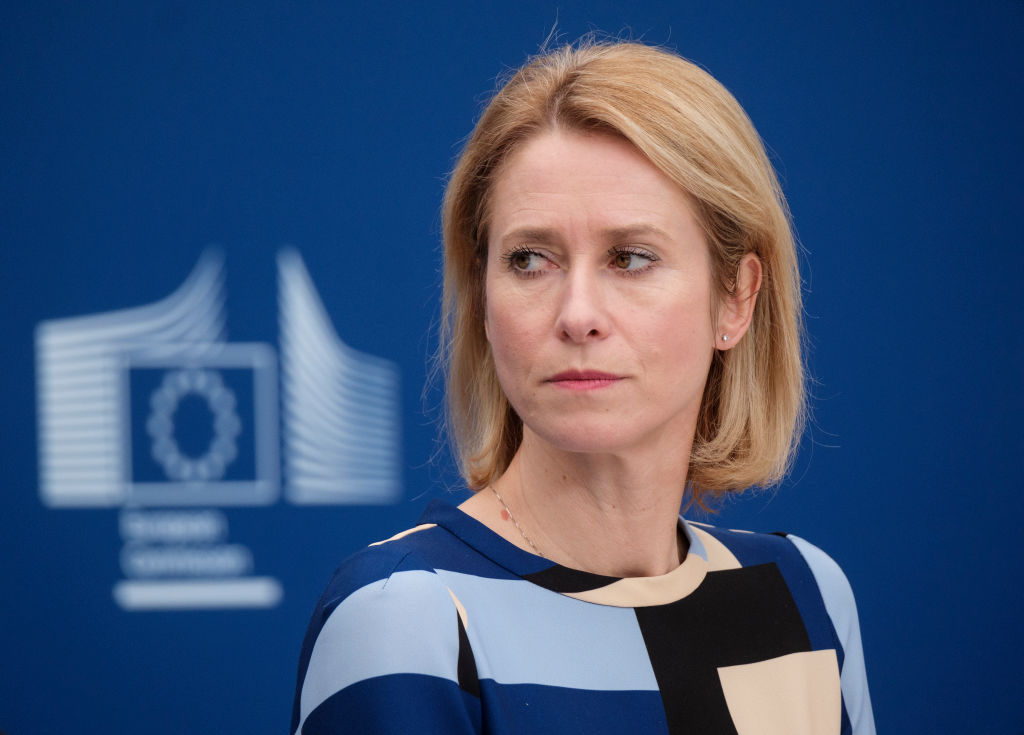
EU High Representative for Foreign Affairs and Security Policy and Vice-President of the European Commission Kaja Kallas struck a more measured tone. Speaking in Doha, she said she only read the European chapter and concluded that “the US is still our biggest ally”.
This posture reflects what Sven Biscop, director at the Brussels-based Egmont think-tank, said the document confirms: That “it is much easier to bully your friends than your enemies”.
His reading helps frame the reactions in Brussels: While the strategy speaks of “non-interventionism” elsewhere, Biscop notes that it openly plans to intervene in Europe by “cultivating resistance to Europe’s current trajectory” and backing “patriotic” forces.
In his words, this amounts to active involvement in European elections — “a hybrid attack as unwelcome as any Russian or Chinese interference”.
“There’s a lot of criticism but some of it is true,” Kallas said, pointing to how Europe has long underestimated its weight toward Russia, likely responding to the strategy’s section presenting the war in purely strategic terms rather than as Russian aggression.
The EC found itself dealing with a second transatlantic flare-up. Asked about the sharp rhetoric, EC spokesman Thomas Regnier said: “It takes one or two sentences to polarise the world and escalate tensions. It takes hundreds to calm them. But we have many challenges we need to work on with our American friends.”
His comments came after US billionaire Elon Musk lashed out at Brussels over a €120 million fine imposed on X for transparency breaches.
In posts on his platform, he blasted “EU woke Stasi commissars” and said the ruling targeted him personally. “It seems appropriate to respond not only to the EU, but to the individuals who took this action,” he wrote.
The escalation adds yet another strain to period already marked by unusually sharp exchanges across the Atlantic.