For the first time, right-wing parties are playing a central role in managing migration at the European Union level, adopting a more restrictive approach.
It started on December 3, when the interior ministers of European Union member states met in the Justice and Home Affairs (JHA) Council in Brussels, reaching agreement on three key regulations.
The returns regulation introduces accelerated procedures for third-country nationals residing illegally and allows for the creation of return centres outside the EU.

The safe countries of origin regulation harmonises national lists and establishes, for the first time, a common European safe list. The countries include Bangladesh, Colombia, Egypt, India, Kosovo, Morocco, and Tunisia. These join EU candidate countries, except in cases of conflict or systematic human rights violations.
The solidarity regulation creates a “solidarity pool” to support member states under pressure through relocations or financial contributions.
These moves reflect the priorities of conservative majorities across much of Europe, calling for stricter migration policies. They are reshaping dynamics in the European Parliament, where majorities are increasingly flexible.
The designation of safe countries was guided by Alessandro Ciriani, MEP for Brothers of Italy and a member of the European Conservatives and Reformists (ECR), who was appointed last September as rapporteur for the regulation.
For the first time, a politician from a party to the right of the EPP holds such a prominent role in EU migration policy. That highlights a shift in Brussels’ political balance. The rapporteur role was secured through an agreement within the relevant parliamentary committee.
Ciriani, 60, previously served as mayor of Pordenone, a city in north eastern Italy, and has extensive experience in local governance, particularly in public security and municipal administration.
He has long been a critic of what he describes as overly “ideological” EU migration policies, drawing on his experience implementing national rules at the local level.
According to Ciriani, the emerging EU approach aims to make it easier for member states to implement migration policies that national governments have previously struggled to enforce due to EU-level constraints.
“For a long time, European migration policy was ideological and not very practical, which local administrators like me often had to contend with,” he told Brussels Signal on December 9.
“Today, the [JHA] Council is calling for co-ordinated migration policies among European states, so that national governments can align and implement measures more effectively.”
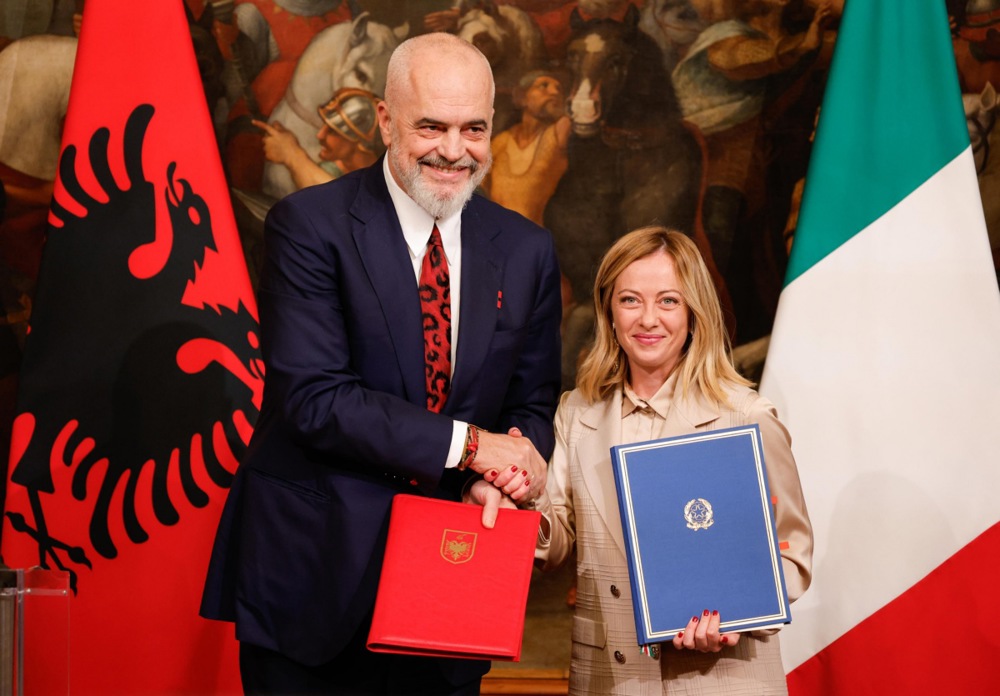
Italy’s experience illustrates the situation. In 2024, the government of Prime Minister Georgia Meloni began creating migrant hubs in Albania to relocate undocumented arrivals, manage return procedures, and ease pressure on Italy’s borders.
The Italian judiciary, citing EU law, blocked the full implementation of these measures, challenging the government’s approach.
Ciriani said the new EU regulations make it harder for courts to undermine such policies by invoking EU law, noting that Italy’s hubs in Albania are now being cited as a model by the Council, potentially influencing other member states.
A second measure aimed at limiting judicial interference is the new EU-wide definition of safe countries.
“For Italy, it is crucial to have a clear definition of safe countries of origin. Previously, judges could block returns based on a country’s perceived danger,” Ciriani said.
“Under the new rules, they will only examine individual cases in the context of countries we have determined as safe. Migrants must demonstrate that their safety is at risk; Italy will no longer have to prove otherwise.
“This list can also be expanded in the future,” he said.
These measures also pave the way for the implementation of the EU Migration and Asylum Pact, set to come into effect in June 2026.
The Pact is a framework designed to co-ordinate migration and asylum policies across the EU, ensuring fair responsibility sharing, faster asylum procedures and stronger border management.
According to Ciriani, the regulations adopted by the Council are complementary to the Pact, enabling member states to put in place policies that some national governments, such as Italy, had already planned but were previously hindered by judicial interventions.
This includes, for example, agreements with third countries to establish external hubs for managing migrants’ procedures.
The new EU framework is thus designed to ensure that such mechanisms can operate effectively and in a co-ordinated manner across the EU.
At the same time, it reflects growing pressure from national governments, where public opinion across most member states has increasingly shifted against mass immigration.
Positions that EU institutions have often been slow to adopt or have even actively resisted are now becoming unavoidable in the policymaking process.
The measures agreed appear to illustrate how the EU is adjusting to the political realities of its member states, integrating some of their requests into EU-level migration governance.