European leaders put on a show of support for Ukraine President Volodymyr Zelensky as they expressed scepticism about parts of the US proposal to end Russia’s nearly four-year invasion.
British Prime Minister Keir Starmer hosted Zelensky, French President Emmanuel Macron and German Chancellor Friedrich Merz at his Downing Street residence in London yesterday, AFP reported.
Downing Street said “positive progress” was made on the issue during crisis talks.

They were joined on a call by the leaders of seven other European countries, a senior representative from Turkey, and Nato and EU chiefs, according to The Guardian.
The leaders agreed that “now is a critical moment” for Ukraine and vowed to ramp up support for Kyiv and increase economic pressure on Moscow “to bring an end to this barbaric war”.
During the meeting, leaders “underscored the need for a just and lasting peace in Ukraine” including “robust security guarantees” against further Russian aggression, Downing Street said.
The discussions came after US President Donald Trump accused Zelensky of not reading his administration’s proposal on a deal to end nearly four years of war sparked by Russia’s invasion of its neighbour, AFP reported.
Starmer said Trump had progressed peace negotiations “the furthest we’ve got in the four years” in just a few weeks. He added that talks were complicated, but progress was being made, according to the BBC.
Merz suggested that he was “sceptical about some of the details which we are seeing in the documents coming from the US side”, but added: “We have to talk about it.”
That followed days of talks between Ukrainian and US officials in Miami that ended on December 6 with no apparent breakthrough but with Zelensky committing to further negotiations.
Following the talks in London, Zelensky said that Ukrainian territory was one of the main sticking points in negotiations, according to AFP.
“Russia is insisting that we give up territories, but we don’t want to cede anything,” Zelensky said at a press conference.
“There are difficult problems concerning the territories and so far there has been no compromise,” he said, adding that Kyiv had no legal or moral right to give up its land.
Meanwhile, Russia has praised the US’s new national security strategy, released on December 5. It took a confrontational posture toward Europe, blaming officials on the continent for blocking US-backed efforts to end the conflict, CNN reported.
Zelensky, speaking to journalists aboard his flight to Brussels following consultations in London, made one of his clearest public statements yet on the US-backed proposal.
He said the plan had been stripped of what he called “explicitly anti-Ukrainian provisions”, suggesting that Kyiv was open to a deal, according to The Washington Post.
But he stood firm on the issue of land — a view shared by European leaders who have insisted that Russian President Vladimir Putin should not be permitted to redraw international boundaries by force.
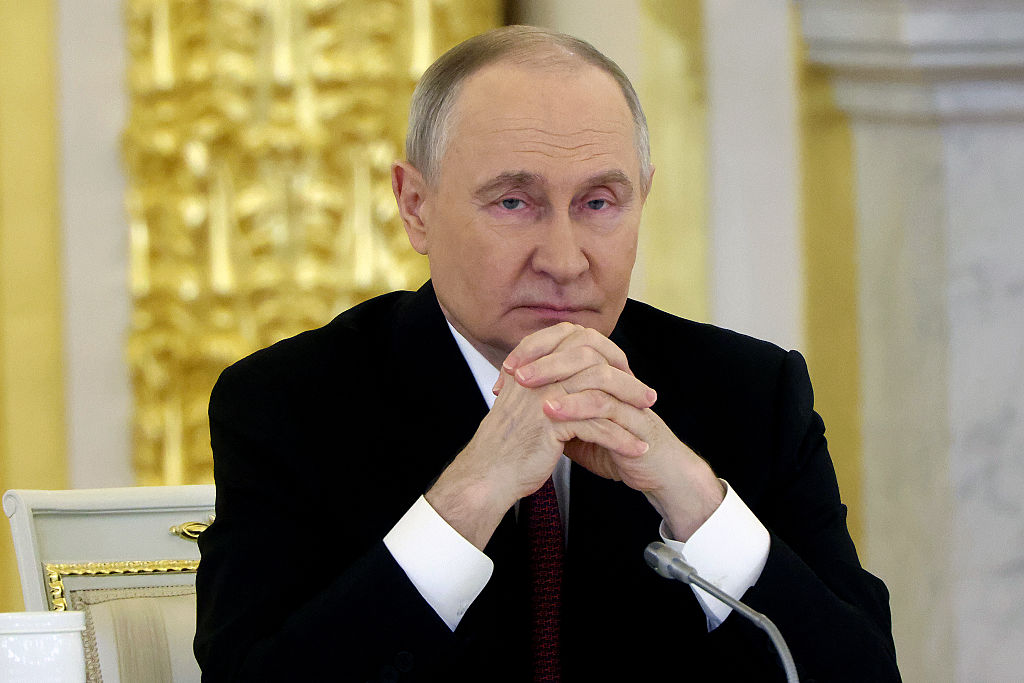
Zelensky said Ukraine will not surrender its territory in the eastern Donbas region — not to hasten peace talks, not to satisfy Washington’s push for compromise and not under pressure from Moscow’s continuing military onslaught.
“Under our laws, under international law — and under moral law — we have no right to give anything away,” he said.
“That is what we are fighting for.”
The unequivocal declaration that Ukraine will not surrender land could mark the collapse of Trump’s plan, which critics condemned as fulfilling a wish list of Putin.
On arrival in Brussels, Zelensky met with the heads of NATO and the European Commission, after which, he said, he would fly to Italy.
Also top of the discussions in London was the issue of security guarantees for Kyiv, AFP reported.
“The key is to know what our partners will be ready to do in the event of new aggression by Russia. At the moment, we have not received any answer to this question,” Zelensky said.
Macron wrote on X: “We are preparing robust security guarantees and measures for Ukraine’s reconstruction.”
He said the “main issue” was finding “convergence” between the European and Ukrainian position and that of the US.
Starmer said he would not be pushing Zelensky to accept the deal spearheaded by Trump’s administration – the initial version of which was criticised by Ukraine’s allies as overly favourable to Russia.
“The most important thing is to ensure that if there is a cessation of hostilities, and I hope there is, it has to be just and it has to be lasting,” the UK Prime Minister said.
Zelensky said as he headed into the meeting that “there are some things which we can’t manage without Americans, things which we can’t manage without Europe, and that’s why we need to make some important decisions”.
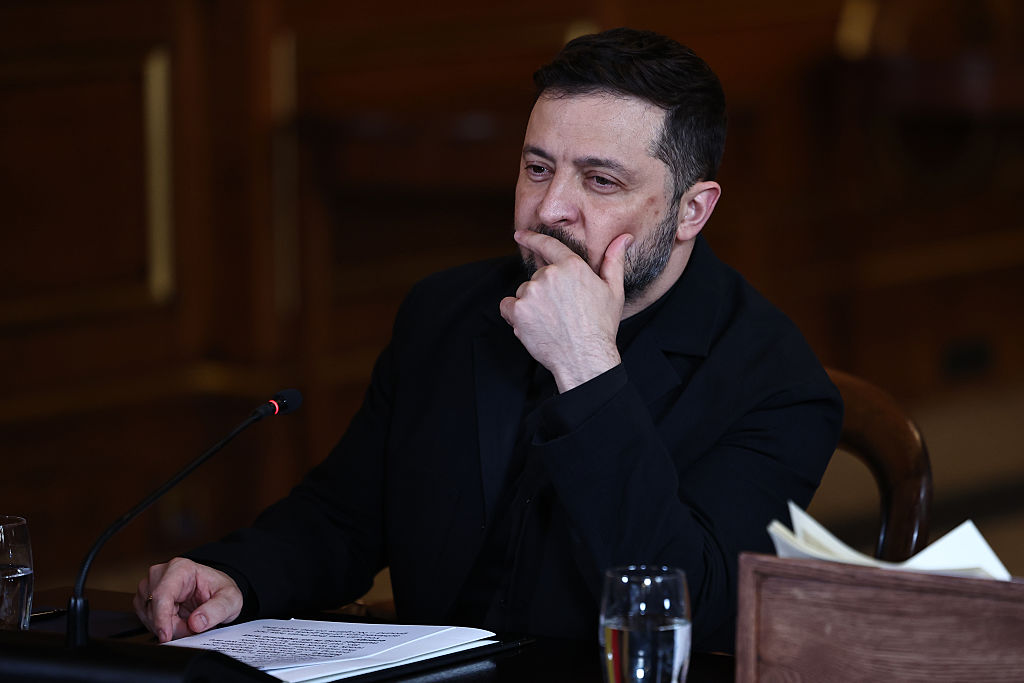
The tricky subject of how Europe can potentially best use frozen Russian assets to help Ukraine was also discussed.
A European Union plan to use frozen Russian assets to fund Kyiv’s fight against Russia would have “far-reaching consequences” for the EU, Sergey Nechaev, Moscow’s ambassador to Germany warned on December 5.
On December 6, Zelensky said he had joined a call with his negotiators in the Miami negotiations for a “very substantive and constructive” conversation with US envoys Steve Witkoff and Jared Kushner.
But Trump criticised his Ukrainian counterpart the next. day, telling reporters: “I have to say that I’m a little bit disappointed that President Zelensky hasn’t yet read the proposal, that was as of a few hours ago.”
Witkoff and Kushner had met Putin at the Kremlin on December 3, with Moscow rejecting parts of the US proposal.
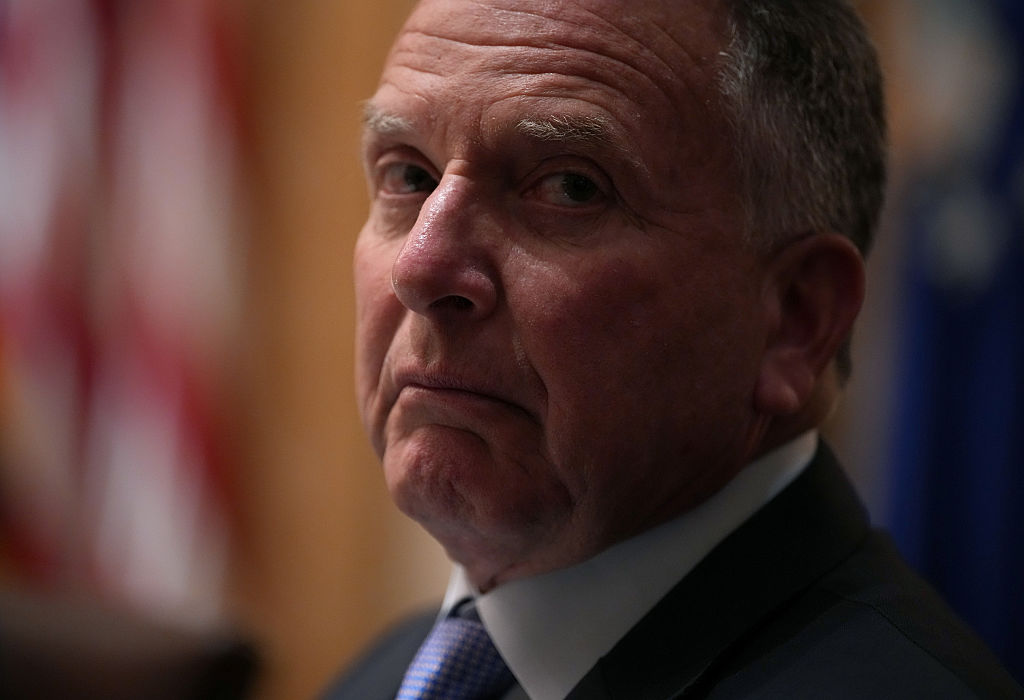
Witkoff spent almost five hours with Putin in negotiations that the Kremlin said produced “no compromise” on ending the war in Ukraine, according to the BBC.
Trump said the talks were “reasonably good” but it was too soon to say what would happen as “it does take two to tango”.
Before yesterday’s talks, Macron slammed what he called Russia’s “escalatory path”.
“We must continue to exert pressure on Russia to compel it to choose peace,” he wrote on X.
Washington’s initial plan to bring an end to the conflict involved Ukraine surrendering land that Russia has not captured in return for security promises that fall short of Kyiv’s aspirations to join NATO, AFP reported.
The nature of the security guarantees that Ukraine could get to fend off any future Russian invasion has so far been shrouded in uncertainty, beyond an initial suggestion that jets to defend Kyiv could be based in Poland.
Trump has blown hot and cold on Ukraine since returning to office in January, initially chastising Zelensky for not being grateful for US support.
But he was also frustrated that his efforts to persuade Putin to end the war had failed to produce results and he recently slapped sanctions on Russian oil firms.
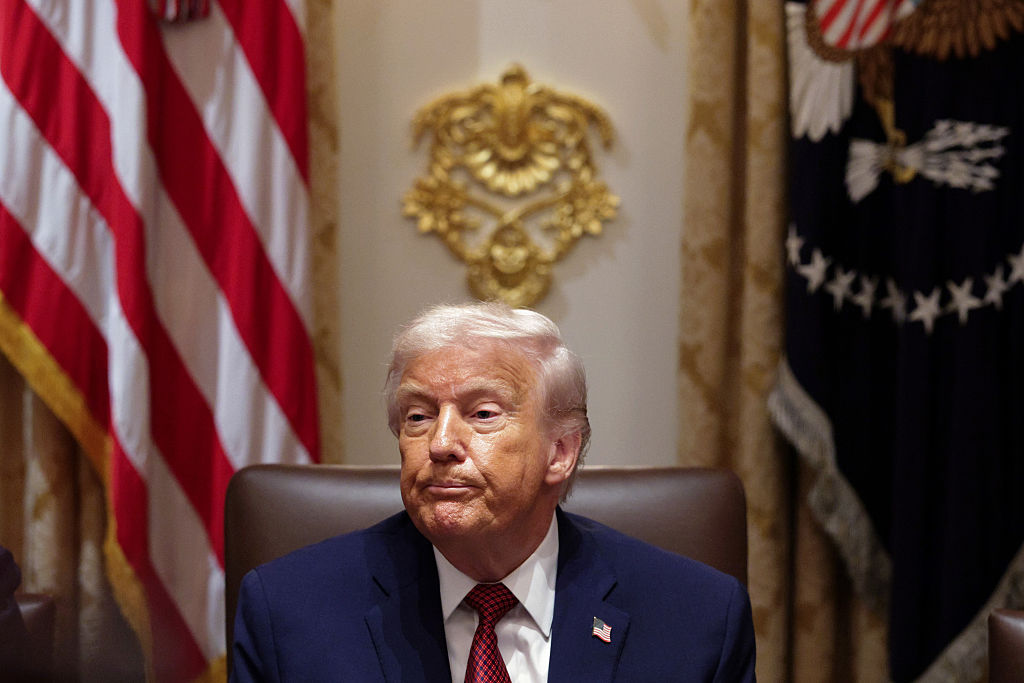
He warned yesterday, though, that Europe was heading in “very bad directions” in a fresh broadside.
The US President hit out at a “nasty” $140 million (€120.3 million) fine by the European Union against US billionaire Elon Musk’s X social network – while admitting he did not know much about it – before widening his attack.
“Look, Europe has to be very careful. [They’re] doing a lot of things. We want to keep Europe Europe,” Trump told reporters at the White House.
“Europe is going in some bad directions. It’s very bad, very bad for the people. We don’t want Europe to change so much. They’re going in some very bad directions.”
Musk said after X was fined for breaking the EU’s digital rules that the bloc should be “abolished”. Brussels dismissed his statements as “completely crazy”.
When asked about the fine, Trump said: “I don’t think it’s right” before clarifying that “Elon has not called me to ask for help on that one” and saying he would get more details later.


