*updates with new quote from MEP Sander Smit*
Dutch State Secretary Jean Rummenie has warned that fatalities caused by wolf attacks in the Netherlands may be inevitable.
“The question is not if deaths will occur but when,” he told Brussels Signal. “This situation is unprecedented in Europe and causes me serious concern.”

This year, several people in the Netherlands have been chased or bitten by wolves. In one incident, a six-year-old child was dragged away by a wolf before being rescued.
The country is currently home to more than 100 wolves. Thirteen packs, including 45 cubs, have been recorded this year.
According to Wageningen University, the wolf population has not yet reached its limit and the Netherlands could theoretically accommodate more than 50 packs.
Rummenie, State Secretary for Nature, disagrees with Wageningen University, arguing that it viewed the situation through a narrow ecological lens and did not pay enough attention to the impact on society.
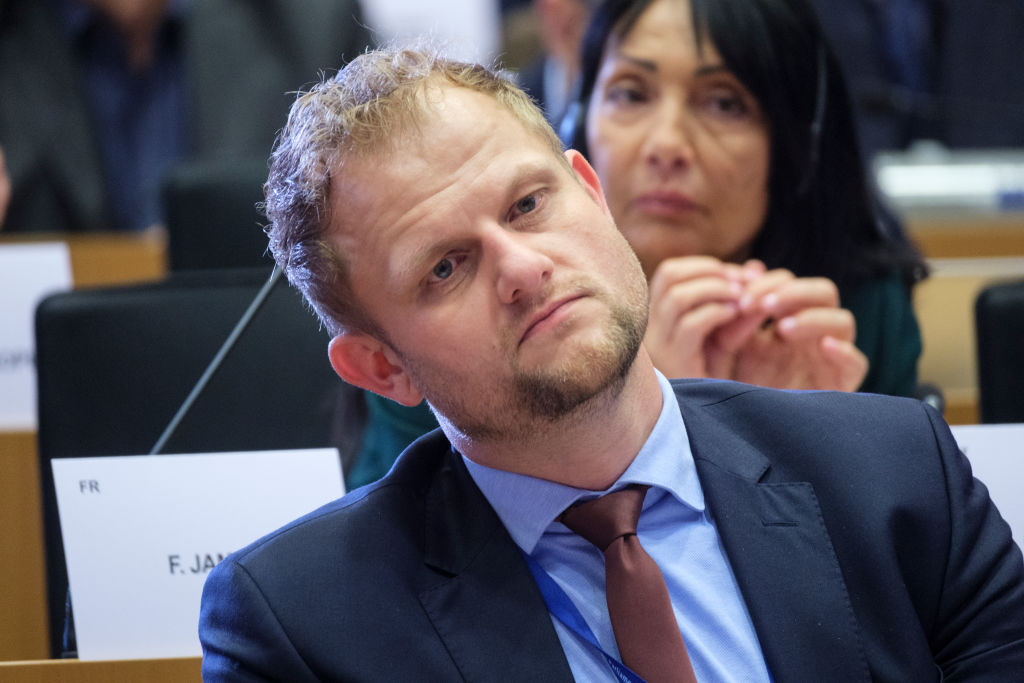
MEP Sander Smit, of the Dutch Farmer–Citizen Movement and the European People’s Party, said: “Over the years, an ideology has taken hold — reflected in case law — that coexistence is treated as an end in itself.”
Reports of wolves entering residential areas in the Netherlands have increased and thousands of sheep, as well as ponies, goats, and 23 alpacas, have been killed in wolf attacks this year.
According to anti-wolf campaigner Annemiek Van Straaten, fear among residents is growing. “People are avoiding forests, and children are afraid to travel alone,” she said.
At the same time, the UK is considering the reintroduction of wolves to Scotland, where the species disappeared approximately 350 years ago.
Researchers at the University of Leeds estimate the Scottish Highlands could support up to 97 packs, around 1,000 wolves.
The Scottish Government has not yet approved the plans.
Dutch farmers and Van Straaten warn that the British, just like the Dutch, could be left facing massacres of wildlife and livestock.
“This will obviously spiral completely out of control in Scotland, just like in the Netherlands,” says Van Straaten. “My message is: think carefully before you begin.”
Rummenie declined to comment directly on the Scottish plans but announced that the Netherlands intends to co-ordinate more closely with Belgium and Luxembourg. Both countries are densely populated and have experienced growing wolf populations since the species returned to the region around 2015.

“The presence of a large predator like the wolf presents additional challenges in such environments,” Rummenie said. “It is important to exchange experiences and share them with the European Commission.”
Several high-profile incidents have intensified public concern in the Netherlands. Last summer, a six-year-old boy was attacked by a wolf in the province of Utrecht and had to be rescued by adults who chased the animal away with sticks.
In another case, a female jogger was bitten twice on the leg. Earlier in December, two men reported being chased by a wolf on a forest path.
Sheep farmer Pieter van der Meer, who participates in a support group for affected farmers, also lost animals to a wolf attack. “The suffering is immense,” he said. “It is deeply distressing.”
Under European law, wolves are a protected species and may not be shot or trapped. In limited cases, so-called “problem wolves” may be culled, although the criteria for this designation remains unclear.
Recently, a wolf known as “Bram” was euthanised following a court ruling, prompting protests by animal welfare groups, some of whom accused authorities of demonising the species.
Millions of euros in EU funding have been allocated for researchers covering wolves and wildlife at universities.
These researchers view the wolf as a contributor to ecosystem restoration and, in some cases, link its presence to climate and carbon-related benefits.
The return of large predators such as wolves, bears and lynx is also supported by the Rewilding Europe network, which counts the EU’s LIFE programme, the World Wildlife Fund (WWF), Arcadia, the Postcode Lottery and Rewilding Britain among its partners.
“The wolf is the flagship species of Rewilding Europe,” said Van Straaten. “Why is the wolf declared sacred? In my view, this is playing ‘primitive nature.’ It’s a large-scale experiment.”
Across Europe, the wolf population has increased by about 60 per cent over the past decade, according to Smit. “In Germany alone, numbers have grown from a single pack in 2006 to more than 180 packs today,” he said.
He welcomed the announcement that Brussels to make further changes to the Habitats Directive.
Smit said the directive “brought the wolf back…But it did not sign us up to a wolf in every backyard. We want to correct that.”
Ecologists maintain that wolves can coexist peacefully with humans in both Scotland and the EU. Wolves are generally shy and tend to avoid people, they argue, and livestock losses can be reduced through preventive measures such as wolf-proof fencing.
Nevertheless, Rummenie reiterated earlier in December that the situation in the Netherlands involves serious risks.
“People have been attacked, and there are numerous instances of wolves approaching humans at close range,” he said.
“The emotional and economic impact on livestock farmers is significant, and veterinarians report that the situation is taking a heavy toll.”