A joint session of two chambers of the Polish Supreme Court has adopted a resolution that rejects the right of the European Union to regulate Poland’s judicial system.
It also curtails any rights for public authorities to disregard rulings by the judiciary on grounds of alleged illegitimacy of some judicial appointments made during the reign of the previous Conservative (PiS) government.
The Supreme Court is the top court in Poland on all but constitutional matters, for which a separate constitutional court operates, whose judges are elected by parliament.

Judges of the Supreme Court are nominated by the president on recommendation of the National Council for the Judiciary (KRS), a body that handles the internal regulation of judicial matters.
Appointments to the Supreme Court and the constitutional court made in the lifetime of the last PiS government are not recognised by the current centre-left government led by Prime Minister Donald Tusk. It argues that they are illegitimate as they have been challenged by the European courts for not meeting the standards of an independent court.
The joint session of the Supervisory and the Labour and Social Security chambers yesterday was held in public session and involved attempts at disruption by some supporters of the present Tusk government.
The police had to remove the protesters who unfurled banners and shouted, “You are not a court you are no judges”, at the deliberating justices whom the present government and its allies call “neo-judges”.
Allegations of illegitimacy have been made against almost 3,000 judges appointed by the president on recommendation of the KRS. That is because that body is now elected by parliament rather than, as was previously the case, by senior members of the judiciary. The KRS is another judicial body which is not recognised by the present government.
The protesters also alleged that the court was acting in violation of the Constitution’s provision that Poland accept international law arising out of the treaties into which the country had entered.
Poland’s EU accession treaty, though, was signed on the basis of the existing Polish Constitution. That remains the highest law of the land, determines the way members of the judiciary are appointed and sets out the principles for the workings of the judicial system.
The Supreme Court hearing was called as a result of an internal dispute relating to a resolution issued by seven members of the Labour and Social Security chamber. That declared the Supervisory Chamber of the same court as “non-existent” because it had been formed in the lifetime of the last PiS government with judges now considered by the current government to be illegitimate.
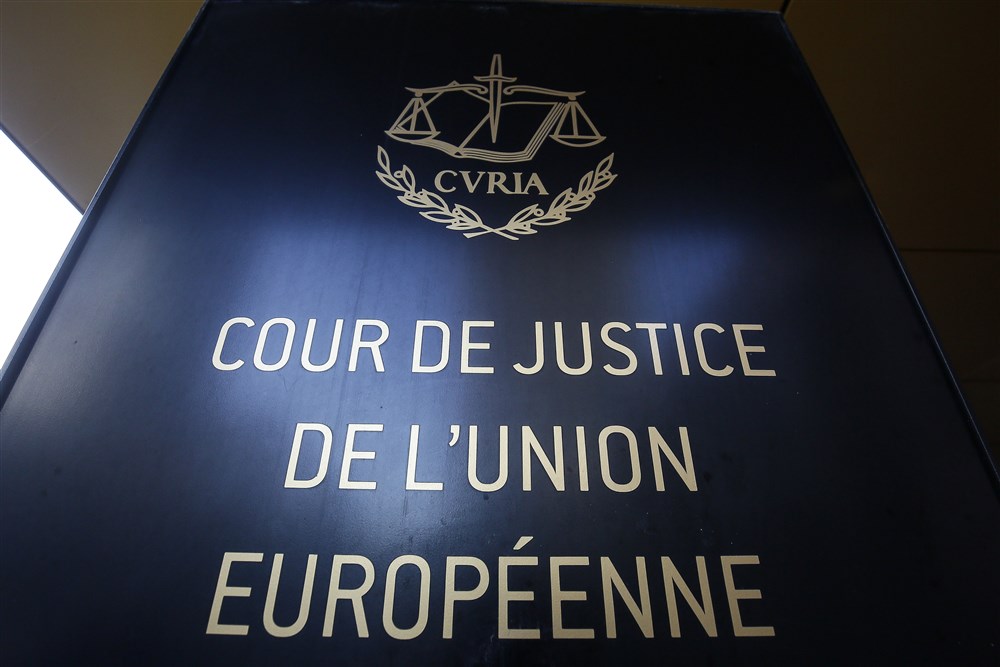
That resolution in September was made based on a ruling by the European Court of Justice (ECJ) that deemed the Supervisory Chamber to be illegitimate and considered its judgments “null and void”.
The edict, if adhered to by other Polish courts, would have had serious consequences for the Polish judicial system since the Supervisory Chamber is responsible for validating results of elections.
Members of the Supervisory and Labour Chambers met to issue their response to the dispute as resolutions of the court are meant to guide judges in the lower courts in making decisions. Four of the judges from the Labour chamber, though, refused to attend in the presence of the alleged “neo-judges”.
The 23 judges who were present adopted a resolution declaring that “no court or other public authority is authorised to declare a Supreme Court judgment null and void and disregard its effect, even by invoking European Union law”.
“Poland has not transferred to the bodies of the European Union or any other international organisation the authority to establish norms regulating the organisation and functioning of the national justice system or to determine the scope in which they may be applied,” it continued.
“These competencies belong exclusively to the constitutional bodies of Poland,” concluded the resolution.
When it came to power in 2023, the Tusk government pledged to restore the alleged rule of law and independence of the courts by reversing many of PiS judicial reforms.
It was those promises that prompted the European Commission to unlock Poland’s post-pandemic and structural funds. They had been frozen as the EC considered Poland to be acting in violation of the principles of judicial autonomy and the rule of law.
The Tusk government has proposed to demote or dismiss many of the judges appointed during the lifetime of the PiS administration, to elect the KRS by judges rather than MPs and has ended the practice of random assignment of judges to cases.
This approach has been rejected by both the former PiS-aligned president Andrzej Duda and his successor President Karol Nawrocki as well as the constitutional court. The Tusk government refuses to recognise that court also as it alleges it is illegitimately constituted.
The continuing dispute over the judiciary has led to situations in which some judges have ruled cases presided over by “neo-judges” to be null and void, affecting several criminal cases.
As a result of the wrangling, an opinion survey published in September found that the proportion of Poles who say they distrust their country’s courts has now risen to 57 per cent, the highest level ever recorded and up from 41 per cent when PiS left office in 2023.