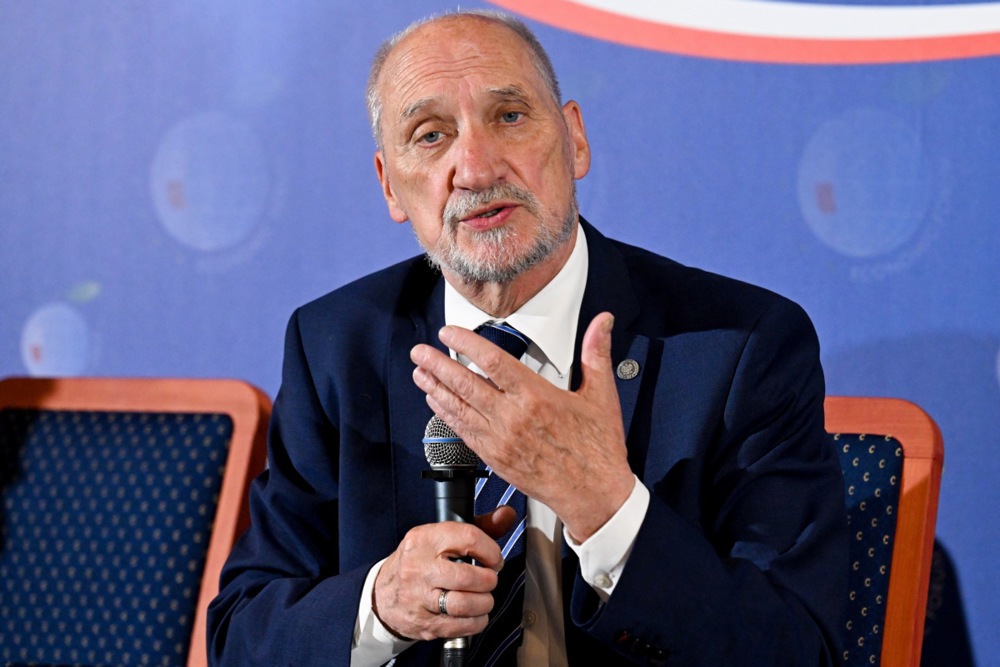
A Polish court has cancelled the European Arrest Warrant issued against Marcin Romanowski, an opposition Conservative politician and former deputy justice minister who is residing in Hungary after being granted granted asylum in that country.
Judge Dariusz Łubowski, who had issued the warrant in 2024 at the behest of the authorities has now ruled that as a result of new evidence coming to light to revoke the warrant. He accused the Polish government of “violating human rights and civil liberties”, including the presumption of innocence.
Prosecutors in Poland indicted Romanowski on eleven alleged crimes. These included participating in an organised criminal group, using crime as a source of income, and abuses of power during his time as a deputy justice minister in the last government.

The Polish MP and former minister denies the charges and says that he was not the beneficiary of any of the sums cited as these were intended for organizations funded from the Justice Fund which he was responsible for managing.
Romanowski left Poland in late 2024 after his parliamentary immunity was lifted. He did so before a court hearing which ordered his arrest. The country’s National Public Prosecutor’s Office is controlled by Prime Minister Donald Tusk’s centre-left government.
After leaving Poland, Romanowski was granted asylum in Budapest. Hungary accepted his argument he would not receive a fair trial in his home country, and refused to comply with the arrest warrant.
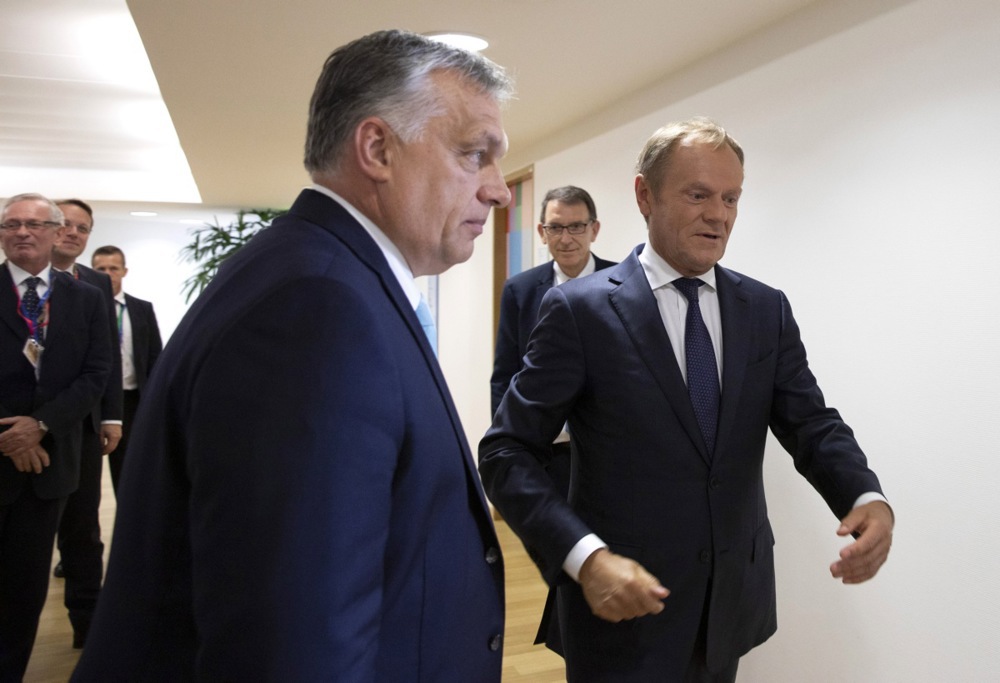
That refusal lead to a diplomatic spat between the Tusk government and Hungarian Prime Minister Viktor Orbán’s administration. The dispute resulted in Poland withdrawing its ambassador to Hungary.
On December 19 a Warsaw court decided to withdraw the warrant on the basis that Hungary had granted Romanowski asylum, and Interpol had declined to issue a Red Notice for him.
The judge made scathing comments about the behaviour of the Polish government in the case.
“It is impossible not to note the extremely dangerous interference of the highest-ranking representatives of the executive branch in the sphere of judicial independence, an unprecedented phenomenon for a democratic state governed by the rule of law,” wrote Judge Łubowski in his decision.
Łubowski stated that there had been “continuous public statements regarding ongoing court proceedings and the issuing of judgments before they have been issued by the court”. This, he added, “violates the most fundamental human rights of all accused persons, namely the presumption of innocence”.
The court considered it “completely unjustified to publicly present the image of Marcin Romanowski as a guilty person who, after being brought to the country, will be convicted and imprisoned”, adding that such “vile statements are incompatible with the basic standards of a democratic state of law” and “directly infringe on the sphere of judicial independence”.
Łubowski then said that there were “serious concerns that the current situation in Poland could be classified as a crypto-dictatorship.”
According to Łubowski there was no case for continuing with the European arrest warrant.
“In this situation, continuing to uphold the arrest warrant against a leading opposition representative, after he has been publicly ‘convicted’ by the most important representatives of the executive branch, would result in a complete loss of credibility of the Polish justice system.”
Romanowski welcomed the decision, and declared “the narrative of Tusk’s gangsters and their lies is falling apart”.
Following the court’s decision, Romanowski is now free to move within the European Schengen area but cannot travel beyond it’s boundaries, because the Polish authorities have invalidated his passport.
The court’s decision angered the current government’s justice minister, Waldemar Żurek who called the judge’s argumentation “astonishing”, and accused Łubowski of “a lack of objectivity”.
Żurek issued a statement saying the court had taken the decision in a closed session without prosecutors’ knowledge or notification and announced that prosecutors would be appealing the decision, with a demand that the trial judge be prevented from hearing an appeal on the grounds of him lacking objectivity.
Łubowski has headed the international proceedings section of Warsaw’s district court since 2018.
In October, he blocked Poland’s extradition to Germany of a Ukrainian man accused of being involved in sabotage of the Nord Stream pipeline. The Polish government praised the decision.
Since replacing the Conservatives in December 2023, Tusk’s government has made it a priority to hold former PiS officials to account for alleged crimes. It has issued a raft of indictments against former PiS government officials, including ex-PM Mateusz Morawiecki and Zbigniew Ziobro, former justice minister.
Ziobro, who is facing 26 indictments and who is currently splitting his time between Brussels were his wife works and Budapest, has had his parliamentary immunity removed and is facing court action for his arrest.
That court action was suspended on December 22 when a Warsaw court accused prosecutors of concealing evidence from both the court and Ziobro’s defence attorneys.
The opposition PiS maintains the Tusk government is pursuing a “political vendetta” against its opponents, and is using unlawful means to do so and this has been noticed by the current US administration even though it is not acknowledged by Brussels.
In May 2025, a group of five Republican members of the US House Committee on the Judiciary wrote to the European Commission expressing “deep concern” about the rule of law in Poland. In particular, they said they were concerned the government is “weaponising the justice system” against the opposition and cited the indictments made by the Tusk government against the previous PiS administration.
They received a reply from the Commission that it does not interfere in domestic judicial matters.