Polish Prime Minister Donald Tusk told German Chancellor Friedrich Merz, that if Germany does not start paying compensation to victims of the Second World War, his country will start doing so next year.
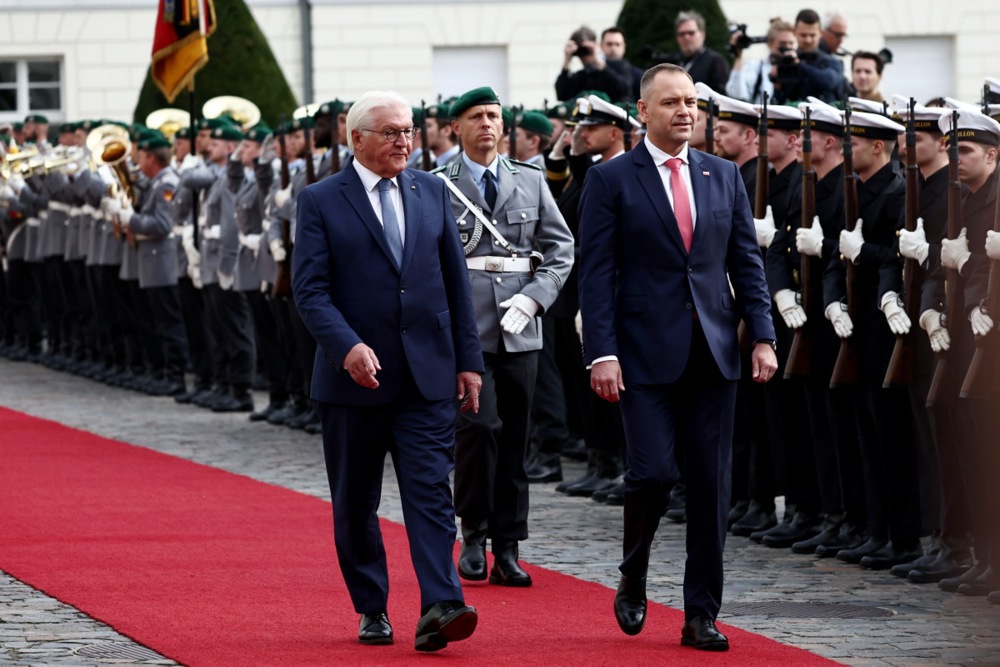
The German and Polish governments held bilateral consultations in Berlin on yesterday and tensions regarding the war were evident once again.
At a press conference following the meeting Merz told reporters Germany is pushing ahead with a memorial to Polish victims in Berlin. He added the government is “accelerating the restitution of Polish cultural property” looted by the German occupiers during the war.

Just before the two leaders spoke to the media, it was revealed that Germany was returning 73 medieval documents to Poland that were looted during the Second World War.
Tusk was not satisfied and returned to what he called the “difficult issues” between the two countries relating to the war and the question of reparations for the destruction suffered by Poland.
Asked about this by a journalist, Merz reiterated that the German Government’s opinion is well known and longstanding: “From a German perspective, the question of reparations has been definitely answered legally and politically for many years.”
When questioned why Germany has so far failed to follow through on a promise made by the previous chancellor Olaf Scholz last year to offer support to surviving Polish victims of the war, Merz said discussions are still ongoing.
Answering questions on German compensation to the remaining living victims of the conflict, Tusk said time was running out to reach an agreement. Last year, when Scholz made his pledge, there were an estimated 60,000 remaining victims alive; now, there are only 50,000.
“If you want to make such a gesture, hurry up,” said Tusk.
“If no decision is reached soon, Poland will next year consider providing such support from its own funds,” he said.
Tusk looked visibly irritated by the situation and said he did not want to discuss it further “at this point in time”.
His remarks on Poland being ready to start making the payments to the living victims, though, caused a stir back at home.
The opposition conservatives (PiS)-aligned President Karol Nawrocki’s chief aide Zbigniew Bogucki said the proposal was like “the victim of a car crash proposing to pay rather than the perpetrator”.
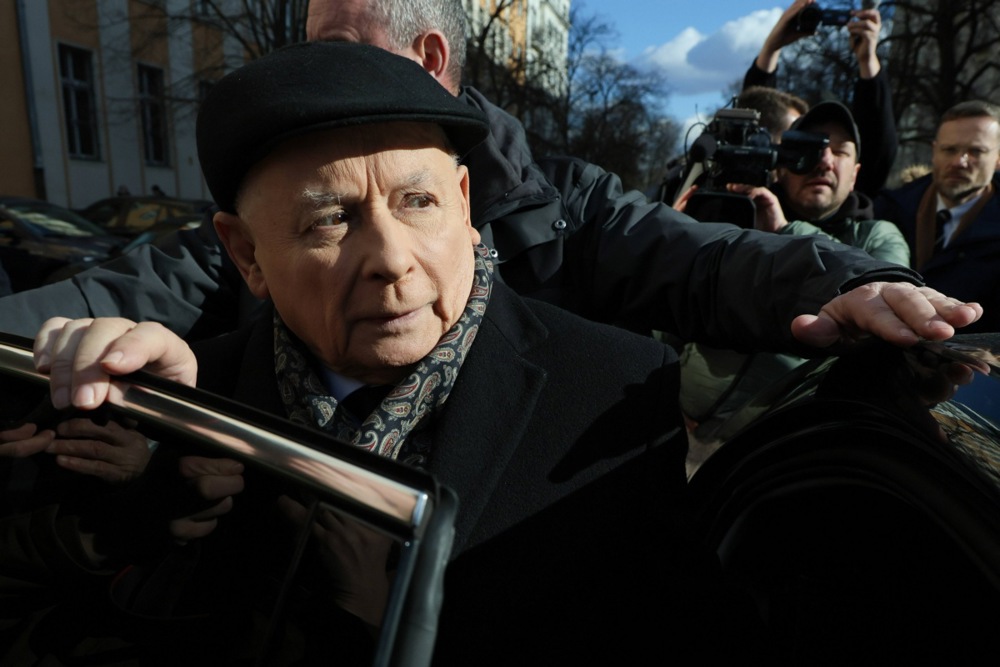
The PiS leader Jarosław Kaczyński took to X responding to Tusk’s remarks.
“I can’t believe it! A Polish PM in Berlin talks about direct assistance to victims of German Nazism from Poland’s budget? Does he want to pay for German crimes from Polish money?
“I am not against us supporting our victims of the war but not as an alternative to German compensation for the war”, wrote Kaczyński.
Sławomir Mentzen, the leader of the opposition right-wing Confederation party, was also scathing.
“I never had any illusions that we could get Germany to pay reparations. But never in a month of Sundays would I have thought that Poland would want to pay out compensation to victims of German aggression itself,” he said.
Tusk’s chief of staff, Jan Grabiec MP, said the opposition had misunderstood the Polish PM, who was attempting to pressure the Germans.
“It was a clear signal directed at Berlin. Merz did not look happy at having been put on the spot by us,” said Grabiec.
Tusk’s government, though, which replaced the PiS administration in 2023, has decided against pursuing the previous administration’s claim for 1,3 trillion dollars in compensation from Germany for documented damages sustained by Poland during the war.
It has accepted Berlin’s stance that the reparations issue was closed in the 1950s. At that time, the then Communist Polish government agreed for the compensation to be paid to the USSR. Tusk, nonetheless, has called on the Germans to find ways of compensating Poland for historical wrongs.
Poland suffered not only enormous material destruction during the conflict but also the deaths of six millions of its citizens, representing 17 per cent of its population. That was a higher relative loss than any other country during the war.
Hundreds of thousands were imprisoned in concentration camps while Polish cities, including the capital Warsaw, were left in ruins. Hundreds of thousands of items of cultural, artistic and intellectual significance were destroyed or looted.
After the war, Poland was awarded previously German territories in Pomerania and eastern Prussia but these merely offset the territorial losses the country suffered to the USSR. That came after the Russians had occupied the east of Poland in 1939 as a result of the implementation of the Ribbentrop-Molotov pact with Nazi Germany.
Some German and Polish commentators have on occasion claimed Poland’s entry into the European Union, which Germany promoted, could be viewed as compensation.
Others, though, point to the fact that Germany has itself benefited hugely from Polish and central European accession with major markets for its goods and investment opportunities.