The latest events in Iran have once again exposed a familiar and uncomfortable pattern in Western politics. Women are beaten, imprisoned, killed. Protesters disappear into prisons. Theocratic authority tightens its grip. And yet, across much of the Western feminist, progressive, and left-liberal ecosystem, the response is hesitant, reserved, or simply absent.
Where are all the freaks? This is not a debate about military intervention. It is not a call for regime change by force. It is not even, strictly speaking, about democratic rights and liberties in general. It is about women paying the price of being women. Wake up.
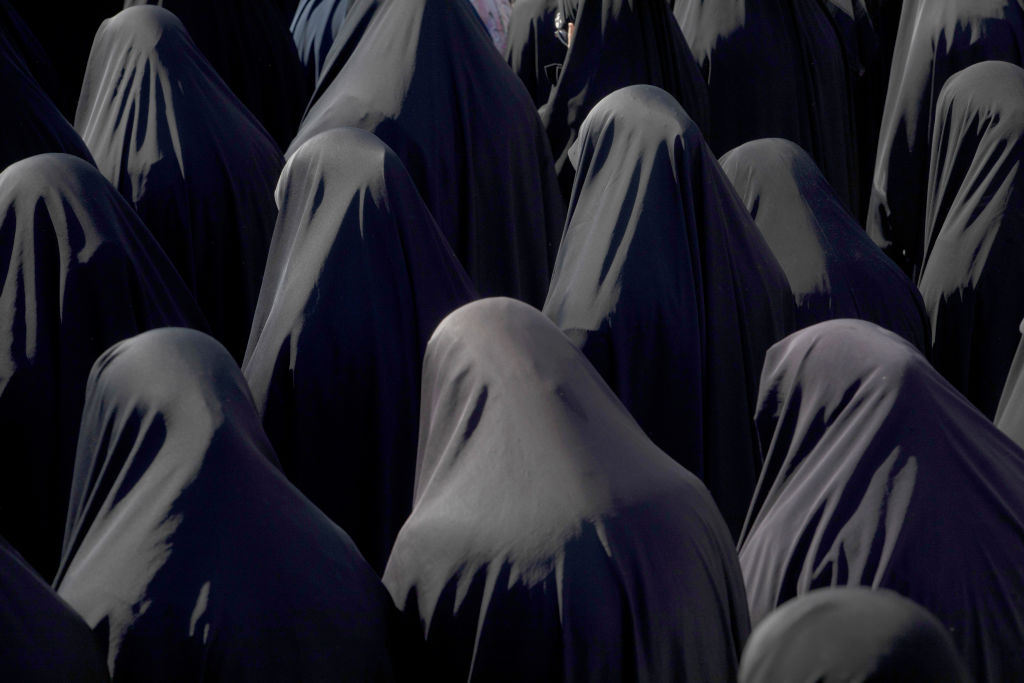
Iran is a regime that enforces compulsory veiling, polices women’s bodies, criminalises dissent and rules through clerical authority. These facts are not disputed. They are documented, systemic, entrenched. And yet, when violence escalates, when women are publicly humiliated, tortured or killed for defying religious rules, much of the Western activist response becomes oddly cautious.

The reason is political, not ethical, isn’t it? For decades, Western feminism and progressive politics portray themselves as movements founded on universal values. Women’s rights are human rights. Bodily autonomy is non-negotiable. Patriarchy is oppression, wherever it exists. Except, it seems, when the oppressor is an enemy of the United States or Israel.
Iran occupies a special place in the progressive imagination. It is not primarily seen as a theocratic dictatorship, but as a geopolitical counterweight. Its crimes are filtered through the lens of “anti-imperialism”. Condemning Tehran risks aligning, however indirectly, with Washington or Jerusalem. And that, for many, is deemed as unacceptable.
Principles collapse. Western feminists mobilise against sexism in Europe and North America. They march, campaign and demand institutional change. But when Iranian women burn hijabs in defiance of a religious state, their solidarity is sure to become somewhat conditional. Statements are softened. Context is added. Blame is redistributed. Silence often prevails.
The same dynamic governs the broader progressive Left. Atrocities committed by regimes hostile to the West are treated as complex affairs. Responsibility is diluted by historical investigations. In many cases, oppression is rebranded as resistance. The victims become secondary to the narrative. This is not moral seriousness. It is ideological hypocrisy.
The irony is profound. The very movements that claim to oppose patriarchy and authoritarianism end up excusing one of the most rigidly patriarchal and authoritarian systems on earth. And they do this not because they doubt the facts, but because they dislike the geopolitical implications of acknowledging them. At the end, they make matters even worse for Iranian women.
Iran’s regime understands all this perfectly. It has learned how to weaponise Western leftard morality, with its deep attachment to guilt, colonial remorse and anti-American reflexes. Every internal crime in Iran is now framed as unavoidable due to external pressure. Every protest is blamed on foreign interference. And too many in the West willingly sing along.
Logic suffers. None of this requires endorsing American policy. One can oppose sanctions, reject military intervention, and criticise Israeli actions while still recognising that Iran’s leadership is a brutal theocracy. These statements and positions are not mutually exclusive. But contemporary progressive politics increasingly treats them as such. Folly.
So what emerges is a hierarchy of victims. Some women deserve unconditional solidarity. Others receive it only if their suffering does not complicate preferred narratives. The Iranian case strips away the rhetoric and exposes the moral void. Feminism, when subjected to geopolitical considerations, ceases to be feminist. Progressivism, when it excuses cases of oppression for strategic reasons, ceases to be progressive.
The cost is not theoretical though. It is paid by Iranian women who discover that their struggle does not fit neatly into Western ideological frameworks. That their suffering is inconvenient. That their oppressors are granted a twisted kind of immunity.
This is not about choosing sides in global power struggles. It is about intellectual but most of all plain human honesty. Either principles are universal, or they are slogans. Either oppression is wrong regardless of who commits it, or outrage becomes a tool rather than a value.
The Iranian regime does not of course survive on Western approval. But Western silence, hesitation and selective outrage grant it something else: Legitimacy through relativism. And that, more than anything else, is the true betrayal not of politics or ideologies, but of those millions of innocent women who suffer because they are not men.


Dodging a proxy war with China in Iran: Trump’s gambit and Europe’s irrelevance