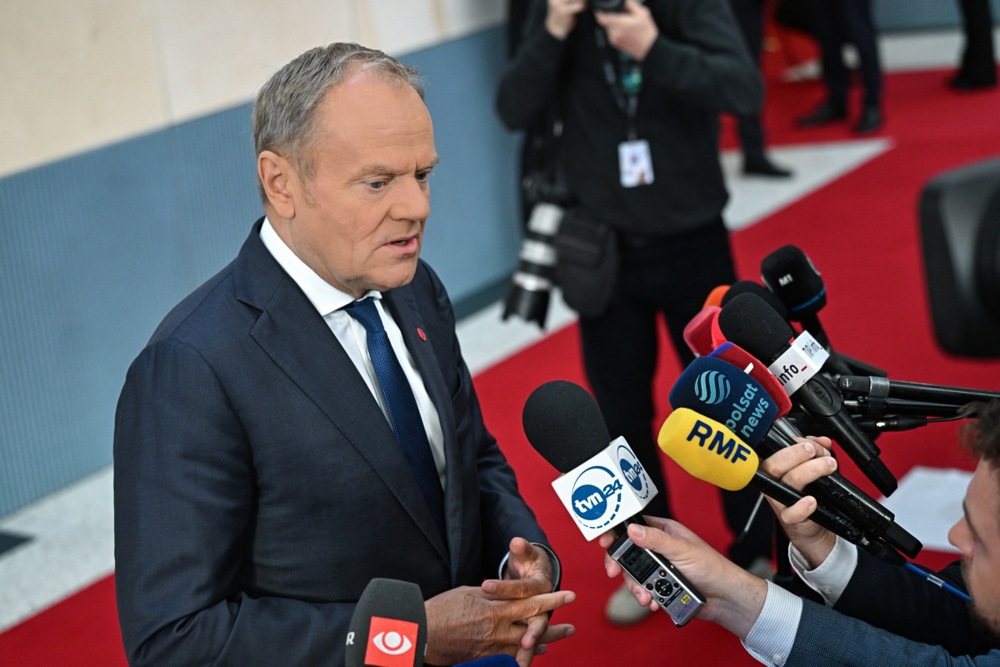
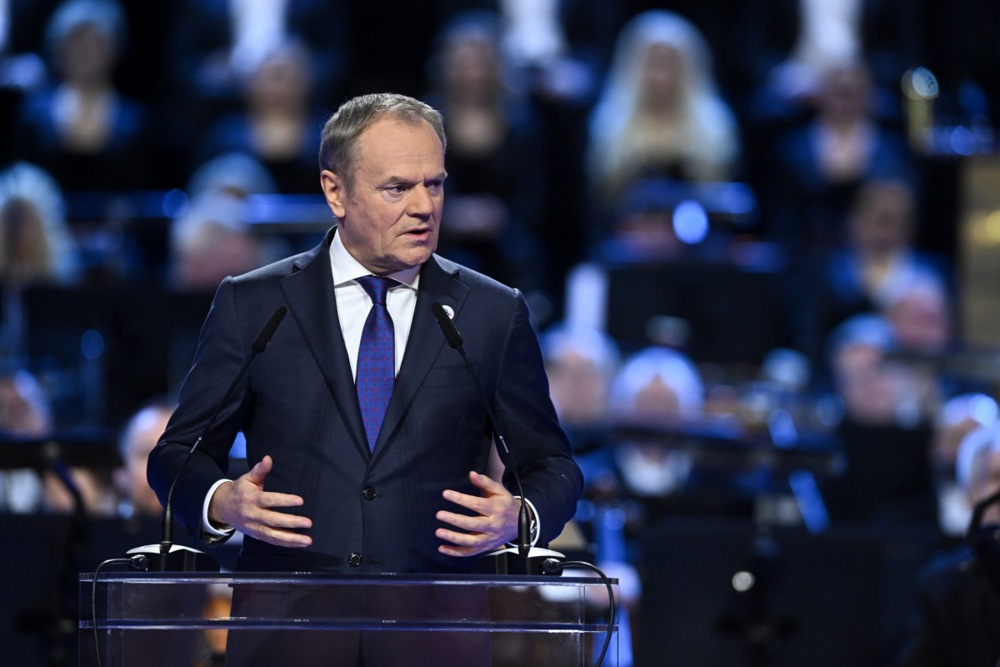
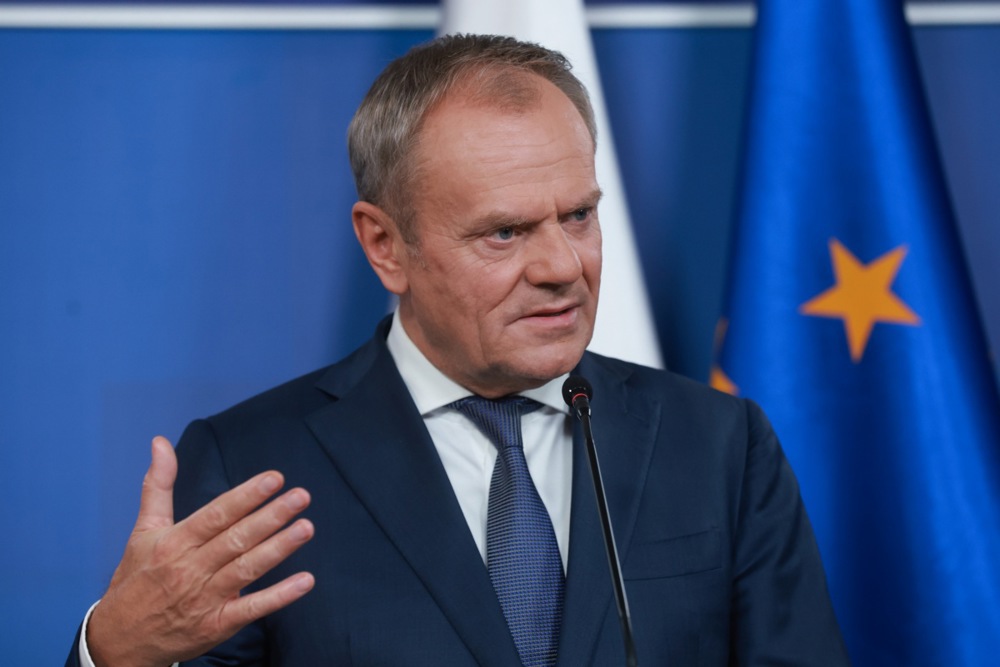
Some €2.5 billion worth of Poland’s post-pandemic European Union funding could be under threat because of Prime Minister Donald Tusk.
Tusk, who leads the centre-left coalition government, has decided to stop legislation to end the use of business-to-business (B2B) agreements to avoid incurring full labour contracts.
The plan was one of the milestones in Poland’s operational programme of the National Recovery Plan the Tusk government submitted to the European Commission. Its fulfilment is a condition for the transfer of parts of post-pandemic funding earmarked for the country.

On January 6, Tusk decided to scrap plans to reform the country’s State Labour Inspectorate (PIP), the body responsible for enforcing employment laws, declaring the issue “closed”. He said that was because he felt the proposals risked granting excessive authority to officials and negatively affecting the economy.
The reform, prepared by labour minister Agnieszka Dziemianowicz-Bąk of the Left Party, a junior member of Tusk’s ruling coalition, would have significantly expanded the PiP’s power. It would give inspectors the ability to convert civil-law B2B contracts into standard employment contracts if they felt employment legislation was being circumvented.
Tusk said he felt that allowing officials to decide how and on what basis people are employed would be “highly destructive” for many companies. He said it could lead to job losses and added that, according to his analysis, “the risks outweighed the potential benefits” and he would “not pursue the reform any further”.
While the reform had support from trade unions, it faced opposition from businesses and lawyers. They argued that some provisions could violate constitutional freedoms, such as the right to conduct business and choose employment.
The Left Party, led by the Speaker of Parliament Włodzimierz Czarzasty, is unhappy about this development and has called for discussions about changes in employment regulations to be continued.
The party, though, is struggling in the polls and with its leader having just assumed the prestigious post of the Speaker of Parliament it is most unlikely to cause much turbulence within the ruling coalition over the labour market reform.
The discussions within the government will now move on to the issue of how to make Tusk’s decision compatible with the milestone on labour market reforms made by the present government when updating the National Recovery Plan for the use of post-pandemic EU funds.
The milestone committed Poland to alter legislation in such a way that B2B labour service contracts would be liable for employer social insurance contributions to be paid into the public purse.
Should Poland ignore this milestone it risks the loss of a substantial amount of EU funds, estimated by Czarzasty to be of the order of €2.5 billion out of the total of €60 billion Poland is to receive from the EU Recovery Fund. Any changes in the milestones in the National Recovery Plan require agreement by the European Commission.
The EC pays particular attention to government promises of reforms that have an impact on reducing the budget deficit. Poland is one of the countries affected by the community’s excessive deficit procedure.
The reform giving PIP inspectors additional powers was a compromise on the original plans to make all civil law and labour law employment contacts liable for full national insurance coverage. The government has acknowledged that the matter will now have to be discussed not only within the coalition but also with the EC.
The Tusk government was able to unblock the post-pandemic funding programme on a promise of tackling rule-of-law problems the EC and the European Court of Justice had raised, without actually passing any concrete legislation.
The PM’s party, the Civic Coalition, is part of the European Parliament’s European People’s Party (EPP) and Tusk was President of the European Council between 2014 and 2019 and the leader of the EPP between 2019 and 2022.