European Commissioner for Energy and Housing Dan Jørgensen said European Union nations — not the EC — ultimately hold the power to stop buying Russian energy.
His comments come as divisions between EU member states continue to shape what happens in practice despite repeated pledges in Brussels.
Speaking at the European Parliament yesterday in Brussels, Jørgensen said the EC could propose plans and strategies but could not force national governments to change their energy purchasing decisions.

“This is not our shaping power,” he said. “It’s the members, they need to do [it].”
Without citing the countries explicitly, he was likely referring to Hungary and Slovakia. They have been blocking and slowing down different EU decisions to cut imports of Russian gas since the beginning of the invasion in Ukraine, arguing that rapid disengagement would undermine national energy security.
Other factors, though, also delayed a reduction in Russian energy imports across the bloc.
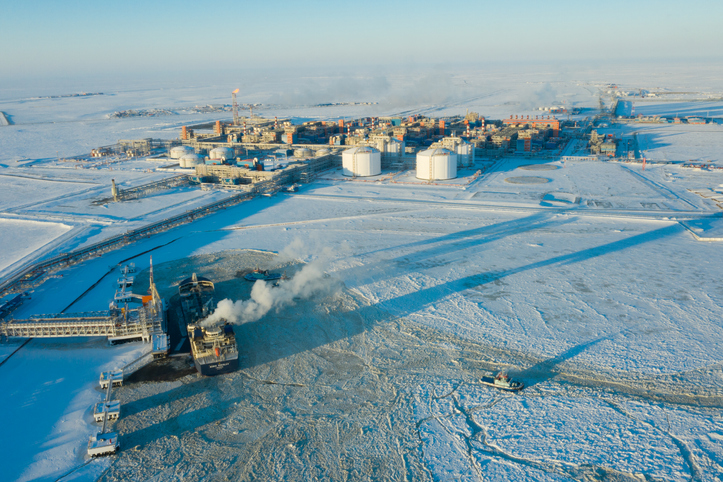
Despite political commitments, EU imports of Russian liquefied natural gas (LNG) continued throughout most of 2025, partly because existing long-term contracts remained in place and no EU-wide ban prevented companies from buying Russian LNG for use inside the bloc.
Measures agreed at EU level, including a ban on LNG transhipment, did not affect deliveries destined for EU terminals. It was only in the final months of 2025 that Russian LNG imports began to slow.
That came as some member states started to adjust purchasing behaviour amid growing political pressure and the prospect of tighter restrictions, highlighting the gap between EU-level announcements and changes implemented by national governments.
Jørgensen said that EU-level ambition often failed to translate into action because energy policy remained under national control and political will varied widely between the 27 member states.
“If you’re getting the power to empower all of the membership to do one thing, then it will never do anything,” he said, referring to the difficulty of reaching binding decisions when governments have different interests and exposure to Russian supplies.
Former Romanian energy minister and current MEP Ștefan Popescu said during the same conference that earlier EU measures had only worked when all countries acted together, pointing to the period after Russia reduced pipeline gas deliveries.
“Because we were together we were very solid together,” he said, referring to co-ordinated action on gas storage and supply security. “We all did it … all of us.”
At the time, EU countries jointly agreed to fill gas storage sites ahead of winter and secure alternative supplies, a move that helped stabilise markets and avoid shortages after Russian pipeline flows dropped sharply.
Popescu warned that such unity could not be assumed, noting that agreed rules depended on national enforcement. “We also have to deal with the regulation of having a stock of gas … This is it, we do it, and we arrive now,” he said. He added that outcomes reflected political choices in member states rather than decisions taken in Brussels.
Ukrainian ambassador to the EU Vsevolod Chentsov, speaking yesterday in Brussels, said Russia would only change its behaviour when the cost of continuing the war became unsustainable.
“When we increase pressure, Russia will look for solutions,” Chentsov said, arguing that economic measures, including energy policy, were as important as military support in shaping Moscow’s calculations.
He said that partial or uneven pressure weakened the overall effect of EU decisions.
“What is important is not to wait how Russia reacts, how Russia thinks, or what Russia would allow us to do,” he said.
“What is important is that we impose together our logic.”
Chentsov said Ukraine’s experience showed that Russian policy was driven by cost-benefit calculations rather than diplomatic signals.
“If Russia wants to continue this aggression, they would continue — regardless of what statements are made,” he said.
“Only real pressure changes behaviour.”