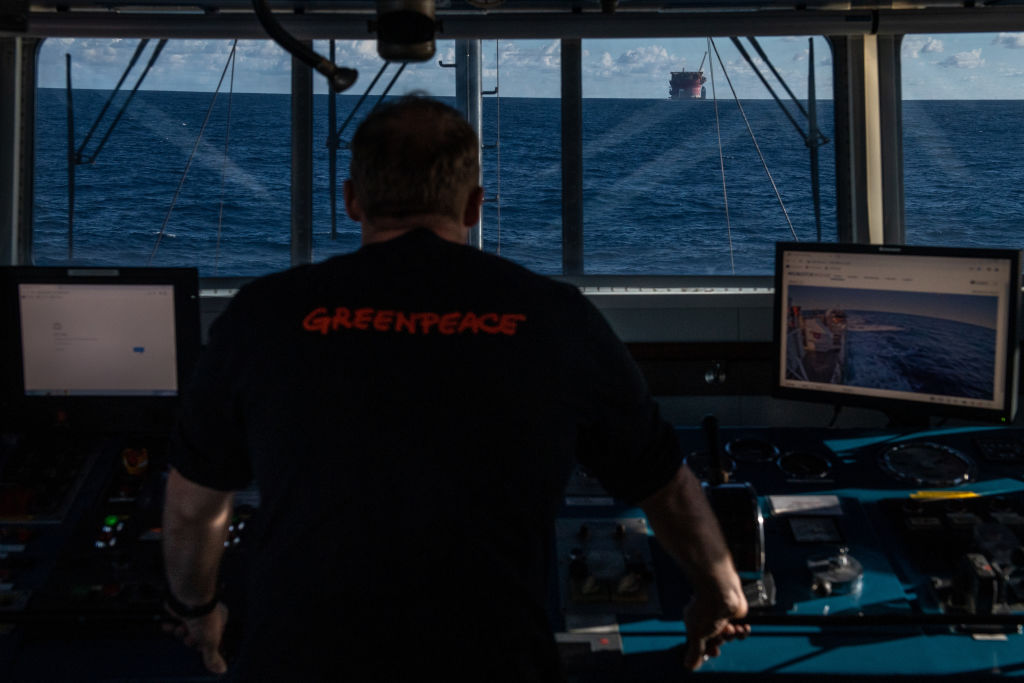
A North Dakota judge has signalled he will order Greenpeace entities to pay an expected $345 million (€292 million) in damages to the US firm Energy Transfer over its role in protests against the Dakota Access oil pipeline nearly a decade ago.
The figure, set by Judge James Gion after reducing a March 2025 jury award of more than $660 million (€508.3) by about half, stems from claims of defamation, conspiracy, trespass and tortious interference related to the 2016–2017 Standing Rock protests.
Tortious conduct, distinct from criminal acts, allows victims to seek compensation through civil lawsuits, often involving damages.

Greenpeace, which in June 2024 described the case as a Strategic Lawsuit Against Public Participation (SLAPP), insists it cannot pay and plans to seek a new trial before appealing to the North Dakota Supreme Court.
Greenpeace International General Counsel Kristin Casper stated: “We will be requesting a new trial and, failing that, will appeal the judgment to the Supreme Court of North Dakota, where Greenpeace International and the US Greenpeace entities have solid arguments for the dismissal of all legal claims against us.”
The latest decision could resonate among European environmental groups because it could curb transatlantic activism and set precedents.
Greenpeace International, headquartered in Amsterdam, is separately pursuing a countersuit in the Netherlands under the European Union Anti-SLAPP Directive, seeking to declare Energy Transfer’s US action meritless and claim damages; a North Dakota court declined in 2025 to block that proceeding.
Critics in Europe argue the hefty award highlights the risks of SLAPP-style litigation exported from the US, potentially deterring EU-based organisations from supporting global campaigns against fossil fuel infrastructure.
Greenpeace International has framed its Dutch action as the first major test of the EU directive, intended to protect public participation from corporate intimidation.
In a financial filing submitted late last year, Greenpeace USA stated that it lacked the funds to pay the fine ordered by the jury “or to continue normal operations if the judgment is enforced”.
The group reported having cash and cash equivalents of $1.4 million (€1.1 million) and total assets amounting to $23 million (€19.4 million) at the end of 2024.
Energy Transfer maintains the protests unlawfully disrupted construction and caused financial harm, while the company itself faced environmental fines and charges during the pipeline’s development.
It previously said it intended to appeal the reduced damages, calling the original jury findings and damages “lawful and just”.