European Union leaders emerged yesterday from a 12-hour summit overshadowed by two wars on Europe’s doorstep, yet with little to show beyond rhetoric.
What was initially billed as a meeting that should have dealt with industrial competitiveness and the future of the single market quickly turned into a crisis summit, dominated by escalating tensions in the Middle East and a deepening impasse over Ukraine.
The European Council struck a grave tone, warning that “developments in Iran and the wider region threaten regional and global security”, adding a call “for de-escalation and maximum restraint.”

It also reaffirmed that Russia’s war against Ukraine remains “an existential challenge” for the EU. It “continues its firm and unwavering support for Ukraine’s independence, sovereignty and territorial integrity within its internationally recognised borders”. Yet beyond these strong words, unity proved elusive.
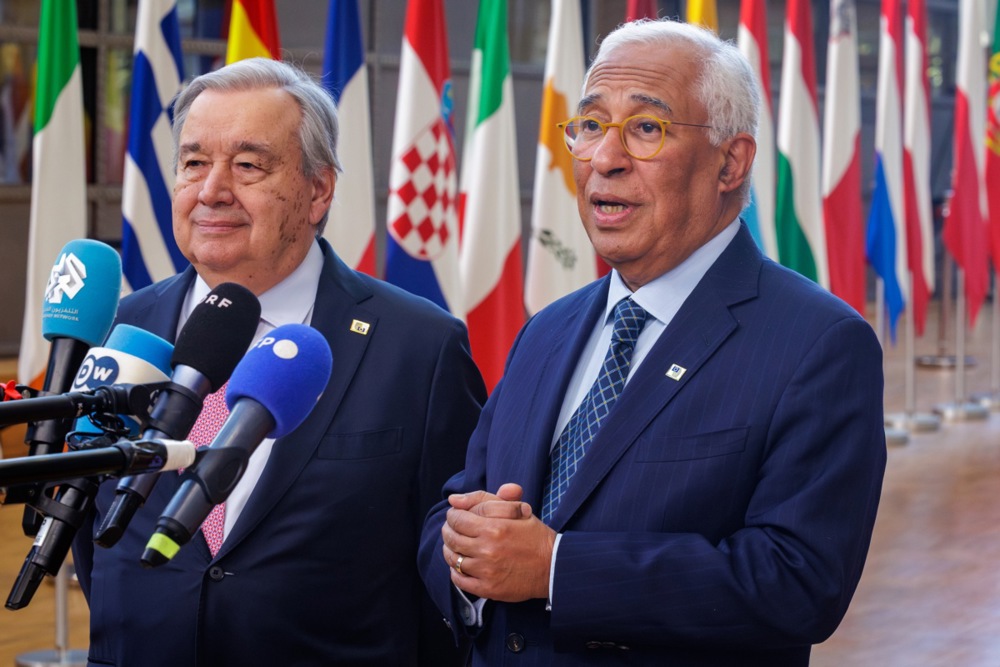
European Council President António Costa attempted to frame the stakes in stark terms, arguing that upholding the international rules-based order was essential because “the alternative is chaos” and “if you want to preserve peace, we need to uphold the international law and uphold the multilateral system”. He explicitly pointed to the wars in Ukraine and the Middle East as examples of what is at risk.
That sense of urgency, though, did not translate into action.
On the Middle East, leaders called for de-escalation and a moratorium on strikes targeting energy infrastructure, a position echoed by French President Emmanuel Macron. He wrote on X that it is “of common interest to implement without delay a moratorium” on attacks against civilian and energy facilities.
Despite discussions around securing the Strait of Hormuz or reinforcing naval missions, no clear commitments emerged.
I have just spoken with the Emir of Qatar and President Trump following the strikes that hit gas production facilities in Iran and Qatar today.
It is in our common interest to implement, without delay, a moratorium on strikes targeting civilian infrastructure,…
— Emmanuel Macron (@EmmanuelMacron) March 18, 2026
On Ukraine, divisions were even more visible.
Prime Minister Viktor Orbán of Hungary maintained his veto on a €90 billion loan package, despite intense pressure from other leaders.
European Commission President Ursula von der Leyen insisted that the EU would deliver support to Kyiv “one way or another”, while Costa warned that “nobody can blackmail the European Council”.
German Chancellor Friedrich Merz went further, warning of broader political consequences if the deadlock continues.
The stand-off created an unusually tense atmosphere, with Sweden’s Prime Minister Ulf Kristersson describing the criticism directed at Orbán as the harshest he had ever heard.
At the same time, the growing energy shock caused by strikes on gas infrastructure in Iran and Qatar loomed large.
While leaders acknowledged the impact on prices and supply, much of the discussion focused instead on reforming the EU’s carbon market.
This disconnect led some officials to question whether the EU was adequately responding to the scale of the crisis.
In the end, the summit highlighted a persistent gap between the EU’s geopolitical ambitions and its ability to act decisively: Caught between external crises and internal divisions.