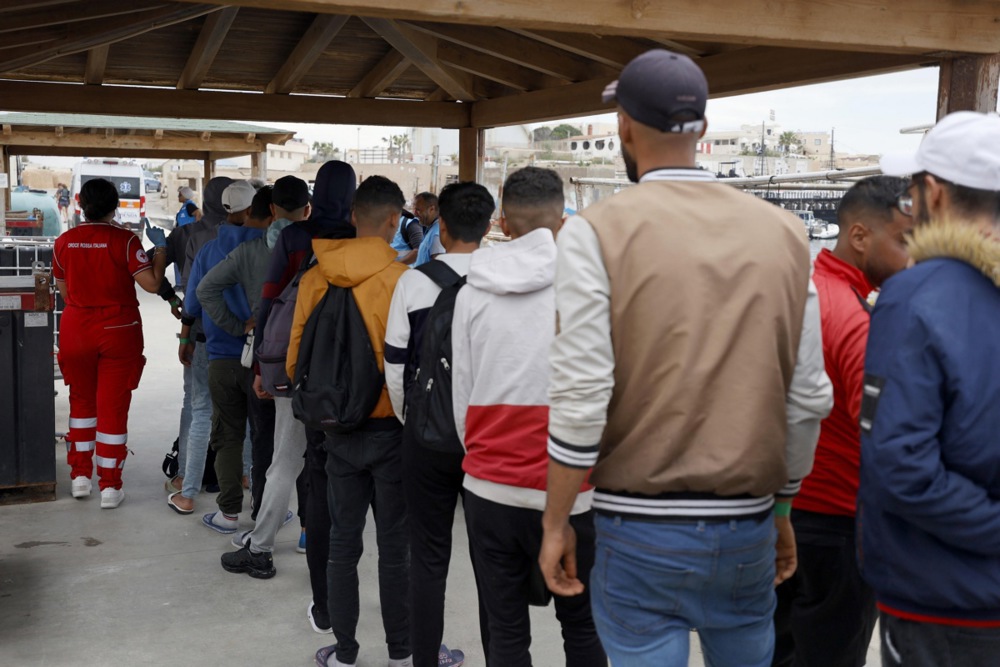
Spain’s Supreme Court has upheld prison sentences for seven individuals convicted of hate crimes over social media posts targeting unaccompanied foreign minors in Melilla, the autonomous city of Spain on the North African coast.
The ruling, issued by the Criminal Chamber on February 26 and made public yesterday, confirms convictions stemming from comments posted on Facebook in 2017.
The defendants, members of local groups with thousands of followers, referred to the minors – often termed “MENAs” (menores extranjeros no acompañados) in Spanish discourse – as “escoria” (scum), “bazofia” (rubbish), or “gentuza” (riffraff).

Other defendants urged the formation of citizen patrols to “clean” the streets and demanded the group be sent back to “their f*cking country to starve”.
Some commentators have criticised the ruling as an example of judicial overreach that prioritises protecting undocumented migrants over citizens’ rights. They argue it criminalises legitimate concerns about border security and public safety in places such as Melilla, the Spanish enclave bordering Morocco.
The court ruled that the expressions constituted incitement to hatred and, at minimum, indirect calls to violence against a vulnerable collective, overriding claims of protected free speech.
“Freedom of expression is not an absolute right,” the judgment stated, “and cannot serve as an excuse when comments objectively demean, humiliate, or provoke conflict with constitutional rights.”
Penalties range from eight months to one year and 10 months in prison – reduced from original terms of up to two years and six months due to undue delays in the lengthy proceedings.
Additional sanctions include fines and bans on working with minors.
The decision upholds an earlier ruling by the Málaga Provincial Court, which reversed an initial acquittal by a Melilla lower court.
The case originated from a 2017 complaint by child rights groups, including PRODEIN Melilla, following posts in Facebook communities such as “Opinión Popular de Melilla”.
These posts highlighted ongoing tensions in Spain’s North African enclaves over migration, where unaccompanied minors from sub-Saharan Africa and Morocco frequently arrive seeking to travel to mainland Spain or further into Europe.
In another free-speech case in Spain today, the Spanish Association of Christian Lawyers lodged a complaint with the Valladolid courts against the Co-ordinadora Juvenil Socialista (a socialist youth group linked to Prime Minister Pedro Sánchez’s Spanish Socialist Workers’ Party, PSOE) for allegedly inciting hatred against Christians and pro-life advocates.
The complaint centres on a poster promoting a demonstration outside a pro-life support centre, featuring a burning rosary and cross with the slogan “Si el enemigo avanza, avancemos nosotras” (“If the enemy advances, let’s advance”).
The lawyers’ association argues this symbolically burns Christian symbols and labels religious believers as “enemies”, potentially breaching Article 510 of the Penal Code on hate crimes.
In Europe, Canada, and Australia, hate-speech laws and related convictions have proliferated in recent years, coinciding with increasing mass migration.
Prosecutions have surged in the UK and Germany’s police have conducted mass raids on “hate posts”.
NGOs and civil society organisations, including those funded through European Union programmes, have played a key role in advocating for stronger laws, monitoring incidents and pushing for enforcement against perceived hatred.
In stark contrast, the US stands as the primary outlier, consistently pushing back through robust First Amendment protections.