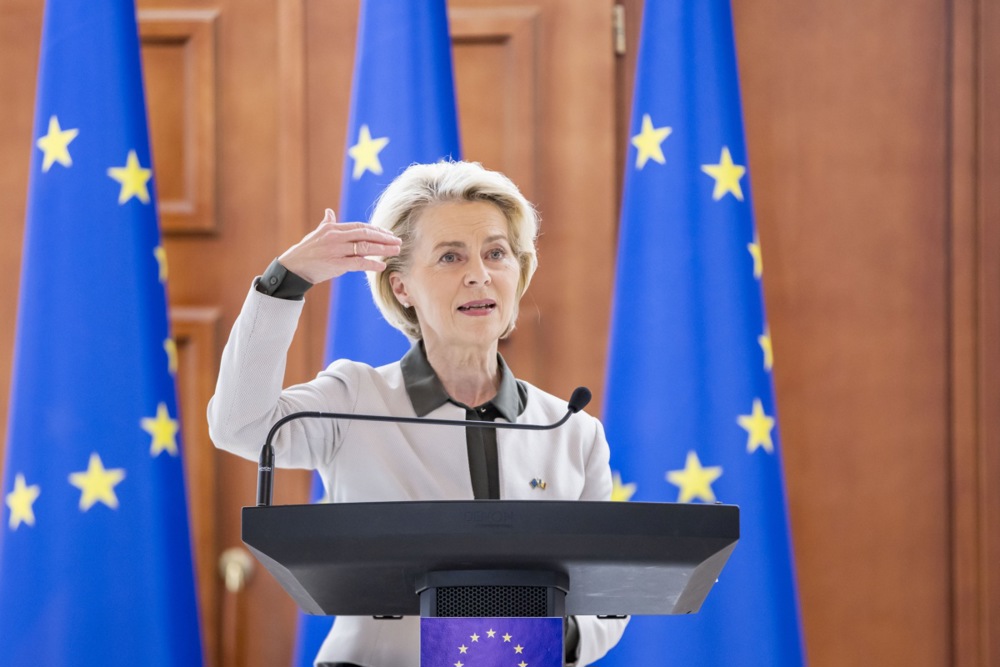
Ahead of this week’s European Council meeting, European Commission President Ursula von der Leyen sent a letter to EU heads of state highlighting Europe’s energy vulnerabilities, as the bloc faces new geopolitical pressure from the Middle East crisis.
Von der Leyen’s letter signalled a notable shift in tone on energy policy as she acknowledged the need for the EU to rely on nuclear energy.
“Avoiding the premature decommissioning of facilities such as existing nuclear power plants, which can continue to supply reliable, cost-effective, and low-emission electricity, can also play a role,” she wrote.

The remarks point to a renewed emphasis on nuclear energy at EU level, yet come as German Chancellor Friedrich Merz reiterated that Germany’s nuclear phase-out will not be reversed, highlighting divisions among Member States on the role of atomic energy.
Von der Leyen comments on nuclear also directly contradicts those of the European Energy Commissioner Dan Jørgensen who yesterday insisted that insisted that accelerating renewable energy deployment is the only sustainable path out of the continent’s deepening energy crisis.
At the same time, the Commission President acknowledged shortcomings in previous EU crisis responses, suggesting a shift in approach.
She admitted that past measures had often been poorly targeted and costly, urging governments not to repeat those mistakes.
“When considering possible further measures to alleviate the immediate impact on consumers and businesses, we should heed the lessons of the past. A key lesson of the 2022–2023 crisis was that many of these measures were broad and untargeted, leading to inefficiencies and very large fiscal costs,” she wrote.
Von der Leyen also cast doubt on the current EU market design, noting its limitations during periods of high gas prices.
“It is undeniable that the current system creates significant challenges in some Member States, especially when gas prices are high,” she said.
With the economic impact of the crisis already intensifying, she warned that further disruption could follow if tensions persist: “The impact on our economies and industries is becoming ever more pronounced. And we have to prepare for more should the conflict be prolonged.”
More broadly, the letter underscores a push to strengthen Europe’s competitiveness through deregulation and efforts to reduce strategic dependencies.
Referring to earlier discussions among EU leaders, von der Leyen stressed the need for “decisive action to address the bottlenecks which hamper our competitiveness,” adding that the current crisis makes this agenda “even more urgent”.
Today, EU environment NGOS warn against deregulation arguing that this move could “weaken the foundations of the Single Market and undermining Europe’s long‑term competitiveness, security and public health”.
“Europe cannot build competitiveness by dismantling the very protections that keep people healthy, drive innovation, support clean industries and ensure a level playing field. Deregulation may look like an easy political win, but it will weaken Europe’s resilience, deepen inequalities and expose citizens to greater climate and pollution risks” they said.