


The second round of France’s municipal elections on March 22 confirmed a familiar pattern: Low turnout, fragmented politics and little real change in major cities.
Voter participation reached 57.8 per cent, down four points compared to 2014. Far from being a surge of protest, the fall may reflect a growing sense of distance from local politics.
Paris illustrates this: The capital remains under Socialist Party control, extending more than 25 years of uninterrupted rule, with the victory of its candidate Emmanuel Grégoire over Rachida Dati of the Republicans.
This result comes despite increasing criticism of the city’s financial situation. Paris’ debt is expected to reach between €9.7 and €12 billion by the end of 2026, compared to €4.18 billion in 2014.
That represents around €5,000 per resident, alongside a sharp rise in operating costs. These figures were central to the campaign, yet they did not translate into political change. If anything, the result suggests that voters are either unconvinced by the alternatives or resigned to continuity.
Across the country, the Right remains dominant in terms of municipalities, with 1,245 towns, ahead of the Left (802) and the centre (589). A significant number of municipalities fall into the “other” category, reflecting the importance of small towns and villages where mayors often run without strong party affiliation.
Beyond these figures, one trend stands out. Centrist forces, particularly those linked to Emmanuel Macron’s Renaissance, struggled to make an impact. In several major cities such as Paris and Marseille, they did not emerge as a credible alternative.
Instead, their presence often contributed to dividing the vote, especially on the Right, making it easier for Socialist Party candidates to win.
In Marseille, for example, Martine Vassal of the Republicans embodied a centre-right option but failed to break through in a fragmented political landscape. This pattern raises questions about the ability of the political centre to translate national influence into local success.
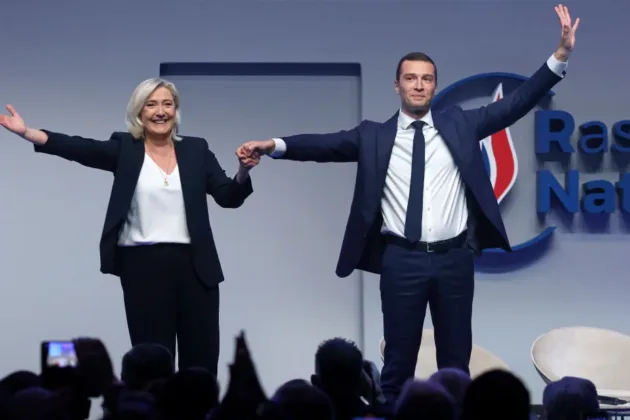
At the same time, the National Rally, led by Jordan Bardella, described the results as “the greatest breakthrough in its history,” in a televised speech on Sunday night. He pointed to a record number of elected officials and several municipal victories, mainly in southern France, although defeats in larger cities such as Toulon and Marseille limit the scope of that success.
For left-wing La France Insoumise (LFI), these elections marked a first real attempt to compete at the municipal level. The party won a few large working-class cities but its broader strategy showed limits.
Alliances with other left-wing parties failed in several key cities, including Toulouse, Clermont-Ferrand and Limoges. Interestingly, where such alliances did not take place, as in Paris and Marseille, the traditional Left performed better.
More than a turning point, these elections look like a test. They reveal a political landscape where strongholds remain intact, opposition forces are divided and meaningful change remains difficult to achieve.