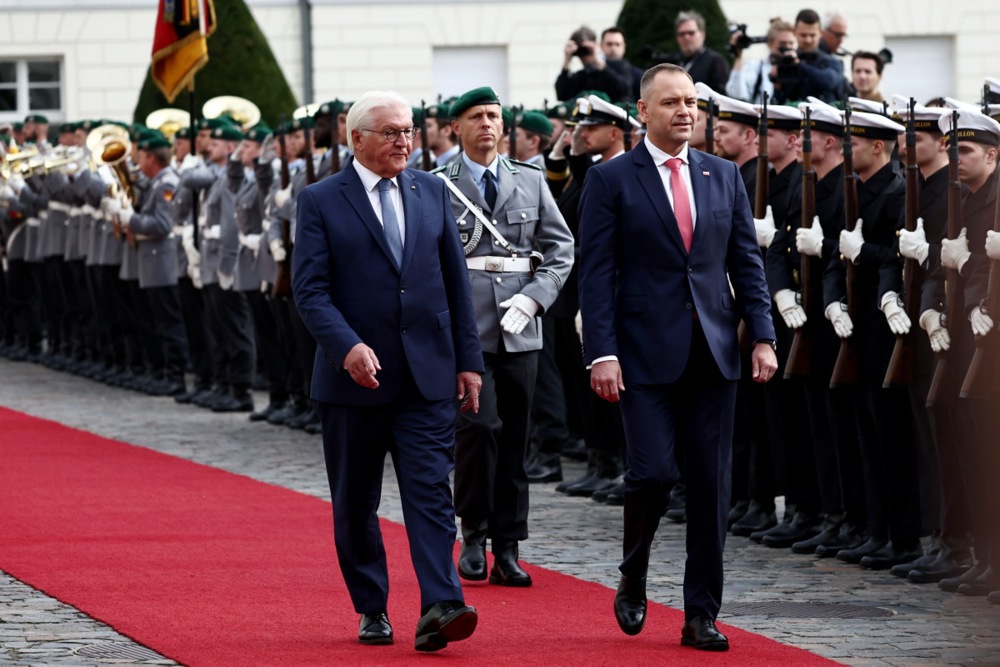
Polish President Karol Nawrocki, in a televised address to the nation, announced he has vetoed legislation which would allow Poland to access a €44 billion loan from the European Union’s Security Action for Europe (SAFE) programme.
The legislation, which implemented unlocking the funding for 139 projects, passed parliament in late February.
“I have decided that I will not sign a law that allows Poland to take out SAFE loans,” the president said yesterday.

“I will never sign a law that harms our sovereignty, independence, economic security and military security.”
He also announced that any attempt by the centre-left government led by Prime Minister Donald Tusk to borrow from foreign sources in contravention of the law will lead to future prosecution of those responsible.
The Polish Constitution states that entering into major international loan agreements requires parliamentary legislation.
In justifying his veto decision, Nawrocki said the loan scheme would burden future generations with debt.
Nawrocki compared SAFE loans to foreign-currency mortgages widely known in Poland as Swiss-franc loans, which left many borrowers facing sharply rising repayments.
“Everything was supposed to be safe, but later instalments rose so much that they led to major financial crises,” he said, warning that loans could burden younger generations for decades.
He also argued that the SAFE loan would give the EU too much say about which arms Poland could buy and impact the ability to block future tranches of funding through the bloc’s conditionality mechanism. That is something the European Commission had done to Poland when it blocked its post-pandemic funding for alleged rule of law violations.
Nawrocki has instead proposed a rival “Polish SAFE zero per cent” plan using profits from the Polish central bank’s gold reserves instead of foreign borrowing, a scheme the government has dismissed as being “SAFE zero money” as the government does not believe the central bank can in reality make such funds available.
Tusk’s camp argues the President’s proposal is unworkable and would delay urgent military purchases.
Some analysts have also warned that booking gains through a gold sale-and-repurchase strategy could backfire if market conditions shift, potentially starving the state budget of future dividends.
Responding to the veto, Tusk said on X: “The President has lost the chance to act like a patriot.”
Polish foreign minister Radosław Sikorski went further and called the head of state a “liar and a coward”. Włodzimierz Czarzasty, the Speaker of the Polish parliament and leader of the Left Party, one of Tusk’s coalition partners, said Nawrocki had committed “treason” by refusing Polish soldiers the armaments they require.
Sikorski views the SAFE zero per cent scheme proposed by the President as a “lie” and he argues that Nawrocki was scared of upsetting the opposition Conservatives (PiS) and its leader Jarosław Kaczyński.
The Tusk government has said that should the PiS-aligned Nawrocki veto the legislation, the government would attempt to proceed with accessing the SAFE programme loan.
Defence minister Władysław Kosiniak-Kamysz confirmed this just after Nawrocki’s address when he said: “We will implement Plan B, because this is what Poland’s national interest requires. Especially at a time when new wars and new threats are emerging around the world.
“We cannot remain passive and rely on imaginary profits and creative accounting that will not strengthen our army. We have no time to wait or for empty promises.”
According to sources close to the EC, it wants to ignore Nawrocki’s veto and ask the Polish Government to appoint an official who will be responsible for managing the loan it wants to make.
Yesterday, EC spokesman Thomas Regnier confirmed that “the next step will be signing an individual loan agreement” with Poland, which has “a very solid plan” for spending the money. Once that is signed, 15 per cent of Poland’s funds would be immediately released, he added.
Poland was allocated €44 billion from the EU’s SAFE loan scheme, launched in 2025. The loan issued at an interest rate of three per cent over 45 years aimed to boosting defence capabilities across the bloc amid mounting security concerns.
A further 18 EU member states have also taken up loans from the SAFE programme.
Germany, the Netherlands and Sweden, though, have passed on the opportunity as they can raise cheaper financing on the markets.