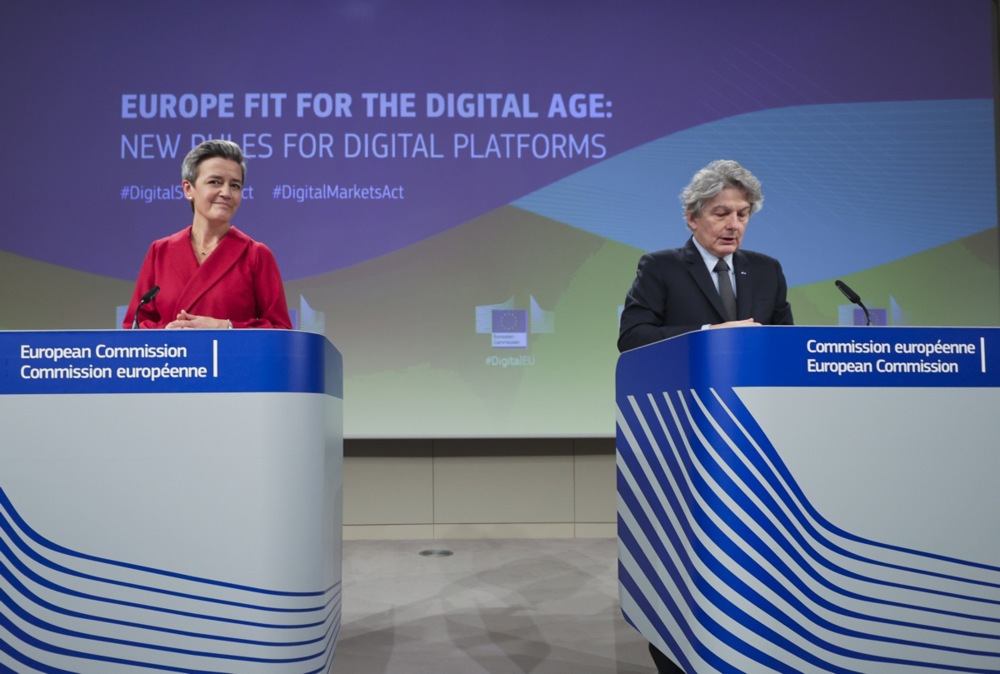
The European Commission announced on March 18 that it will activate the “rapid response” mechanism under the Digital Services Act (DSA) for the upcoming Hungarian elections.
Critics warn that the system, which gives European Union-linked NGOs direct access to platform moderation channels, hands these organisations the power to decide which content remains visible online, raising serious questions about who controls the flow of information during the election period
The EC’s move is designed to make online platforms act quickly against what Brussels labels “disinformation risks”. But some of the organisations that can flag alleged “disinformation” online are embedded in EU-linked funding structures.

The Rapid Response System is initiated by the European Commission in cooperation with the signatories to the Code of Conduct on Disinformation. Among the signatories, many have received funds from the EU.
For example, Democracy Reporting International received funding in 2024 that was dependent on public money, including large contributions from the German Government and the EU. Alliance4Europe and Debunk EU received hundreds of thousands of euros under the Horizon Europe programme. GLOBSEC contracted funding from the EU under the EU for “democracy resilience” projects. In 2023 and 2024, Reporter Without Borders received many institutional grants.
These organisations operate within structures supported or co-ordinated by the EC itself, including the European Digital Media Observatory (EDMO) and similar regional observatories.
For critics of the DSA, there is a structural overlap with organisations funded directly or indirectly by EU institutions also involved in systems that influence online political debate, especially during election periods.
They see that these NGOs operate less as independent observers and more as extensions of the same political ecosystem.
Under the rapid response mechanism, NGOs are given direct access to platform moderation channels. This allows them to flag what they see as “questionable content” quickly.
Critics argue this effectively gives these organisations the power to act as gatekeepers of online speech, deciding which posts stay visible and which are suppressed.
Supporters of the DSA often point to a network of NGOs that are presented as independent watchdogs.
In February, Facebook-owner Meta removed pro-Hungarian government war-related posts from outlets kisalfold.hu, bama.hu, and szon.hu, citing violations of its own community principles.
The Hungarian National Media Association reacted “with shock and outrage”, condemning the removal of these pages from Facebook.
It suggested that Facebook may be targeting right-wing outlets, arguing: “Meta is effectively shaping what Hungarian citizens can see in the lead-up to the elections, giving the platform an unprecedented role in influencing political discourse.”
Critics of the DSA clampdown on disinformation ahead of the national election argue this is less about enforcing “community principles” and more about controlling the narrative around sensitive topics during the campaign.
This so-called rapid response system allows Brussels to demand that major online platforms act immediately against what the EC labels as “disinformation risks”.