

In a dramatic policy shift that marks the final nail in the coffin of Belgium’s long-standing nuclear phase-out, the federal government has announced plans to acquire all of French energy giant Engie’s nuclear assets in the country.
The move, announced today by Prime Minister Bart De Wever, aims to guarantee secure, affordable and low-carbon baseload power for decades to come.
Engie and the Belgian Government signed a letter of intent setting out the framework for the negotiations. Next to a radical change, it is also a significant breakthrough as negotiations between both parties had been difficult for years.
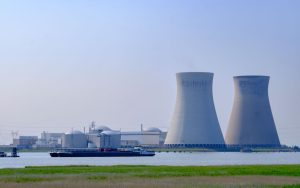
The proposed deal covers every nuclear activity currently owned and operated by Engie and its Belgian subsidiary Electrabel.
This includes the two reactors still running under a 50/50 joint venture (Doel 4 and Tihange 3, extended until 2035) as well as the five units that were progressively shut down or placed in decommissioning mode.
With the decision, all decommissioning activities have been halted effective immediately.
Alongside the the complete nuclear fleet of seven reactors, the associated personnel, Belgium will take over all nuclear subsidiaries, as well as all associated assets and liabilities including decommissioning and dismantling obligations.
The country stated it has the ambition to run the existing power plants and also expand the. fleet with new nuclear capacity.
“By doing so, the Belgian Government is taking responsibility for Belgium’s long-term energy future, with the objective of building a financially and economically viable activity that supports security of supply, climate objectives, industrial resilience and socio-economic prosperity,” energy minister Mathieu Bihet said in a press release.
No financial details were released, but the government described the acquisition as essential to “suspend plans to decommission nuclear operations” and regain full control over the country’s strategic energy infrastructure.
Engie and the Belgian Government aim to finalise the main parts of the transition by October 1, with no outsized effects on the global financial situation of Engie.
The government’s case is rooted in hard economics and geopolitics: Nuclear power currently supplies around 40 per cent of Belgium’s electricity at stable, low marginal cost.
Extending and eventually replacing that capacity is seen as the only realistic way to deliver the “secure, affordable and long-lasting source of energy” the country needs while reducing dependence on fossil fuels.
Large industrial users grouped under Febeliec have repeatedly urged the authorities to investigate longer operations, even without Engie’s co-operation, warning that security of supply is “too important to leave to one private party”.
The Federal Planning Bureau has consistently ranked nuclear as the cheapest and safest option for baseload power. The nuclear regulator FANC has also called for urgent clarity on post-2035 operations.
De Wever has framed the takeover as a matter of national control.
He has held talks with French President Emmanuel Macron and is exploring co-operation with the Netherlands as nuclear momentum builds across Europe.
The head of the International Energy Agency has called Germany’s decision to abandon its nuclear power plants a “historic mistake”. https://t.co/C8ouoHXg2H
— Brussels Signal (@brusselssignal) February 5, 2026
While the government is obviously supporting the move, the opposition parties are split.
Vlaams Belang, the leading opposition party, said it “finally gives a perspective” on the nuclear future and was happy that the government shared its views on nuclear energy, although noted that there is no clarity on the price tag of the operation.
The Greens reacted negatively. “Buying up dilapidated nuclear reactors is an irresponsible waste of billions,” party President Aimen Horch said.
He also pointed to the unknown price tag, stressing that there was not enough money for pensions but suddenly the government now could take over old plants.
Belgium’s nuclear story has been one of repeated political U-turns.
A 2003 law, pushed through by the first Green participation in federal government, mandated the complete shutdown of all seven reactors by the end of 2025.
Successive governments stuck to the script until the 2022 energy crisis triggered by Russia’s invasion of Ukraine exposed the fragility of relying on imported gas and intermittent renewables.
The previous administration of then-prime minister Alexander De Croo secured a last-minute 10-year extension for Doel 4 and Tihange 3.
That deal, finalised in March 2025, created a 50/50 joint venture with Engie, transferred all nuclear waste liabilities to the Belgian state (in exchange for a €15 billion lump-sum payment from Engie), and introduced a contract-for-difference mechanism to share financial risks.
The two reactors restarted successfully in late 2025 after major upgrades costing €1.6 billion to €2 billion.
But the new centre-right coalition that took office on January 31, 2025 under De Wever went much further.
Its programme explicitly calls for maintaining at least 4GW of nuclear capacity long-term, exploring further life extensions (potentially to 2045), restarting closed reactors where feasible and developing new capacity, including small modular reactors (SMRs). Parliament formally repealed the 2003 phase-out law in May 2025.
De Wever has been blunt about the failures of the old policy. In March he told parliament that earlier governments had left Belgium with “skeletons in every closet” and saddled the country with bills it would pay “for an entire century”.
He described the original phase-out as “the stupidity of the century” and a “naïve dream” that left the nation vulnerable to blackouts, sky-high energy prices and de-industrialisation.
For its part, Engie has made clear for years that nuclear power no longer fits its corporate strategy.
The French group, which operates the Belgian plants through Electrabel, has pivoted hard towards renewables, battery storage, energy networks and regulated infrastructure offering predictable returns.
In February, Engie’s CFO Pierre-François Riolacci stated the company had “little interest in maintaining nuclear assets” and was focused on its broader transition.
It has since made major acquisitions such as the £14 billion purchase of UK Power Networks, which leans heavily on renewables.
Further investment in ageing Belgian reactors, with their political uncertainty and open-ended decommissioning costs, does not align with that vision.
Opting for nuclear energy is the safest and cheapest option, according to Belgium’s Federal Planning Bureau (FPB), which has compared various energy scenarios to achieve climate neutrality by 2050. https://t.co/HTup8trzxS
— Brussels Signal (@brusselssignal) September 22, 2025