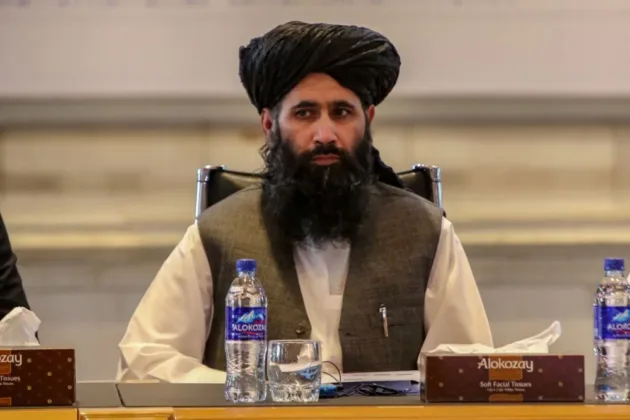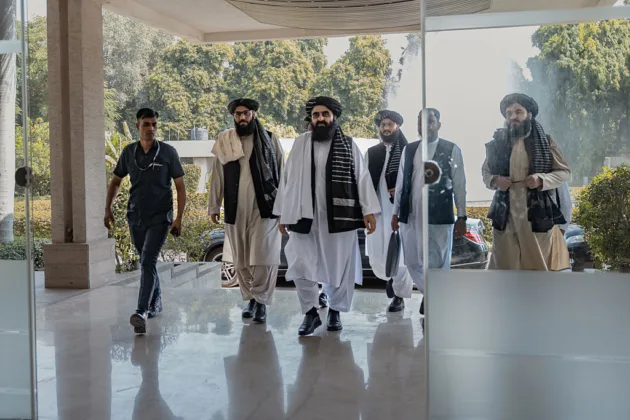





The European Commission is moving toward opening a direct channel of communication with the Taliban.
The move comes as Brussels seeks new ways to facilitate the return of Afghan nationals residing irregularly within the European Union.
According to multiple reports, EU officials are preparing to host a Taliban delegation in the coming months for talks centred on re-admission arrangements.
In particular, Euractiv reports that the meeting could take place before the summer and would bring together EU officials and representatives from member states, in an effort to overcome the current stalemate on deportations.
Since the Taliban regained control of Afghanistan in 2021, the EU has been left without functioning agreements with Kabul, severely limiting its ability to return Afghan nationals — even in cases where asylum applications have been rejected or individuals have been convicted of crimes.
Relations between Brussels and Kabul were effectively frozen following the Taliban’s return to power after the collapse of the western-backed Afghan government during the Fall of Kabul, which marked a total victory for the Taliban.
The EU, alongside most of the international community, refused to recognise the new regime, citing concerns over human rights, governance and the exclusion of women and minorities from public life.
As a result, formal diplomatic ties were cut, development co-operation was largely suspended , and structured co-operation on migration and returns came to a halt.
The Commission’s current view, though, does not come in a vacuum.
Several member states had already begun exploring limited forms of engagement with the Taliban — particularly from 2022 onwards, with a noticeable intensification in 2023 and 2024.
That was driven not by recognition of the regime but by the practical need to manage migration and enforce return decisions.
Countries such as Germany have, since 2023, debated and in some cases pursued technical contacts aimed at facilitating the return of individuals subject to deportation orders, particularly those considered security risks.
Austria has been among the most outspoken since 2022, repeatedly calling for the resumption of deportations and signalling willingness to engage directly with Taliban authorities on operational matters.
Meanwhile, the Netherlands and Denmark have, particularly between 2023 and 2024, explored indirect or intermediary-based contacts focused on documentation, identification , and logistical procedures required for returns.
These approaches have remained strictly technical and non-political, avoiding any implication of formal recognition of the Taliban government.
The broader context for this shift is the growing difficulty European states face in enforcing migration decisions.
The issue is mainly linked to the structural inability to implement deportation orders in the absence of co-operation from Kabul.
Since 2021, the lack of diplomatic and administrative channels has made returns to Afghanistan , in practice, almost unworkable, creating a backlog of unenforced decisions.
Other outlets, including France 24, have confirmed that Brussels is now increasingly leaning toward a pragmatic approach.
The planned discussions are expected to remain technical, focusing on documentation processes, identification procedures and logistical co-ordination for returns.
The shift reflects growing pressure from several EU member states demanding more effective tools to enforce migration rules and ensure that rejected asylum decisions can be implemented.