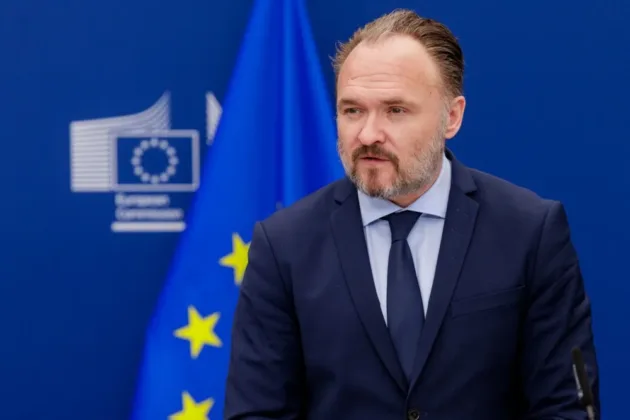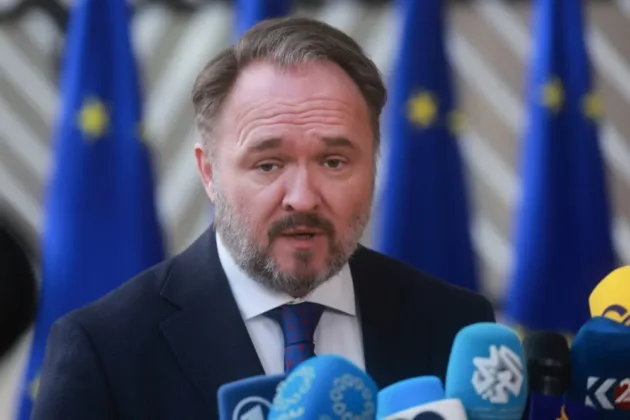







European Commissioner for Energy and Housing Dan Jørgensen has warned that Europeans should brace themselves for a “pretty tough” summer, with the global energy market under extreme pressure as a result of the ongoing war in Iran.
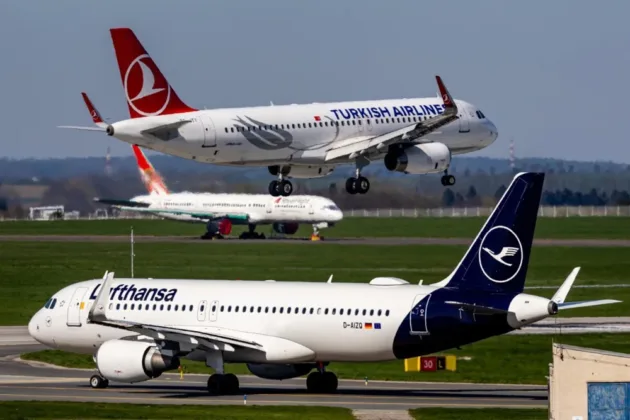
In an interview with Spanish daily La Vanguardia, Jørgensen cautioned that air travel would become more expensive and that, in some cases, the bloc could even see flight cancellations as carriers struggle with soaring fuel costs.
“Flying will be more expensive and, in some cases, we could even see cancellations,” the Commissioner told the Barcelona-based newspaper. “This must be a major wake-up call. It must show us that the transition to renewable energy sources is absolutely necessary.”
The Danish Commissioner argued that prices were likely to remain elevated for a considerable period, irrespective of any near-term ceasefire.
“Even if peace is declared tomorrow, weeks, months and even years of difficulty await as regards energy prices,” he said, pointing to the extensive damage inflicted on natural gas infrastructure across the Middle East.
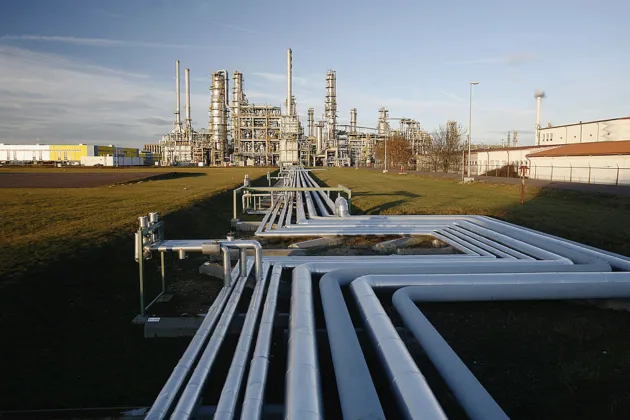
Jørgensen singled out Qatar in particular, noting that the Gulf state’s facilities had suffered such a setback that they would take years to recover. The de facto closure of the Strait of Hormuz has stranded much of the Qatari and Emirati supply of liquefied natural gas (LNG), while Iranian missile strikes have severely damaged Qatar’s export capacity.
State-owned QatarEnergy declared force majeure on its contracts last month and is still quantifying its losses.
The shipping bottleneck in the Strait of Hormuz has left Asian buyers outbidding European purchasers for spot LNG cargoes, complicating the European Commission’s task of refilling gas storage sites over the summer in preparation for next winter.
Asked whether the same bleak outlook applied to crude oil, Jørgensen suggested the picture was somewhat different, indicating that production could rebound more quickly. He said the recovery in the oil market could be a matter of weeks rather than years.
According to the Commissioner, the European Union has paid more than €20 billion in additional energy costs since the war in Iran began. “While we import more than €370 billion annually in fossil fuels, we will be too vulnerable,” he said.
The figure represents a sharp escalation from earlier estimates. In mid-March, Jørgensen told an informal meeting of EU energy ministers that 30 days of conflict had already added €14 billion to the bloc’s fossil fuel import bill.
Natural gas prices in the EU have jumped by approximately 70 per cent since the conflict erupted, while oil prices have risen around 60 per cent, according to figures presented by the EC. Brent crude briefly touched $100 (€92) per barrel in the early stages of the war, the largest single jump since 2022.
The aviation sector has already begun to feel the effects. Air Canada on April 15 announced it would suspend all summer services from Toronto and Montreal to New York’s John F Kennedy International airport between June 1 and October 25. A company spokesman said jet fuel prices had doubled since the start of the conflict.
The warning comes as the EC faces mounting pressure from member states to deliver short-term relief. EU leaders are due to meet in Brussels next week and are expected to demand specific, concrete proposals from the executive, after Jørgensen flagged a series of measures designed to help households and businesses weather the price shock.
The Commissioner has previously called on member states to cut taxes on electricity as the fastest way to bring down household bills, arguing that such a step could be taken “tomorrow” without further legislation. He has also suggested that a co-ordinated release of strategic oil reserves could help to ease global concerns and keep prices in check.
Jørgensen has made clear, though, that easing sanctions on Russian energy is not on the table, despite the US considering such a move and Hungary urging Brussels to do the same in a controversial letter sent earlier in April.
The Commissioner has insisted that the EU does not want Russian energy and that this position will not change.
The Danish politician, who has held the energy and housing portfolio since December 2024, has consistently framed the crisis as a vindication of the bloc’s broader energy transition strategy.
Reliance on Russian gas has fallen from 45 per cent before the invasion of Ukraine to about 10 per cent now. Brussels aims to reach zero once supplies from other producers, including the US, Azerbaijan, Algeria and Canada, are fully scaled up.
For consumers across the bloc, though, the immediate prospect is one of higher bills, dearer flights and a summer that, according to the EU’s own energy chief, is set to be “pretty tough”.