European prosecutors today demanded that Greece lift the parliamentary immunity of 11 lawmakers suspected of involvement in a scam that syphoned off millions of euros in EU farm subsidies for years.
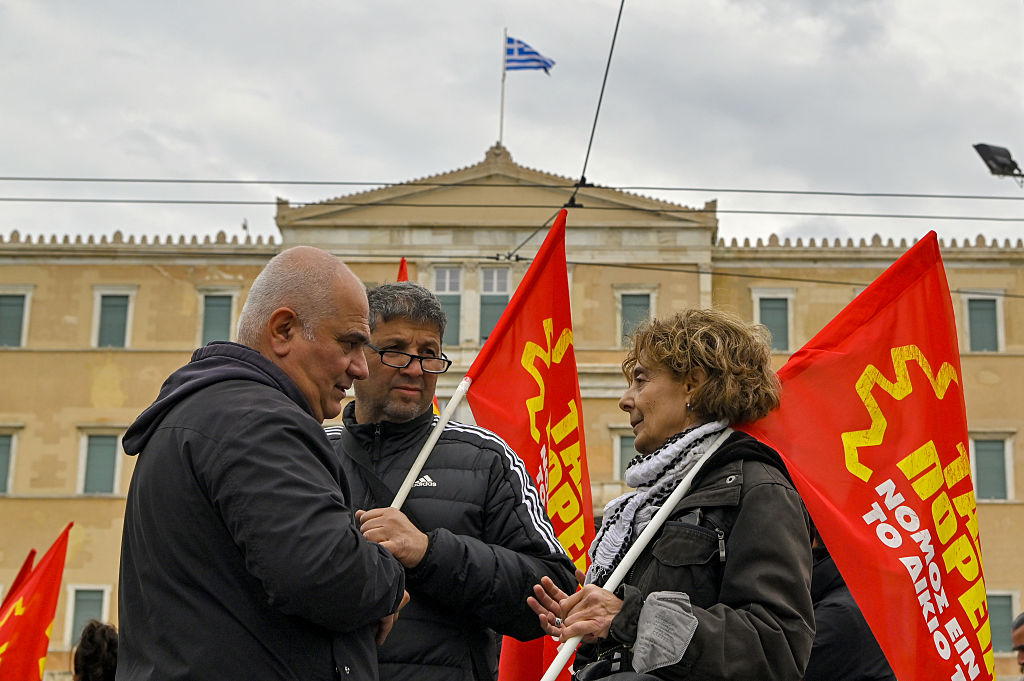
The scandal has rocked Greece since the European Public Prosecutor’s Office (EPPO) revealed the fraud in May, with farmers launching widespread protests after the scandal led to delays in the payment of agricultural aid.
The case has piled major pressure on Greece’s conservative Prime Minister Kyriakos Mitsotakis, especially given his family’s decades-long political influence in Crete, where most of the allegedly fraudulent subsidies went.

“The European Chief Prosecutor requested to the Hellenic Parliament the lifting of immunity of 11 active Members of Parliament in an investigation into an alleged organised fraud scheme involving agricultural funds,” the EPPO said in a statement.
Police in Greece made dozens of arrests in connection with the scandal last year.
According to the Greek authorities, the network defrauded at least 23 million euros ($27 million) since it began operating around 2018.
The suspects are accused of making subsidy claims for land that they did not own and exaggerating the number of animals on farms. Some people receiving payments had no link to agriculture.
The scheme started after the EU’s Common Agricultural Policy began calculating subsidies based on land instead of livestock in 2014. With a woefully incomplete land registry at the time, ownership across much of Greece was unclear.
Farmers were therefore allowed to declare land owned elsewhere in the country to claim a share of the subsidies.
Cases under investigation include pastures declared on archaeological sites, olive trees in a military airport and banana plantations on Mount Olympus.
The scandal has led to the resignation of a minister in Mitsotakis’s and the closure of the OPEKEPE agency that handled the EU subsidies.
“To conceal the illicit origin of the proceeds, the suspects are believed to have issued fictitious invoices, routed the funds through multiple bank accounts, and mixed them with legitimate income,” the EPPO said in October, during an earlier phase in the investigation.
According to OPEKEPE, approximately 80 percent of total subsidies granted from 2017 to 2020 for pastures ended up in Crete.
Mitsotakis, who insists the fraud began before he came to power in 2019, has vowed to imprison the “thieves” responsible and to reclaim the funds.
“Whatever the political cost, I am not backing down,” the prime minister said last year.