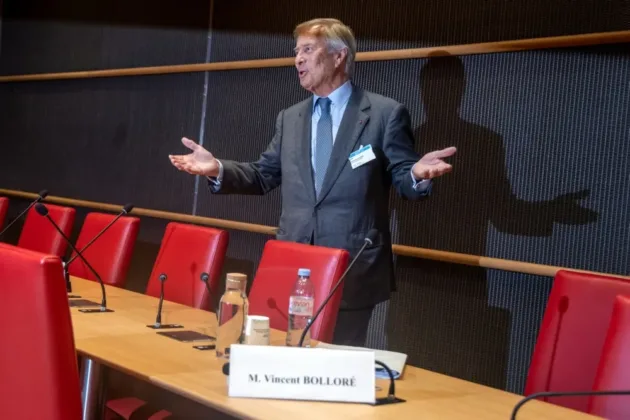





Vincent Bolloré, the French conservative and Christian media magnate, is once again expanding his influence, this time with the launch of a Christian-inspired think-tank that could deepen his role in the political and cultural battles ahead of France’s 2027 presidential election.
The initiative adds a new institutional layer to Bolloré’s already formidable media ecosystem, which spans Europe 1, CNews, publishing giant Hachette, Le Journal du Dimanche and a major position in the post-spin-off Canal+ sphere. In recent years, critics and supporters alike have viewed that network as a vehicle for pushing conservative, identitarian and Christian-inflected themes further into the French mainstream.
Registered in 2025, the Institut de l’Espérance, or Institute of Hope, aims to serve as a platform for Christian-inspired reflection. According to publicly reported registry details, its mission is to bring together like-minded individuals to promote “common-sense solutions” to contemporary challenges, grounded in the common good and driven by what it describes as competent, courageous and determined voices.
Speaking before a French parliamentary inquiry in early April 2026, Bolloré had already signalled the move, stating: “With friends, I’ve created an institute called the Institut de l’Espérance.” The French media tycoon framed the move in personal terms, adding that his focus has increasingly shifted toward “philanthropy and spirituality”, something that naturally becomes “more important with age”.
In a 36-page manifesto reported by Bloomberg, the institute outlines proposals to curb immigration, reserve social housing for French citizens, reduce public spending, introduce business incentives for young people, boost fertility and ultimately raise living standards. That agenda places the new body squarely inside the ideological space now contested by the French Right, where questions of immigration, demography, sovereignty and welfare access are likely to dominate the run-up to 2027.
The idea of prioritising French citizens in access to social welfare, often referred to as “national preference”, was put forward by National Rally during the last general election campaign, notably under the leadership of Jordan Bardella. What makes Bolloré’s intervention significant is that he is not entering politics as a candidate but as a power broker: a businessman with the means to align media, publishing and now think-tank activism around a broader conservative agenda.
The move also comes at a moment when Bolloré’s growing weight in French publishing and broadcasting is under especially intense scrutiny. In April 2026, more than 100 authors resigned from Grasset, part of the Hachette group, amid a widening backlash over what opponents see as ideological encroachment into French cultural life.
Taken together, the launch of the Institut de l’Espérance suggests Bolloré is not merely consolidating a media empire. He is building an intellectual and political infrastructure designed to shape the French Right’s arguments well before voters go to the polls.