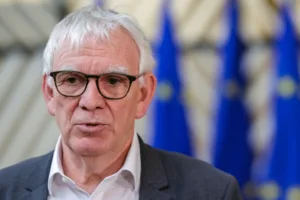


Alain Juillet, a veteran French intelligence figure who served as director of intelligence at France’s external intelligence service (DGSE) , has publicly stated that teams in power in Brussels do not hesitate to influence the course of elections in European Union member countries.
In an April 12 appearance on French news channel CNews‘ programme L’Heure Inter, Juillet, who also later held senior roles in economic intelligence, criticised what he described as direct interventionism by the European Commission and associated European Union structures, particularly in the context of recent elections in Hungary.
“The teams in power in Brussels, the people in power in Brussels, do not hesitate,” he said.
Juillet said that the entirety of Europe intervened in the elections of Hungary. He also pointed towards interventions in Moldova, calling it “scandalous”.
“Europe did everything so their candidate would win.
“There is currently no hesitation in influencing the course of elections in member countries of Europe, which is extremely serious because it means that we no longer respect democracy, we no longer respect the rules,” he said.
He added that while interference by external powers such as the US, Russians or Chinese can be understood as classic statecraft, it is “unacceptable” and “very bad” when it comes from within the same bloc, between member states or EU institutions.
Juillet’s comments reference several alleged interventions into parliamentary elections and broader accusations of EU pressure on governments and politicians perceived as illiberal (notably Hungarian Viktor Orbán’s Fidesz administration).
Juillet had a long career in French intelligence and strategic affairs, including leadership roles at the DGSE and contributions to economic intelligence policy.
He frequently appears on French media to discuss international relations, often from a sovereigntist perspective.
In the Hungarian elections, Brussels was accused of withholding billions in EU cohesion funds over political disagreements dressed up as rule-of-law concerns and using the Digital Services Act (DSA) to pressure platforms (eg, Meta, TikTok) for content moderation that allegedly targeted pro-Orbán or anti-EU narratives ahead of the vote.
In Romania, the Constitutional Court annulled the first round of the November 2024 presidential election after intelligence reports cited major foreign (mainly alleged Russian) interference via TikTok bots, disinformation and algorithmic boosting that propelled fringe candidate Călin Georgescu, although no conclusive evidence was ever presented.
A February 2026 US House Judiciary Committee report countered that the EC had interfered by pressuring social media platforms under the Digital Services Act (DSA) to censor or remove content during the election period and supporting the annulment process.
Moldova’s pro-EU Party of Action and Solidarity (PAS), led by President Maia Sandu, secured a majority in a vote overshadowed by similar Russian interference allegations (again, vote-buying, cyberattacks, disinformation).
At the same time, the EU gave €1.2 billion in aid while also delivering cybersecurity assistance and providing a heavy NGO presence.
Moldova’s postal voting for the diaspora was restricted to citizens in 10 specific countries, excluding Russia.
While there were a record 301 polling stations opened in more than 40 countries, there were only two polling stations in Moscow, despite over 200,000 Moldovan citizens living in Russia.
In contrast, hundreds of stations were opened across western Europe (eg, 75 in Italy, 36 in Germany, 26 in France) and the US (22), where the diaspora tends to be more pro-EU.
Hungary has been rocked by allegations of interference by foreign intelligence in the run-up to its parliamentary elections on April 12.https://t.co/ODkEusiTRm
— Brussels Signal (@brusselssignal) March 25, 2026