




German police have registered a record number of unlawful insults against politicians in 2025.
According to official statistics, in 2025 there were 4,792 investigations against people who had denigrated politicians in breach of the German Criminal Code.
This is an increase of 8 per cent compared to 2024 (4,439 cases) and almost 85 per cent compared to 2023.
The data was first published by newspaper Welt yesterday, which obtained it from the police.
Germany has strict rules which give politicians special legal protection of their supposed honour.
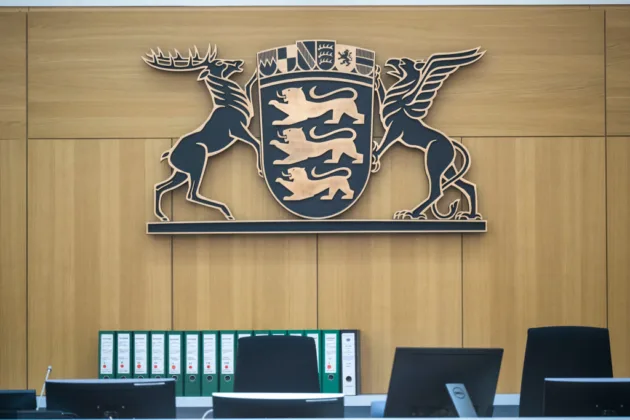
According to Art. 188 of the German Criminal Code (StGB), anybody who insults a politician in a way which “is likely to significantly impede their public activities” can be imprisoned for up to three years or be fined.
The clause expressly includes local politicians.
Opposition parties have tried to abolish the controversial law for years without success.
In January 2026, the German parliament voted down a proposal by the right-wing Alternative for Germany (AfD) party to overturn Article 188 StGB.
AfD MP Stephan Brandner said in response to the latest numbers: “Special criminal laws for politicians are not only unnecessary but also undermine public confidence in the fairness of our legal system.
“When the number of investigations almost doubles within a few years and even satirical or exaggerated remarks are increasingly subject to criminal prosecution, the impression arises that political criticism is coming under ever greater suspicion.”
The law was only introduced in 2020 under then-chancellor Angela Merkel (Christian Democratic Union, CDU). It was significantly tightened in 2021 under the left-wing successor government when public prosecutors were allowed to launch investigations independently, without the affected politician having to bring suit themselves.
Critics have long accused the clause of giving politicians undue special protection and the right to pursue their critics.
In the past years, Germany has seen a spate of controversial cases in which ordinary citizens were persecuted for venting against elite politicians in Facebook posts or on other social media.
Article 188 StGB served as the basis for bringing the full force of state authority against normal people, from raiding offender’s houses to slapping them with fines in the thousands of Euros.
One of the most notorious cases was the so-called “moron affair”: In 2024, Bavarian pensioner Stefan Niehoff, shared a meme on X that insinuated that then German vice chancellor Robert Habeck (Greens) was a moron.
After a state reporting body had registered the post and forwarded it to the police, officers raided Niehoff’s house where he lived with his wife and handicapped daughter in the early morning hours of November 12, 2024 – confiscating his tablet.
Niehoff was later fined €1,350 for his post. He appealed the sentence. In January 2026, he died at the age of 65 years. The appeal has not been decided on yet.
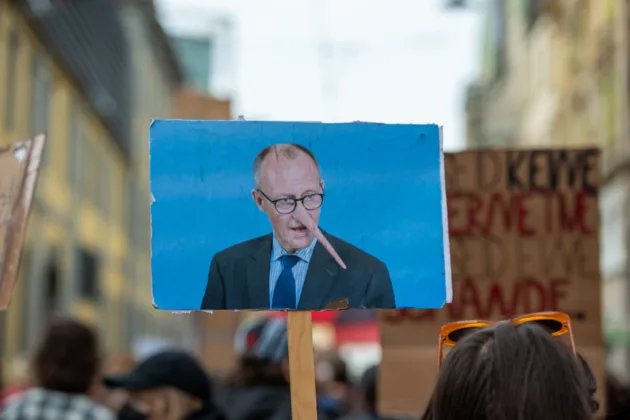
Niehoff’s case is far from the only one. In another notorious affair, in February 2026, police in Heilbronn launched an investigation against a pensioner for supposedly calling current German Chancellor Friedrich Merz (CDU) “Pinocchio” in a Facebook comment.
Opposition parties have tried to abolish the controversial law for years without success.
In January 2026, the German parliament voted down a proposal by the AfD to overturn Aricle 188 StGB.
AfD MP Stephan Brandner said in response to the latest numbers: “Special criminal laws for politicians are not only unnecessary but also undermine public confidence in the fairness of our legal system.
“When the number of investigations almost doubles within a few years and even satirical or exaggerated remarks are increasingly subject to criminal prosecution, the impression arises that political criticism is coming under ever greater suspicion.”