



Poland has announced plans to file a legal challenge at the European Court of Justice (ECJ) against the European Union’s trade agreement with South America.
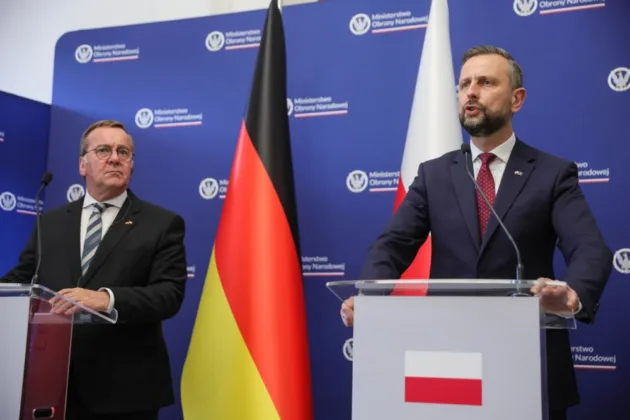
Poland’s legal challenge to the Mercosur agreement was announced by Deputy Prime Minister and defence minister Władysław Kosiniak‑Kamysz, who also leads the centre-right Polish People’s Party (PSL), part of the centre-left coalition led by Prime Minister Donald Tusk.
It has taken the PSL some time to persuade Tusk to allow such a challenge to be made and the PM has in the past said the Mercosur agreement provided opportunities as well as some threats.
The move by Poland is the first challenge against Mercosur coming from a member state, escalating the country’s opposition to the agreement.
Kosiniak-Kamysz told reporters on April 24 that the government’s move was “a response to the clear demands raised by farmers”.
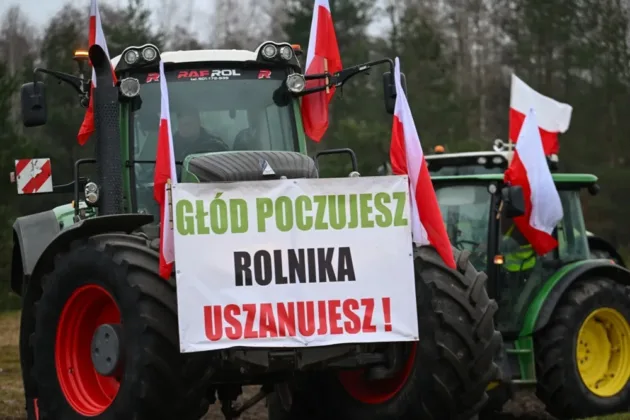
The agreement has sparked resistance across parts of Europe, with farmers demonstrating in several EU countries to protest the deal.
While its proponents argue that it will improve market access for European manufacturers, critics say it causes a risk of a sharp increase in imports of cheaper agricultural products, including beef, sugar and poultry, that may undercut domestic producers.
Kosiniak‑Kamysz said Warsaw saw multiple risks in the agreement, particularly for food security and consumer protection.
“It cannot be the case that we protect the European market, care for consumers, and our farmers meet the highest production standards, constantly building food security and complying with very strict rules, while allowing in goods of unknown origin,” he said, adding that the Polish Government was determined to defend domestic agriculture from unfair competition.
Kosiniak‑Kamysz added that Poland had concerns about the procedure used to advance the deal, arguing that it had been applied in a manner “inconsistent with EU law”.
The opposition claimed that the government is reacting far too late and that its actions are in fact being forced by the President and farmers.
Conservatives (PiS) leader Jarosław Kaczyński said that the challenge would be only partial and merely symbolic.
“This is essentially the same game – to pretend, pretend, and pretend again,” said Kaczyński on April 25, alluding to the fact that the Tusk administration was reluctant to challenge the EC’s actions.
On April 7, the PiS-aligned President of Poland, Karol Nawrocki, sent a letter to Tusk demanding the immediate filing of a complaint at the ECJ against the EU’s agreement with Mercosur countries to the ECJ.
“The government promised this. To this day, it has not fulfilled that promise. The countryside cannot wait any longer. I am attaching a ready draft of such a complaint to the letter,” he said.
The agreement with the Mercosur states of Argentina, Brazil, Paraguay and Uruguay, aims to create a free-trade area through reducing tariffs and other barriers to trade between the EU and South America. It includes a broader political partnership alongside a separate trade pillar focused on market access.
The deal was signed by EU and Mercosur nations in January after winning the backing of a majority of EU governments, despite opposition from Poland, France, Ireland, Hungary and Austria.
While the political elements still require ratification by the European Parliament and all EU member states, the trade provisions are due to apply provisionally from May 1.
Alongside the trade provisions coming into force next month, a so‑called safeguard clause is also due to kick in from May 1, allowing the EU to reimpose tariffs or restrict imports if a surge in Mercosur products causes prices in the EU to fall by more than 5 per cent a mechanism intended to ease farmers’ concerns.