




Several NGOs have filed a complaint with the European Commission against Austria’s 2025 decision to halt family reunification for asylum seekers.
The complaint was officially submitted yesterday as reported by state broadcaster ORF. The circle of initiators includes international and Austrian NGOs, including the US-based International Refugee Assistance Project (IRAP), Asylkoordination Österreich (Austria), the Austrian Protestant Church and Polish NGO Stowarzyszenie Interwencji Prawnej (Association for Legal Intervention).
The NGOs demand that the EC start infringement proceedings against Austria as the stop for family reunification would go against European. Union law.
Lukas Gahleitner-Gertz, a spokesman for Asylkoordination Österreich, demanded “a clear sign from Brussels in favour of the protection of legally guaranteed rights to family reunification”.
A spokesman for the Protestant Church said the halt to family reunification had caused “enormous strain for persons entitled to protection”.
The Austrian interior ministry told media thatit was not concerned by the NGOs’ complaint as the halt was in line with the EU’s Migration and Asylum Pact and was part of “a hard and fair asylum policy”.
Nico Marchetti, general secretary of the ruling Austrian People’s Party (ÖVP) – which is trying to position itself as tough on migration – said today: “The fact that a local NGO is joining forces with two foreign NGOs to jeopardise social cohesion in Austria speaks volumes.
“Unchecked immigration is not an act of humanity – it is sheer irresponsibility, which the public quite rightly rejects.”
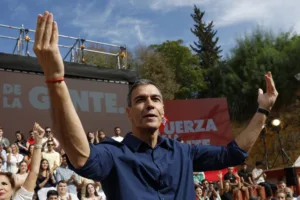
Meanwhile, the ÖVP’s own coalition partner, the Social Democratic Party (SPÖ), is actively trying to reinstate family reunification. At the party convention of the Vienna SPÖ on April 25, representatives urged party leaders to once more allow asylum seekers to directly bring their relatives tto Austria from their home countries.
In March 2025, Austria’s Government had decided to halt family reunification for asylum seekers until mid-2026.
Afterwards, the government plans to introduce a quota system aimed at restricting immigration.
It is estimated that between 2015 and 2025 more than 100,000 immigrants came to Austria through family reunification – primarily from Syria, Afghanistan, Turkey and Somalia.
That has left its mark on the country. According to the Austrian Integration Fund, 52 per cent of pupils in Vienna do not speak German as their first language, with the number reaching almost 75 per cent in some districts.
In a survey in November 2024 by a Vienna teachers’ union, one-in-two teachers reported that more than half their students could not understand or speak German sufficiently.