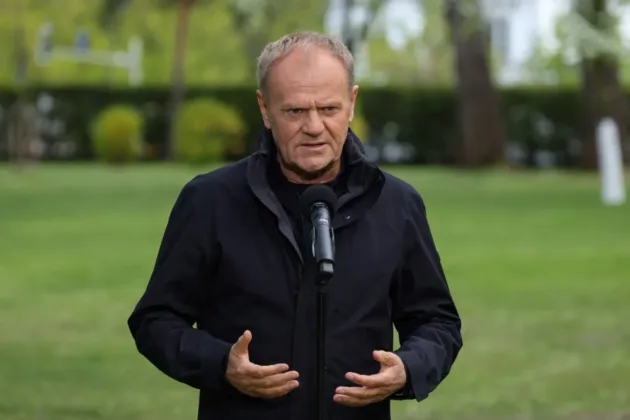



Poland’s Prime Minister, Donald Tusk, has cast doubt on whether the US would be “loyal” to its NATO commitments in the event of a Russian attack on NATO’s eastern flank and therefore urged the European Union to become a military alliance.
Tusk was reported in the Financial Times today as saying that Europe’s “most important question is if the United States is ready to be as loyal as it is described in NATO treaties”, as he warned that Russia could attack an alliance member in “months” rather than years.
The Polish PM, who leads a centre-left coalition government, was referring to Article 5 of the NATO treaty that commits countries to show solidarity in case another member has been invaded.
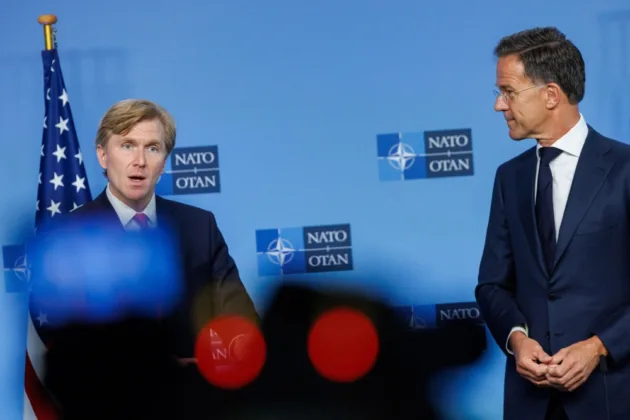
Recently, US President Donald Trump cast doubt on whether the US would remain in NATO, citing the lack of support of NATO member states in the US’ present war in the Middle East. He has in the past demanded NATO member states increase their military spending as he accused them of “freeloading” off the US.
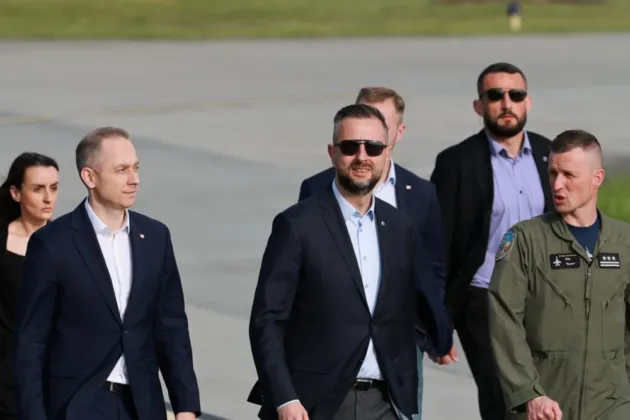
Hhe and his US administration, though, have held Poland to be a model ally because of Poland’s near 5 per cent of GDP spending on defence. According to a report in the Wall Street Journal earlier in April, the US is considering increasing its current 10,000 troops commitment to Poland, including the possibility of a significant transfer of US forces from Germany.
Tusk acknowledged the fact that Washington has treated Poland as a close ally but nevertheless cast doubt on the future despite the fact that neither Russia or the then-USSR have ever militarily attacked a country in which US troops were stationed.
“Washington treats Poland as the best and the closest ally in Europe. But for me, the real problem is what if in practice something happens,” Tusk said.
The Polish head of government said he was concerned at the way NATO member states responded to last year’s incursion of over 20 Russian drones into Polish airspace
He recalled that some members of the alliance “pretended that nothing happened” adding: “It wasn’t easy for me to convince our partners in NATO that it wasn’t a random incident, it was a well-planned and prepared provocation against Poland.”
There had been a NATO response, though, with Dutch planes participating in the shooting down of what turned out to be decoy drones, which the Polish military had received warning of from Belarus.
Tusk argued that Poland needed certainty with regard to what would happen in case of Russian military attack.
“This is why I want to be, you know, certain that if something happened, that Russia knows the reaction will be tough and unequivocal,” he said.
“I’m talking about short-term perspectives, rather months than years,” Tusk added. “For us, it’s really important to know that everyone will treat their NATO obligations as seriously as we do.”
Tusk’s remarks came as an EU summit was taking place in Cyprus. It includes discussions about the bloc’s own mutual defence as the community is encouraging its members to increase their defence spending by making available substantial loans from the Security Action for Europe facility.
Tusk made clear in his interview with the FT that he will press for far more.
“What you need if you want to have, not only on paper, is true tools and real power when it comes to defence instruments and mobility of militaries from country to country. It’s a very practical problem for today,” he said.
The Polish PM did not hide the fact that he wanted the EU to become a much closer union with regards to defence capacity.
“This is why my obsession now and my mission is to reintegrate Europe,” Tusk added. “It means common defence, a common effort to protect our eastern borders.”
The Polish opposition Conservatives (PiS)-allied President Karol Nawrocki, though, differs from the Polish PM on this issue. He is wary of questioning the US commitment to defending Europe and of undermining NATO as the primary alliance defending the continent since the Second World War. He has also expressed doubts about Europe’s current potential and ability to defend itself without the US.
Historians recall that Poland had a mutual defence treaty signed with Britain and France in 1939, just months in advance of the German invasion of the country that started the Second World War.
Although both France and Britain declared war on Germany they did not come to Poland’s aid as the country was first attacked by Germany from the west and then the Soviet Union from the east.