While Warsaw celebrated the freeing of a high-profile Polish journalist from Belarus, Ukraine protested that as part of a prisoner swap brokered by the US, Poland decided to release a Russian scientist arrested in Poland and wanted by Ukraine.
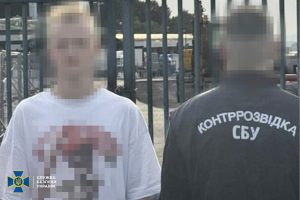
The Russian scientist in question is Alexander Butiagin. He was arrested by the security services in Poland in December last year while on his way to the Balkans.
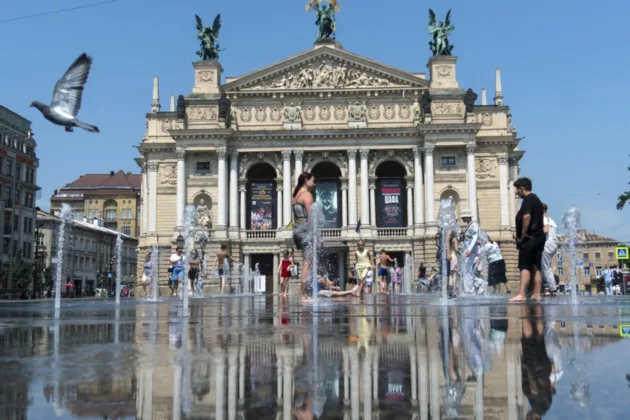
He was wanted for allegedly causing damage to the archeological site of the ancient historic city of Myrmekjon in the Russian-occupied territory of Crimea and a Polish court had decided that he should be extradited to face charges in Ukraine.
The Ukrainian foreign ministry issued a statement saying that Ukraine had “received with disappointment that despite an earlier decision by a Polish court a Russian citizen suspected of committing a crime on Ukrainian territory against our heritage has not been handed over.”
The statement went on to claim: “It is obvious that Russia will cynically use this legal and political incident to justify the occupation of Crimea and the exploitation of that territory by Russian citizens,” adding that Ukraine will continue to seek to hold to account all Russian entities engaged in the occupation and in the war.
Yesterday, Belarus and Poland agreed a prisoner swap that took place on the border in which five individuals connected to Poland and Moldova and who were imprisoned in Belarus were released and handed over to the Polish authorities in return for five prisoners the Belarusians and their Russian allies wanted to be released from custody in Poland.
Poland’s foreign minister Radosław Sikorski and US special envoy John Coale appeared side by side at a press conference following the prisoner swap. Sikorski said during the conference that the release “would not have happened without the United States”.
“Today, my team and I helped secure the release of three Poles and two Moldovans”, said Coale, adding: “The President of Poland Karol Nawrocki along with [US] President Donald Trump were very much involved to get this done.”
The US has been leading efforts to secure the release of prisoners from Belarus. In March, 250 were freed in exchange for the easing of US sanctions on Minsk. Similar releases took place last year, including of Nobel Peace Prize laureate Ales Bialiatski in December.
Coale also thanked Belarusian President Alexander Lukashenko for agreeing to the deal.
“People have to remember it takes two to release a prisoner – it takes Lukashenko and it takes us. I’m not saying Lukashenka is Churchill, but he is moving in the right direction. And today it shows,” he said.
US Ambassador to Poland Tom Rose wrote on platform X: “America delivers for its friends and allies, adding that our partners in Poland worked side by side with us to secure the release. That is what real partners do.”
Nawrocki emphasised during a press conference that the process of securing the release was long but successful.
“The release process was very long; it was strengthened by my conversation with Donald Trump when I asked that the President of the United States not forget about the Pole who is in a Belarusian prison and that he raise this issue,” the head of state added.
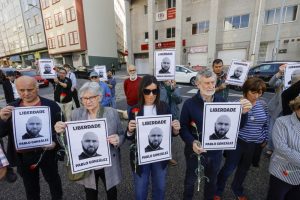
The opposition Conservatives (PiS)-aligned Nawrocki was referring to the most high-profile release of Polish journalist and minority leader Andrzej Poczobut . He spent five years in a Belarusian penal colony for protesting against Lukashenko’s allegedly fraudulent re-election as president in 2020.
Poczobut was detained along with other leading figures in Belarus’s ethnic-Polish community. He was held in pretrial detention for 460 days before being sentenced to eight years in a penal colony for “inciting hatred” and “the rehabilitation of Nazism”.
The allegations against Poczobut were widely regarded as politically motivated and have been condemned by Poland, the European Union and a range of human rights groups. Last year he was awarded the EU’s highest distinction in the field of human rights, with the European Parliament hailing him as “a beacon for all who refuse to be silenced”.
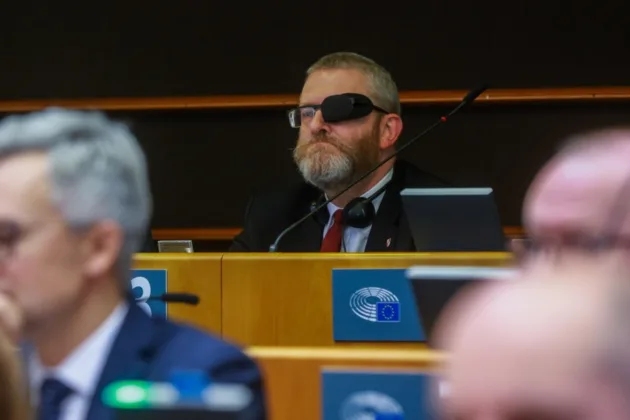
Another man released as part of the prisoner swap was Grzegorz Gaweł, a Polish monk detained last year in Belarus who was facing espionage charges. Official communiques from the Belarusian authorities emphasised that this was a swap of five individuals engaged in espionage in return for the release of individuals Belarus and Russia wanted freeing.
Following news of Poczobut’s release and the prisoner swap, exiled Belarusian opposition leader Sviatlana Tsikhanouskaya thanked the US, Poland and the EU for fighting for his release, but another leader of the exiled opposition, Pavel Latushka, reminded all that 834 political prisoners remain behind bars in Belarus.
Belarus, which is a close ally of Russia, has tense diplomatic relations with Poland, which has criticised Minsk over its support for Russia’s war in Ukraine and its involvement in “hybrid activities” against Poland itself, including allegedly engineering a migration crisis on the border.
Relations have improved of late, though, following the decline in the number of attempted illegal border crossings from Belarus. The fact that Belarus warned Poland about approaching Russian decoy drones in the autumn of last year and now the agreement to free the most high-profile Polish political prisoner in Belarus have also helped.