



The US Department of Justice has refused to provide mutual legal assistance to French authorities investigating Elon Musk’s social media platform X.
It described the French probe as a politically motivated attempt to regulate a US company in violation of the First Amendment.
In a two-page letter dated April 18 from the DOJ’s Office of International Affairs to France’s justice ministry and seen by the Wall Street Journal, US officials rejected multiple French requests for cooperation, including efforts to compel interviews with Musk and X executives.
The letter stated the requests “constitute an effort to entangle the US in a politically charged criminal proceeding aimed at wrongfully regulating through prosecution the business activities of a social media platform”.
It added that the investigation sought to regulate “a public square for the free expression of ideas and opinions in a manner contrary to the First Amendment of the United States Constitution”.
The French investigation, handled by the Paris prosecutor’s cybercrime unit, opened in January 2025. That followed complaints from French lawmakers and officials alleging that X’s content-selection algorithms distorted the treatment of material on the platform and amounted to foreign interference.
It has since broadened to examine suspected complicity in the distribution of child sexual abuse material, the creation and spread of non-consensual sexual deepfakes and the improper extraction of user data.
Prosecutors have also probed allegations of algorithmic bias favouring certain viewpoints and the platform’s handling of content such as Holocaust denial, which is illegal in France.
Key developments include a search of X’s Paris offices in February 2026 and the issuance of summonses for voluntary interviews with Musk, former X chief executive Linda Yaccarino and other employees.
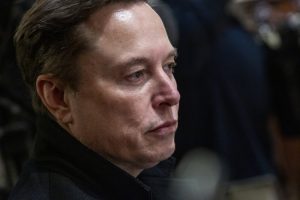
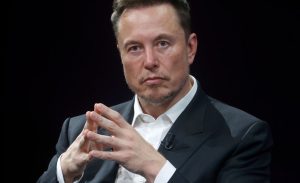
Musk’s appearance was scheduled for tomorrow and today French prosecutors summoned the tech billionaire for a voluntary interview over allegations that the AI feature Grok disseminated millions of sexualised deepfakes on X.
French authorities had previously shared elements of the file with US counterparts and state attorneys-general in California and New York.
Paris prosecutors responded to Reuters on the rift with the US by stating they had no knowledge of the DOJ letter and insisted on the independence of the French judiciary, guaranteed by the French Constitution and the separation of powers.
They emphasised that the investigation would proceed regardless of whether those summoned appeared.
X, which forms part of Musk’s artificial-intelligence venture xAI (now owned by his SpaceX), welcomed the DOJ decision.
An xAI official told reporters the company was “grateful to the Justice Department for rejecting this effort by a prosecutor in Paris to compel our CEO and several employees to sit for interviews”, adding that it hoped French authorities would “recognise that there is no wrongdoing here and terminate their baseless investigation”.
X had earlier described the February office search as “an abusive act of law enforcement theatre”.
Musk shared the Wall Street Journal report on X, commenting simply: “Indeed, this needs to stop.”
Telegram founder Pavel Durov, himself the subject of a separate French investigation since his arrest in August 2024, publicly backed Musk.
In a post on X today, Durov wrote: “Macron’s France is losing legitimacy as it weaponises criminal investigations to suppress free speech and privacy. The US Department of Justice has refused to assist France in its investigation of Elon Musk calling the case politically motivated.”
He drew parallels with his own case, describing being investigated in France as “the new Légion d’honneu”, and stating he was “proud to stand alongside Elon Musk and others targeted by Macron’s campaign against digital rights”.
The US House Judiciary Committee Republicans have ramped up their blistering assault on the European Union’s Digital Services Act, exposing what they call a “secret censorship order”. https://t.co/iplYRhv6EI
— Brussels Signal (@brusselssignal) January 29, 2026