




Belgian health minister Frank Vandenbroucke has branded the tobacco industry a “criminal” sector with “no future”.
His comments came after his own flagship anti-smoking policies were undermined by a constitutional court ruling that forced him to backtrack on a ban of cigarette sales in supermarkets.
The minister’s scathing condemnation came during a talk yesterday on Ter Zake, a current affairs programme on the public broadcaster VRT.
He defended his government’s stricter regulations on flavoured vapes and nicotine products, only to admit that a landmark court decision had derailed his plans to reduce tobacco accessibility.
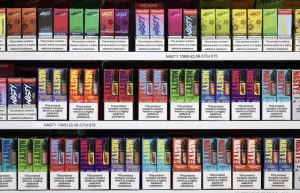
In April 2025, Belgium banned the sale of cigarettes and vapes in supermarkets, restricting tobacco products to specialist shops and newsagents in a bid to curb impulse purchases.
The move was part of a broader strategy to reduce smoking rates, which have fallen from 24 per cent in 2004 to 12.8 per cent today — although vaping among 15 to 24-year-olds has surged to 17 per cent, a figure Vandenbroucke called “a complete policy failure”.
But in April, the Belgian Constitutional Court ruled the supermarket ban discriminatory as it allowed sales in small shops while prohibiting them in larger retailers.
The court ordered the government to either lift the ban entirely or draft non-discriminatory legislation by the end of 2026.
Instead of fighting the ruling, Vandenbroucke’s team capitulated, reinstating supermarket sales while pushing ahead with a ban on flavoured vapes. That decision has infuriated public health advocates and small retailers alike.
“We had made real progress: Fewer sales points, no cigarettes at festivals, no vending machines,” Vandenbroucke told Ter Zake. “But the court said: ‘You can’t treat big and small shops differently.’ So now we’re back to square one.”
He was highly derogatory of the tobacco lobby, calling it a “criminal industry” that “has no place in our future”.
He accused manufacturers of deliberately hooking a new generation on nicotine through flavoured vapes, products he described as “a rapidly advancing epidemic”.
“This is the old tobacco industry repackaged,” he said. “They’re targeting children with strawberry, apple, and raspberry flavours, making them believe vaping is harmless. We have to stop this, not just in Belgium but across Europe.”
His comments echo a growing European Union-wide push to ban flavoured nicotine products, with Belgium positioning itself as a key player in the campaign.
Critics argue that measures such as banning flavours while allowing supermarket sales do little to protect youth when illicit markets thrive.
Small shopkeepers and newsagents, who complied with the original ban, are angry at what they see as unfair competition.
“We followed the rules, hid our cigarettes, stopped selling vapes, only to see supermarkets get a free pass,” one Brussels vendor told Ter Zake.
Worse still, illegal sales are rampant. A 2025 Dutch study found that 72 per cent of young vapers in the Netherlands, where flavoured vapes are banned, buy their products on the black market.
Belgian retailers report similar trends, with unregulated often dangerous vapes from China flooding the streets.
“You walk into a classroom, and every other kid has a disposable vape from some shady website,” said a Brussels teacher.
“They’re cheaper, more accessible, and who knows what’s in them? Meanwhile, we’re punishing the shops that actually follow the rules.”
Vandenbroucke dismissed industry arguments that regulation drives illicit trade.
“That’s the tobacco lobby’s favourite excuse: ‘Make it legal, because you’ll never beat the black market,’” he said. “But in the Netherlands, where flavoured vapes are banned, usage has dropped.
“Yes, there’s illegal sales, but we’re cracking down with inspections and seizures.”
Addiction experts are attacking the European Commission for a report on its tobacco control efforts which says novel nicotine products, such as vaping, are “pulling a new generation into addiction”. https://t.co/BBfD4n4Vdu
— Brussels Signal (@brusselssignal) April 7, 2026