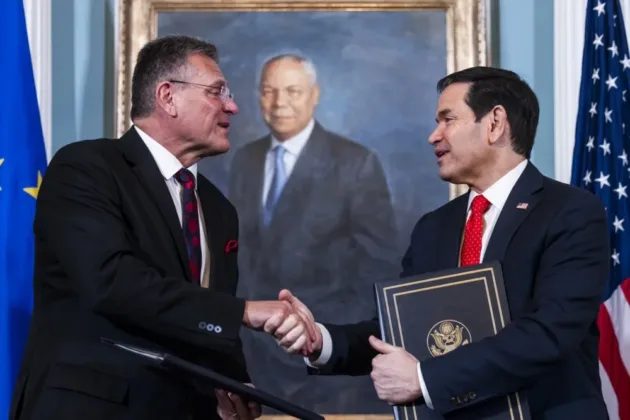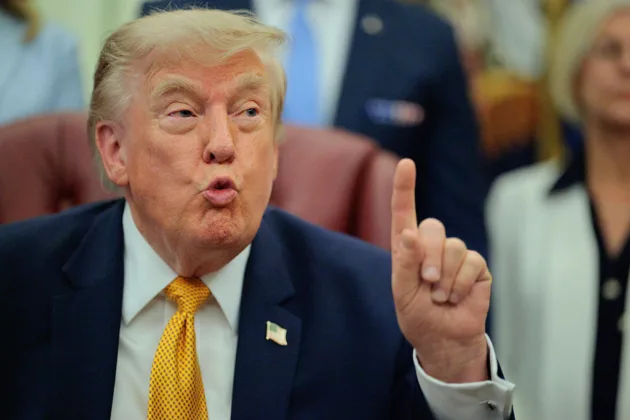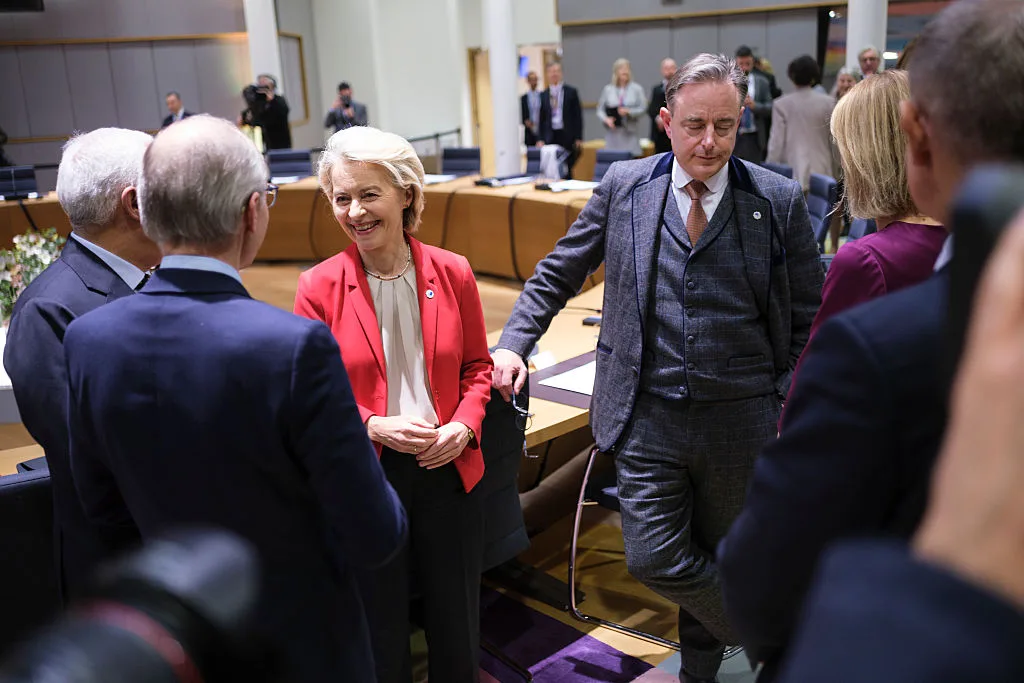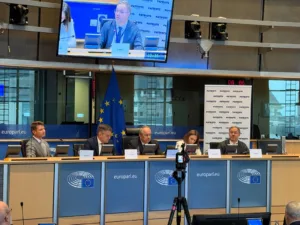
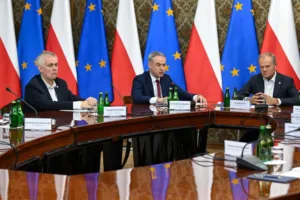




The Council of the European Union and the European Parliament have reached a provisional agreement in Strasbourg on two regulations to implement the trade pact struck between United States President Donald Trump and European Commission President Ursula von der Leyen in Turnberry, Scotland, in July 2025.
The compromise, sealed after more than five hours of talks in a third round of negotiations between co-legislators, must still be formally adopted by the EU’s 27 member states and confirmed by a plenary vote in the Parliament. The clock is now ticking ahead of the July 4 deadline set by Trump, who has threatened fresh duties if Brussels fails to deliver.
In practice, the EU is agreeing not to retaliate against the across-the-board duties Washington applies to most European goods, provided the surcharge does not exceed 15 per cent. That ceiling does not yet cover European steel and aluminium, which continue to face a 50 per cent US tariff.
The first regulation eliminates remaining customs duties on US industrial products and grants preferential market access for certain non-sensitive US agricultural goods and seafood, including a five-year extension, to 2030, of tariff-free imports of US lobster. The second focuses on the lobster suspension itself.
Under the Turnberry deal, the EU also pledged to purchase $750 billion (€645 billion) of US energy and invest $600 billion (€516 billion) in strategic American sectors through 2028, commitments that fall to member states rather than to Brussels.
MEPs say they have wrung significant concessions out of the Commission. The regulations include a sunset clause that automatically ends the rules at the end of 2029 unless the bloc decides to extend them after a full review, alongside quarterly Commission reports and parliamentary oversight mechanisms.
A safeguard clause allows the Commission to suspend the deal in whole or in part if rising imports threaten serious damage to EU producers, if the US breaches its joint-statement commitments or if Washington targets EU economic operators, as occurred when several capitals backed Denmark during the Greenland crisis. Should the 50 per cent US tariff on EU steel and aluminium not fall to 15 per cent by December 31, 2026, the EU is also entitled to suspend its own concessions on US steel and aluminium.
German Social Democrat MEP Bernd Lange, who led the Parliament’s negotiating team and chairs the Committee on International Trade, called the result “a great success”, saying lawmakers had “significantly improved” the original Commission proposal by securing tougher safeguards for the European economy.
European Parliament President Roberta Metsola wrote on social media that “Europe is a reliable partner […] a deal is a deal”, while Von der Leyen said the bloc was delivering on its commitments and urged co-legislators to finalise the process swiftly. European Commissioner for Trade Maroš Šefčovič said the package would “boost transatlantic stability and cooperation”.