







The European Union imported a record volume of Russian liquefied natural gas (LNG) in the first quarter of 2026, even as the bloc continues its efforts to phase out Russian energy supplies following the invasion of Ukraine.
According to the Institute for Energy Economics and Financial Analysis (IEEFA), EU imports of Russian LNG rose 16 per cent year-on-year to approximately 6.9 billion cubic metres in Q1 2026, the highest quarterly total since the start of the war in 2022.
Russia remains the EU’s second-largest LNG supplier after the US.
Deliveries from Russia were driven primarily by France, Spain and Belgium.
French terminals, in particular, received the largest share of Russian cargoes, with CNews reporting that France imported more Russian LNG than any other European country in the opening months of the year.
This aligns with broader tracking data showing sustained flows into ports such as Dunkirk and Montoir-de-Bretagne.
The surge comes despite EU sanctions, a planned phased ban on Russian LNG imports and repeated political commitments to reduce dependence on Moscow.
In 2025, EU countries spent an estimated €6.7 billion on Russian LNG in addition to €5.9 billion on remaining pipeline supplies and EU payments to Russia are estimated at €3.88 billion for the first four months of 2026.
EU imports of Yamal LNG were 17.2 per cent higher in the first 4 months of 2026 than in the same period of 2025, rising from 5.71 million tonnes to 6.69 million tonnes. April mirrored this wider trend, with EU deliveries rising 17.1 per cent compared with April 2025.
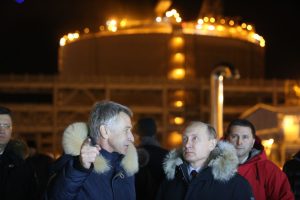
Sebastian Rötters, Sanctions Campaigner with the German NGO Urgewald, said: “Europe has never imported this much LNG from Yamal in the first four months of the year since [Russian President Vladimir] Putin launched the project in 2017.
“For three months in a row, every Yamal cargo that reached its final destination went to Europe. It shows that Europe keeps Russia’s Arctic LNG business alive.
“The EU’s ban on LNG imports via short-term contracts is a step forward but long-term contracts remain the core problem. As long as these exist, Europe will continue sending money to a Russian gas project that doesn’t have a lucrative future without the EU,” Rötters said.
While Russian volumes hit records, Europe is simultaneously on course to source two-thirds of its total LNG imports from the US in 2026.
US LNG is the most expensive for European buyers.
IEEFA forecasts that US LNG will overtake Norway to become the continent’s and the EU’s single largest gas supplier next year, with the US share potentially rising to 80 per cent of EU LNG imports by 2028.
US supplies to Europe more than tripled between 2021 and 2025. Its LNG, though, remains on average the most expensive option for European buyers, leaving the bloc exposed to price volatility and geopolitical risks.
Ana Maria Jaller-Makarewicz, Lead Energy Analyst for IEEFA’s Europe team, said the dual reliance illustrates the limitations of the current strategy.
“Europe’s shift from pipeline gas to LNG was meant to provide security of supply and diversification. Yet disruptions caused by the war in the Middle East and an overreliance on US LNG show that Europe’s plan has failed on both counts,” she.said.
Jaller-Makarewicz added: “LNG has become the Achilles’ heel of Europe’s energy security strategy, leaving the continent exposed to high gas prices and to new forms of supply disruption.”
The figures highlight the EU’s continued vulnerability in global gas markets.
Europe’s overall gas consumption is forecast to fall by 14 per cent and LNG demand by 23 per cent between 2025 and 2030, yet planned import capacity could exceed actual needs by a factor of three by the end of the decade, raising concerns over potential stranded assets.
Jaller-Makarewicz noted the bloc has limited control over external LNG flows but can reduce import dependence via other means.
“Europe may have no control over LNG supply disruptions, but it can boost energy efficiency and accelerate renewables and heat pump installations,” she said.