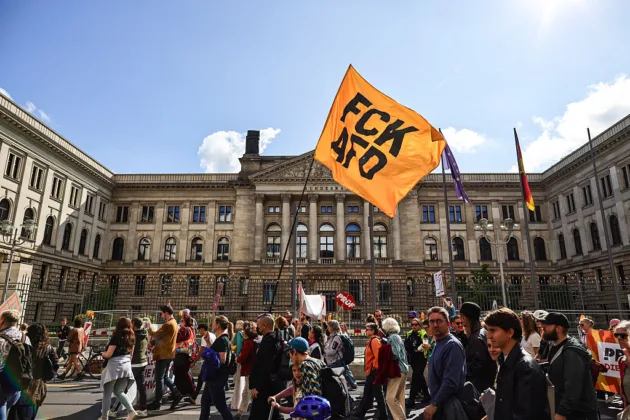











The right-wing Alternative for Germany party (AfD) has announced it will replace up to 200 civil servants in the state of Saxony-Anhalt – if it comes into power following the September elections there.
As Ulrich Siegmund, the party’s leader in Saxony-Anhalt, told newspaper MZ yesterday, there are plans to fill a three-figure number of posts in the administration with new personnel.
“A figure of between 150 and 200 posts seems realistic here,” he said.
The plans concern not just the highest levels of the state’s administration – such as ministers and their staff – but also lower echelons.
Siegmund indicated the replacements were necessary because many of the current civil servants might oppose his party and try to sabotage its work once in power:
“Large sections of the middle echelons are not politically aligned. We are open to working with anyone, regardless of their political affiliation … However, should anyone attempt to actively obstruct our work, we must, of course, take action,” he said.
The AfD leader claimed his party had a reservoir of people who already had experience in civil service and administration roles.
Siegmund also said he planned to abolish the State Energy Agency, a public body largely tasked with consulting citizens and companies on energy efficiency and promoting “green” energy.
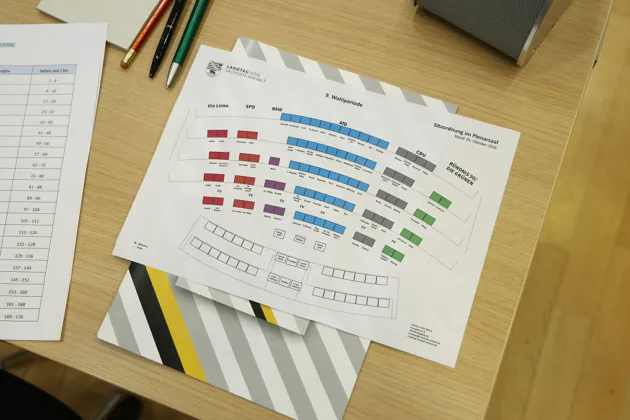
The citizens of Saxony-Anhalt are electing a new state parliament on September 6, 2026. The right-wingers are leading in the polls – with latest surveys seeing them far ahead with 40 per cent of the vote.
The German cordon sanitaire, though – a promise by all parties including the Conservative Christian Democratic Union (CDU) to shun any co-operation with AfD – may keep them out of power even with almost half the electorate on their side.
Also yesterday, the Saxony-Anhalt CDU’s deputy chairman, André Schröder, indicated his party might even work together with the hard-left Die Linke party to keep the right-wingers out of power.
Die Linke is the legal successor to the Socialist Unity Party (SED), the one-time state party of the former German Democratic Republic (GDR), which ran from 1949 to 1990.
In 2018, the CDU had adopted a party resolution precluding any “coalition and other form of co-operation” both with Die Linke and AfD.
Schröder said this resolution only precluded the CDU from a formal coalition with Die Linke but would not preclude a CDU minority government supported by the left-wingers:
“This decision does not affect voting patterns in individual cases regarding CDU initiatives,” he. said.
In April 2026, the CDU had teamed up with Die Linke to change Saxony-Anhalt’s constitution, preparing the ground for an eventual cooperation that would keep AfD on the side-lines.