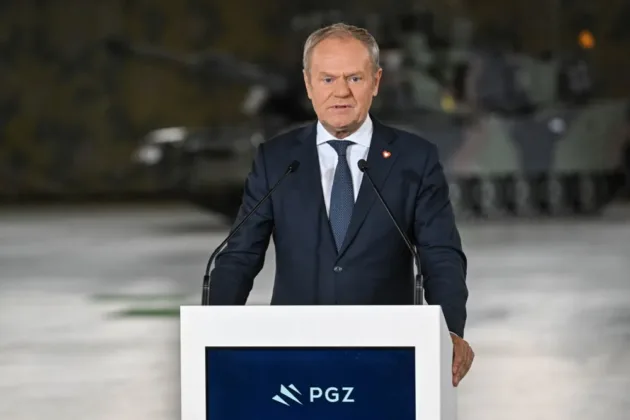

Polish Prime Minister Donald Tusk has reacted to the US decision to withdraw at least 5,000 troops from Germany by warning that “the greatest threat is the ongoing disintegration of our alliance”.
The Pentagon on May 1 announced plans to pull approximately 5,000 American soldiers from its 38,000-strong contingent in Germany, with the operation expected to be carried out over the next six to 12 months.
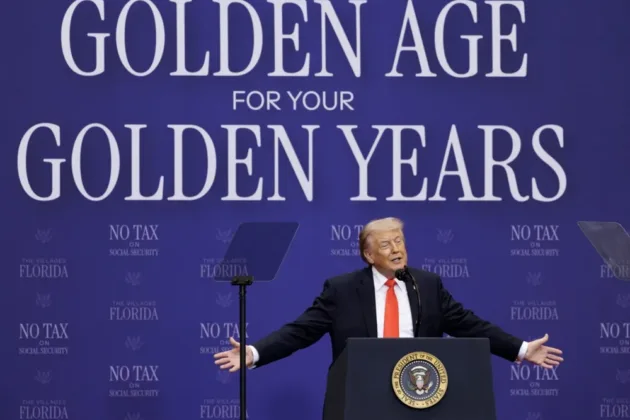
The decision, which US President Donald Trump indicated at the weekend could be followed by further reductions, came in the aftermath of German Chancellor Friedrich Merz saying Iran was “humiliating” the US in the Middle East.
Tusk, who leads Poland’s liberal-centrist coalition government, addressed the US decision in a post on X on May 1.
“The greatest threat to the transatlantic community are not its external enemies, but the ongoing disintegration of our alliance. We must all do what it takes to reverse this disastrous trend,” he said.
Earlier in the week, in an interview with the Financial Times, Tusk said he had doubts about US loyalty and questioned whether Article 5 of the NATO treaty — which commits all member states to collective defence if one ally is attacked — still applied in practice.
As a result of those doubts, Tusk pointed to the need to strengthen defence co-operation within the European Union.
In other recent remarks, Tusk has said he expected NATO could soon face a war on its eastern flank, comments for which he has been criticised in Polish media.
Krzysztof Stanowski, founder and commentator for Poland’s most popular current affairs YouTube channel, Kanał Zero, said at the weekend that “Donald Tusk is in danger of being like the boy who cried wolf and ending up being taken no notice of”.
Stanowski added that “if we really are close to being at war, it might not be the best moment to cast doubt on our chief ally, the USA”.
The opposition conservative Law and Justice party (PiS) has been scathing about Tusk’s remarks.
“Time and again, you prove that you do not understand what is really happening around us. It is you who consistently undermines our defence alliances, attacks and questions transatlantic relations. You are sowing distrust toward the strongest pillar of NATO, the United States, and trying to ensure Poland is treated in Washington as an unwelcome petitioner rather than a key ally,” said Jacek Sasin, a former minister in the last PiS government.
“And now you have the audacity to write about the ‘disintegration of the alliance’, as if someone other than the circles you represent were responsible,” Sasin added.
While Tusk’s comments have also been criticised by US Ambassador to Poland Tom Rose, he and other members of the US administration have been eager to point to Poland as a model ally, noting that Warsaw is sharply increasing defence spending and has stopped importing energy from Russia.
Poland has become one of NATO’s highest defence spenders, with military expenditure now well above the alliance’s 2 per cent target and among the highest in Europe as a share of GDP. Warsaw has also signed major arms deals with the US, South Korea and other partners as it seeks to build one of Europe’s largest land forces.
The opposition PiS-allied President Karol Nawrocki enjoys good relations with the Trump administration. The US envoy to Belarus recently singled out Nawrocki’s intervention in support of American pressure on the Belarusian regime as important in securing the release of Polish journalist Andrzej Poczobut and other political prisoners last week.
Tusk’s disparaging remarks about the US are seen by critics as an expression of loyalty to his main European allies, Merz and French President Emmanuel Macron. Sources close to Tusk reportedly regard US praise for Poland as an attempt to sow discord within the EU.
That may explain why Tusk has made no comment on rumours coming out of Washington that the US is seriously debating whether troops currently stationed in Germany should be moved to Poland.
The idea would fit a long-running argument in Warsaw that NATO’s eastern flank should host a larger permanent US presence, especially after Russia’s full-scale invasion of Ukraine in 2022.
PiS believes it is the US that offers Poland the strongest security guarantee, with around 10,000 American troops already stationed in the country. The party argues that increasing that number would only strengthen deterrence against Moscow.
For Polish conservatives, the lesson is clear: while EU defence co-operation may be useful, only the presence of American troops offers the kind of hard security guarantee that Russia is unlikely to test directly.