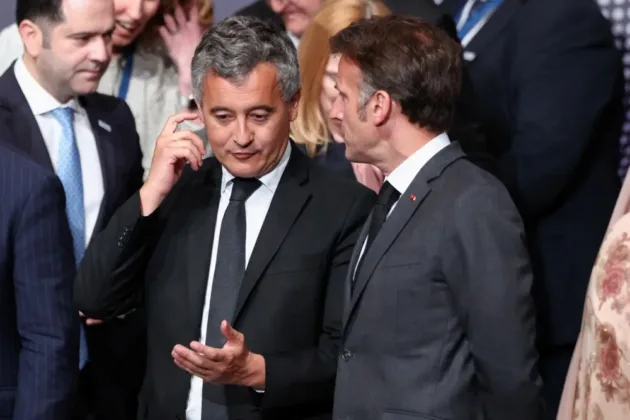


French President Emmanuel Macron’s Government will not let protesting farmers “block” the country’s capital, said interior minister Gérald Darmanin.
The senior official has been one of the few in the current administration to take a hard-line approach with the farmers.
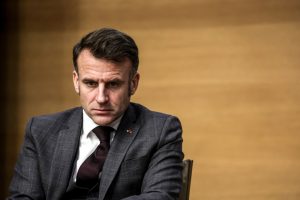
Macron has opted to try to appease the protesters over what they see as destructive European Union “green” regulations.
Acknowledging that the farmers engaged in demonstrations “are not delinquents” and have not caused any sort of violent unrest, Darmanin warned there were nevertheless “red lines” that they must not cross.
??️ "Les agriculteurs ne sont pas des délinquants […] et il n'est pas question de les évacuer"
Gérald Darmanin rappelle ses "lignes rouges" : ne pas rentrer dans Paris, Rungis ou les aéroports parisiens. #Les4V @GDarmanin #BlocusDeParis pic.twitter.com/G3jXLsJ0dc
— Telematin (@telematin) January 31, 2024
“Do not enter Paris, do not block Rungis [the location of a major trade market] and do not block the airports,” he told the farmers on January 31 in an interview.
He added that any attempts by protesters to break such red lines would be met with “substantial resistance”.
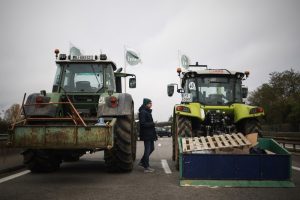
The minister is deploying 15,000 law enforcement officials and numerous armoured police vehicles in the hope of keeping the demonstrators outside Paris itself.
Farmers in France have launched a “siege of Paris” after the country’s Government failed to roll back various “green” restrictions on the agriculture sector.#AgriculteursEnColere https://t.co/19CtSCX5OZ
— Brussels Signal (@brusselssignal) January 29, 2024
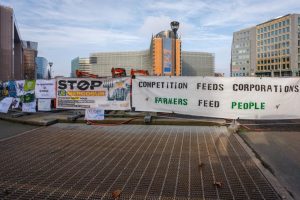
Darmanin’s warning came amid intensifying demonstrations in France and Belgium. Agricultural workers in both countries are blocking numerous motorways near their respective capitals.
Politicians have largely opted to try to disarm the demonstrators with understanding. The Macron administration has acknowledged the anger of those protesting as being “legitimate” and has vowed to try to “fix” the problems French farmers are facing.
He has also vowed to pressure the European Union into loosening a number of its controversial green restrictions, particularly regarding the mandatory fallowing of arable land.
Such efforts appear to be having some success. The European Commission announced on January 31 that it would allow farmers to derogate the requirement to fallow 4 per cent of their land each year for one year.
That was as long as they used 7 per cent of their land to grow “catch crops” or “nitrogen fixing crops”, such as lentils, peas or fava beans.
It is unclear whether the organisations backing the farmer protests will accept the peace offering.
Poland’s farmers have demonstrated in at least 180 locations against the implementation of the European Union’s Green Deal programme and the uncontrolled influx of goods from Ukraine. https://t.co/KJVk98WiUU
— Brussels Signal (@brusselssignal) January 25, 2024
The demonstrations appear to have left their mark on French politics. MPs across the political spectrum have come out in support of the farmers and their quest to push back EU-level environmental regulations.
Macron’s attempts to appease the movement do not appear to have helped his polling, with the President not seeing his approval rise since his appointment of Gabriel Attal to the post of Prime Minister.
By contrast, Marine Le Pen of the National Rally (RN) has continued to see her popularity grow. Le Figaro reported on January 31 that she is now the “most popular” political personality in the country.
With an approval rating of 40 per cent, she is also ahead of Marion Maréchal – who abandoned Le Pen’s RN to join Eric Zemmour’s Reconquête! party – and the French Communist Party’s Fabien Roussel.
A French rural party, set up with the support of President Emmanuel Macron to target the right-wing National Rally party, is facing trouble after a top figure left amid farmers’ fury against Paris. https://t.co/jQIWYpjm4M
— Brussels Signal (@brusselssignal) January 24, 2024