






A €40 billion budget hole has put Germany’s coalition government under serious pressure.
It comes as another blow to an already reeling Chancellor Olaf Scholz, whose Social Democratic Party (SPD) received just 14 per cent in European Parliament elections, the worst result in its 134-year history.
Scholz’s SPD has found itself in a “strategic and emotional crisis”, Die Zeit columnist Bernd Ulrich wrote on June 19.
Germany’s GDP shrank 0.3 per cent over 2023 and growth this year is only predicted to be 0.3 per cent amid falling tax revenues.
The coalition members — Scholz’s SPD, finance minister Christian Lindner’s Free Democratic Party (FDP) and foreign minister Annalena Baerboc’s Alliance 90/The Greens — together won 52 per cent of the vote in the federal elections in 2021 but only 31 per cent in June’s EP ballot.
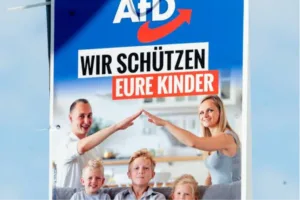
Senior SPD members, such as Secretary General Kevin Kühnert, have rejected social spending cuts and claimed popular anxiety about the welfare state was driving the popularity of the Alternative for Germany (AfD). It received 15.9 per cent in the EP elections, the second-highest vote share of any party.
Baerboc’s Greens have taken a similar line against cutting welfare spending.
The fiscal gap emerged after Germany’s Constitutional Court ruled in November the government could not apply unused pandemic emergency funds to its post-pandemic budget shortfall.
Scholz has since been searching for “a few billion in savings in unused funding pots, supplementary budgets, and ministries”, wrote WirtschaftsWoche columnist Dieter Schnaas. He has been “a treasurer, not a captain – a shopkeeper, not a chancellor”, added Schnaas.
Scholz has managed to find €20 billion in savings but €40 billion remains if Germany is not to violate its post-2016 constitutional debt brake, which limits new government debt to no more than 0.35 per cent of GDP a year. The deadline for finding a solution falls in early July.
The Greens and SPD parties have clamoured to protect remaining social spending from cuts.
Yet, the FDP leader has made a much more centre-right appeal for a budget that would cut spending, and encourage “more growth”. Germany could do that in its budget by rewarding people’s “willingness to take entrepreneurial risks, and willingness to invest and improve their qualifications,” Lindner said June 12.
Lindner also “wants drastic cuts” of up to 23 per cent in Germany’s foreign affairs and humanitarian aid budgets, said Milan Nič, a senior fellow at the Berlin-based German Council on Foreign Relations.
According to data NATO released on June 17, the German defence budget was on track to surpass the alliance’s 2 per cent of GDP requirement in 2024 – for the first time since 1991.
But the country’s defence spending has come under fire from the so-called SPD Friedenssflügel (peace wing) keen to preserve the welfare budget.
That raised some eyebrows. The Economist‘s Berlin bureau chief Tom Nuttall said: “Now that it is no longer possible to argue that Putin does not want war”, it is “reduced to arguing that Germany’s military aid to Ukraine is bad for the climate”.
Nuttall called that “impressive flexibility!”
Scholz’s headaches sharpened even more when one of his party’s key figures, Rhineland-Palatinate’s PM Malu Dreyer, resigned June 19, saying “Unfortunately, I have to admit that my strength is finite”.
With the AfD strongest (and Scholz’s SPD weakest) in Eastern Germany, three State elections coming up there in September pose a key challenge for all three coalition parties, Scholz’s especially. Saxony is likely to be a close race between the CDU and AfD, with Sahra Wagenknecht’s party in third place, according to a June 18 survey in Die Zeit.
They will probably manage a budget deal and to stick together as a coalition — because of a shared fear of a bigger common enemy, a British citizen living in Berlin told Brussels Signal.
“I think there’s a lot of will not to open the door to the AfD, especially after the EP election results. So they’ll do what they need to to hold it together.”