Austria’s National Council, the main chamber of the country’s parliament, has greenlighted a law banning Muslim headscarves for girls under 14 in schools.
The law which was originally proposed by Austria’s Conservative Family Minister Claudia Plakolm (Austrian People’s Party, ÖVP) passed with an overwhelming majority as the right-wing Austrian Freedom Party (FPÖ) also voted in favour of the ban along with the MPs of the government coalition of ÖVP, Social Democrats (SPÖ), and the liberal Neos party.
Only the Greens party voted against the proposition.

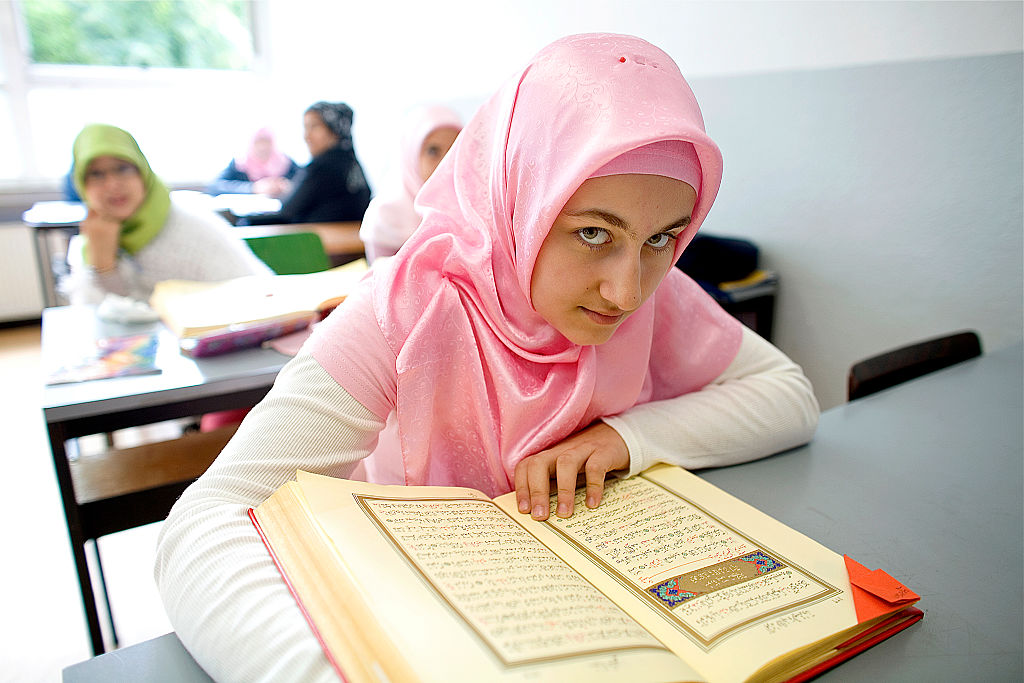
The new law takes effect at the start of the 2026 summer semester. It forbids girls under the age of 14 from wearing Muslim headscarves in both public and private schools.
Specifically, the law bans “headgear which covers the head in accordance with Islamic traditions”.
Government party representatives said they were happy with the outcome of the vote. Neos MP Yanick Shetty emphasised that the ban was not about restricting freedom but about protecting the freedom of girls up to the age of 14.
Minister Plakolm said the Muslim headscarf was “not a harmless piece of fabric, but a sign of repression”. She added that the problem had gotten worse in the last years as young Muslim girls wear pressured to wear the headgear not only by family members but also by self-declared moral guardians among male Muslim youths.
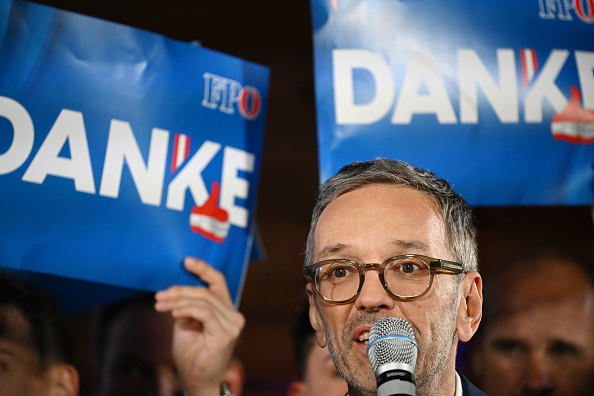
FPÖ representatives criticised the law as “a minimal step” forward. The right-wingers submitted a motion to extend the headscarf ban to all personnel in public schools, including female teachers. However, this motion was voted down by all other parties.
FPÖ speaker for education Hermann Brückl said his party would still vote in favour of the ban as it was a long-term demand of the right-wingers. Brückl added: “The headscarf is a deliberate statement of political Islam.”
FPÖ MP Andreas Mölzer prophesized the new law would be struck down by the Austrian Constitutional Court. Austria’s highest court had already struck down a similar ban in 2020, claiming it violated religious freedom.
The government could have given the law “constitutional status” with the votes of the FPÖ – effectively removing it from the Constitutional Court’s remit – but declined to do so at the insistence of the Social Democrats.
Mölzer said: “The headscarf ban failed last time, and it will fail again this time – because we cannot pass a constitutional law as the SPÖ does not want us to. The SPÖ does not want to impose this ban on its Muslim voters in Vienna. That is the truth.”