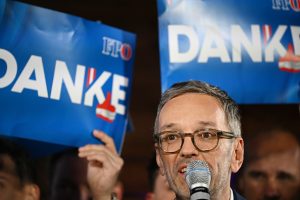







The Freedom Party (FPÖ) scored a momentous and better-than-expected win in Austria’s September 29 elections. At 9 pm – with 97 per cent of votes counted – the right-wing FPÖ party under its leader Herbert Kickl led other parties with 29 per cent of the vote, a 13 percentage-point improvement over its performance in the previous 2019 elections.
It was a better result for the FPÖ than the last pre-elections polls predicted, which suggested a tie for first place between Kickl’s party and the conservative People’s Party (ÖVP). In the event, the FPÖ pulled ahead of the ÖVP by 2.5 percentage points.
NATIONALRATSWAHL | Hochrechnung FORESIGHT/ORF/APA, 21:08 Uhr
FPÖ: 28,8% (+12,6)
ÖVP: 26,3% (-11,2)
SPÖ: 21,1% (-0,1)
NEOS: 9,2% (+1,1)
GRÜNE: 8,3% (-5,6)
KPÖ: 2,4% (+1,7)
BIER: 2,0% (+1,9)
KEINE: 0,6% (+0,1)
LMP: 0,6% (NEU)
…Änderungen zu 2019#nrw24 #NRWahl2024 pic.twitter.com/JBZNH5UMxu
— Österreich Wählt (@Wahlen_AT) September 29, 2024
The Conservatives emerged as the election’s clear loser, in the worst result for the ÖVP since 2013.
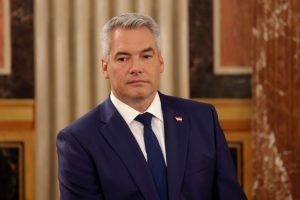
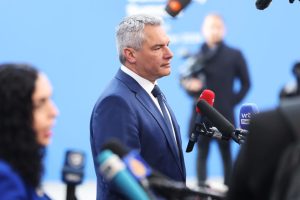
Karl Nehammer’s party lost 11 percentage points compared with 2019. Its 26 per cent share of the vote was the party’s lowest in 11 years.
The days now seemed a distant memory when the ÖVP trounced other parties with 37 per cent of the vote in 2019, under the party’s young leader Sebastian Kurz.
Kurz was subsequently forced to resign as Austrian chancellor in 2021 due to a perjury lawsuit, replaced by the much less charismatic party soldier Nehammer.
The Greens, the ÖVP’s coalition partner for the last five years, were the day’s other big loser.
Werner Kogler’s party dropped from 14 per cent of the vote in 2019 to only eight per cent, despite heavy support from much of the Austrian press.
The Social Democrats, with an expected 21 per cent of the vote, scored their worst result in a general election since the Second World War.
This was even worse than their previous worst postwar showing in 2019. Their relatively new chairman Andreas Babler, a self-declared “Marxist”, ran on a programme matching his self-description.
The left-leaning liberal Neos party did not capitalise on dissatisfaction with the government either, gaining only a single percentage point to win nine per cent of the vote.
A spate of predominantly left-wing fringe parties failed to surpass the four per cent minimum showing to secure parliamentary representation.
Barring last-minute surprises, there were two main options for a two-party coalition to secure a majority in the Austrian parliament’s lower house, the National Council.
FPÖ and ÖVP together would have a comfortable 108-seat majority in the 183-seats chamber.
NATIONALRATSWAHL | Hochrechnung FORESIGHT/ORF/APA, 21:08 Uhr
Sitzverteilung
FPÖ: 57 (+26)
ÖVP: 51 (-20)
SPÖ: 41 (+1)
NEOS: 18 (+3)
GRÜNE: 16 (-10)Änderungen zum Wahlergebnis von 2019#nrw24 #NRWahl pic.twitter.com/WJUWO8Smk9
— Österreich Wählt (@Wahlen_AT) September 29, 2024
Together with Neos they would even have enjoy two-thirds supermajority, allowing them to amend Austria’s constitution.
This would permit the new government to push through much-needed reforms such as a federal debt limit, or abolishing constitutionally forced membership in the Chamber of Commerce (for employers) and the Chamber of Workers (for employees).
Es gäbe eine klare 2/3-Mehrheit für Mitte-Rechts ?
-) Schuldenbremse
-) Ausgabenbremse
-) Abschaffung der Kammerzwangsmitgliedschaft#nrw24— Maverick ????? (@FHMaverick) September 29, 2024
However, dreams of a three-member reform coalition appear premature.
The sole remaining option for a two-party coalition is a government consisting of the ÖVP and the Social Democrats (SPÖ), though this would only have a thin majority of one seat.
Still, some ÖVP representatives have shown a clear preference for this coalition—which before the election was dubbed a “coalition of the losers”.
Before the vote the ÖVP ruled out a coalition with the FPÖ if the government included Herbert Kickl, accusing him of “radicalisation” and “right-wing extremism”.
However, after scoring a landslide win for his party it is unlikely Kickl would be replaced against his will.
It remained to be seen if the Conservatives’ election loss leads to a change of mind. The ÖVP’s leader, Nehammer, called the result “bitter” in his initial reaction, and did not want to speculate about possible coalitions.
All parties other than the ÖVP have ruled out entering into a coalition with the FPÖ.
On Sunday evening, Herbert Kickl told other party leaders: “Our hand is outstretched. I am ready for talks with each and every one of you”.
Austria now faced a difficult and potentially long phase of party talks before a future coalition government emerged.
Some commentators expected the ÖVP to drag coalition talks well into November until after regional elections in two states.
Also, a coalition between the ÖVP and SPÖ might drive even more dissatisfied conservative voters towards Kickl’s Freedom Party.
Ich mach euch das Orakel:
Bis 24.11. passiert garnix. Man will ja nicht die Vorarlberg und Steiermark Wahl der FPÖ schenken.…dann Schwarz/Rot. #NRW2024
— ChriWgnr (@chriwagner) September 29, 2024