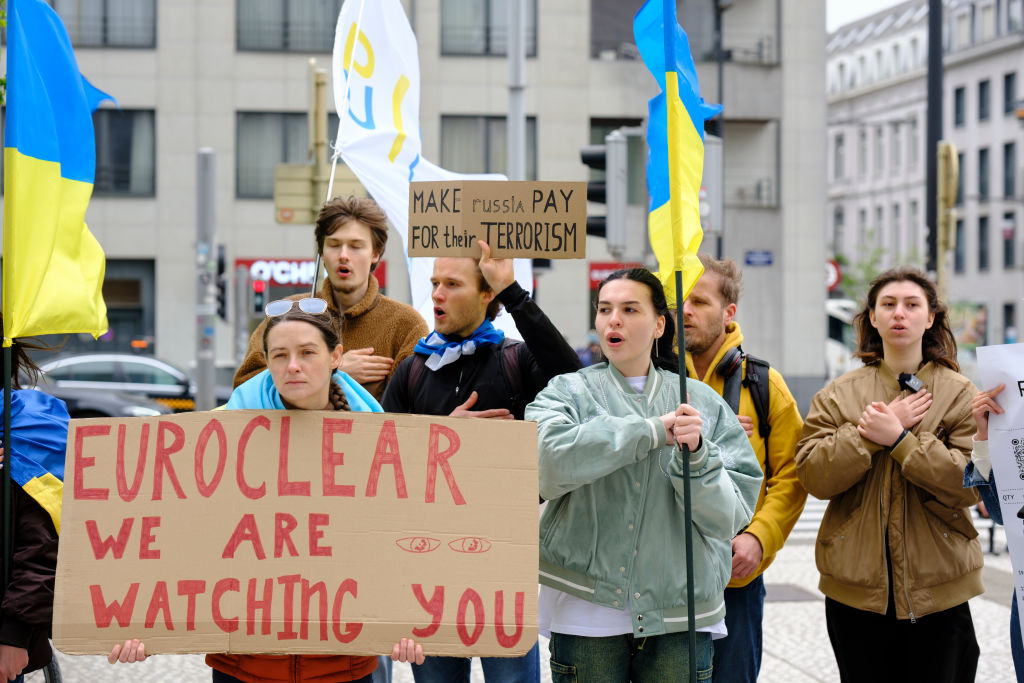
Europe’s leaders and Belgium continue their collision course over European Commission plans to tap into €140 billion in frozen Russian assets to fund Ukraine’s war efforts.
The High Representative for Foreign Affairs, Kaja Kallas, is disregarding Belgian objections over the illegality of the move, while at the same time member states refuse to give guarantees to Belgium.
Yesterday, while she acknowledged Belgium’s “legitimate” concerns after an European Union defence ministers’ meeting, Kallas urged swift action, stating the loan would “strengthen Europe’s position towards Moscow” and send a message that Russia “cannot wait us out”.

She dismissed fears of derailing peace talks, insisting collective EU solidarity could shoulder the risks without specifying commitments.
Earlier, Belgian Prime Minister Bart De Wever sent a scathing letter to EC President Ursula von der Leyen, labelling the proposed €140 billion reparations loan — backed by €185 billion in Russian Central Bank assets held at Euroclear in Brussels — as “fundamentally wrong” and a violation of international law.
De Wever warned the scheme would expose Belgium to multibillion-euro lawsuits from Russia, disrupt financial markets and undermine the euro’s stability, with his country facing the primary liability as Euroclear’s host nation.
He argued that using the assets during an ongoing conflict sets a dangerous precedent, as such funds have historically only been seized post-war for reparations. Doing so, he said, could provoke Russian countermeasures against Belgian interests.
De Wever demanded full risk sharing across all 27 EU states, including legally binding liquidity guarantees exceeding €185 billion and alignment with non-EU partners such as the US to prevent unilateral actions.
Full risk sharing would pool and distribute all associated costs and potential financial losses among a group of participating entities, so that no single party bears the entire burden of a loss.
Despite most EU governments claiming the move is legal and much-needed, they refuse to back Belgium with guarantees, saying the country is demanding a “blank cheque”.
Kallas noted that the Russians “don’t want this reparations loan to happen”.
“So our response should do exactly the opposite.”
She said a Ukrainian capitulation was the worst outcome.
“I’m afraid that all the pressure will be put on the weaker side because that is the easier way to stop this war when Ukraine surrenders but this is not in anybody’s interest,” Kallas said.
“If this [invasion] pays off, we will see this elsewhere, all around the world,” she said.
Despite European elites piling up against De Wever, there are institutions supporting him.
A few days ago, he got the backing of Euroclear and the National Bank of Belgium, which both warned of the long-term consequences of the “confiscation” of Russian assets.
Today, the European Central Bank (ECB) joined their ranks.
It compounded Belgium’s position by refusing to act as a liquidity backstop for the loan, deeming it a violation of its monetary stability mandate and equivalent to direct government financing.
ECB officials rejected the EC’s proposal, calling it illegal “monetary financing” — directly funding governments — which is banned by EU treaties due to risks of high inflation and loss of central bank credibility.
Belgium has already contributed €1.7 billion in 2024 taxes from these assets’ windfall profits to Ukraine aid, counting towards its NATO spending target, yet faces accusations of opacity in revenue handling.
This week could be pivotal for diplomacy.
It is clear that Russia does not want peace, and therefore we need to make Ukraine as strong as possible.
My doorstep ahead of today’s Foreign Affairs Council on Defence ↓ pic.twitter.com/SzWnYJy4iw
— Kaja Kallas (@kajakallas) December 1, 2025