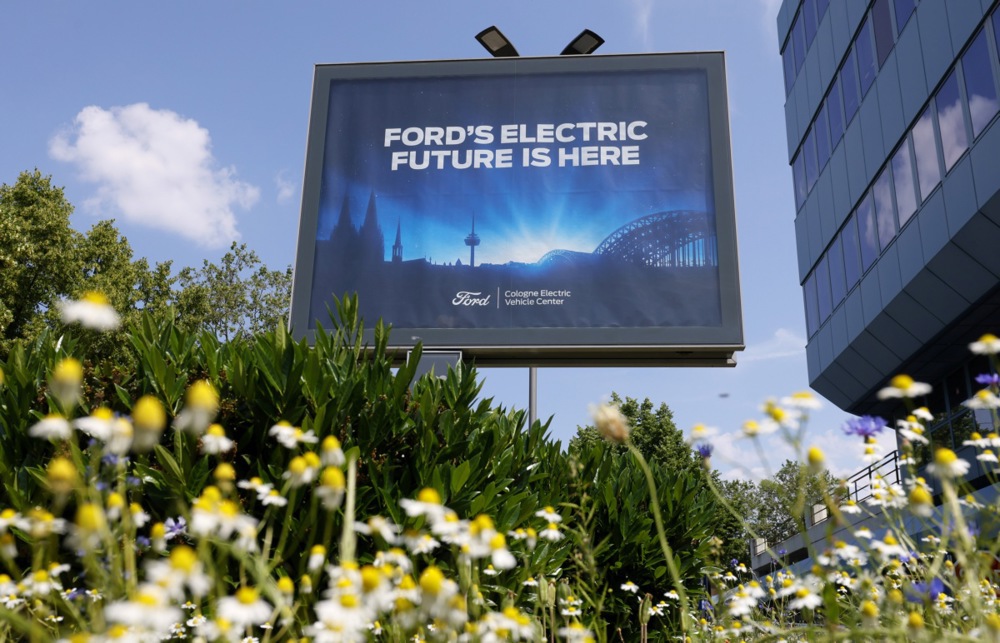
US carmaker Ford has announced far-reaching changes to its electrical vehicle (EV) strategy.
The company said yesterday it would stop producing most larger EV models as customer demand had turned out lower than expected.
Instead, it will focus on offering its larger models, such as the iconic F-150 pickup truck, with both classic combustion engines and hybrid motors. The fully electric F-150 Lightning model will be cancelled.

Ford also said it no longer intended to produce a previously planned new electric commercial van for the European market.
Its electric vehicle devision – Ford e – will henceforth focus on developing smaller, more affordable vehicles.
“This is a customer-driven shift”, said Ford president and CEO Jim Farley. He added: “The operating reality has changed.”
The carmaker also said it had ended its joint venture with South Korean battery maker SK On. The two companies had struck a deal to jointly manufacture EV batteries in the US in 2022.
Ford said it would convert its underutilised EV battery production facilities to enter a new business offering battery energy storage for data centres and electric grid infrastructure.
The major strategic shift will heavily impact Ford’s baseline in the coming years. Altogether, the company said it will incur costs of $19.5 billion (€16.6 billion) due to write-downs of assets, necessary adaptations to production facilities and other factors.
Ultimately, Farley said in a statement, the adaptions would make the company stronger and more profitable.
Ford also raised its guidance for 2025, saying it now expected to generate $7 billion (€6 billion) in earnings before interest and taxes (EBIT) for 2025, an increase of more than $500 million compared to earlier estimates.
Its share price was not greatly impacted by the news, trading 0.8 per cent down by the end of yesterday. The news did send the shares of several producers of EV batteries tumbling with South Korea’s LG Energy sliding 6 per cent and Samsung SDI dropping 3.5 per cent.
Ford also announced it would increase its US manufacturing footprint with plans to hire thousands of additional workers across the country.
The strategic shift of the US’ second-biggest vehicle maker reflects political changes under US President Donald Trump.
Since taking office Trump has slashed generous tax credit rules for EVs and proposed weakening regulations on vehicle emissions.