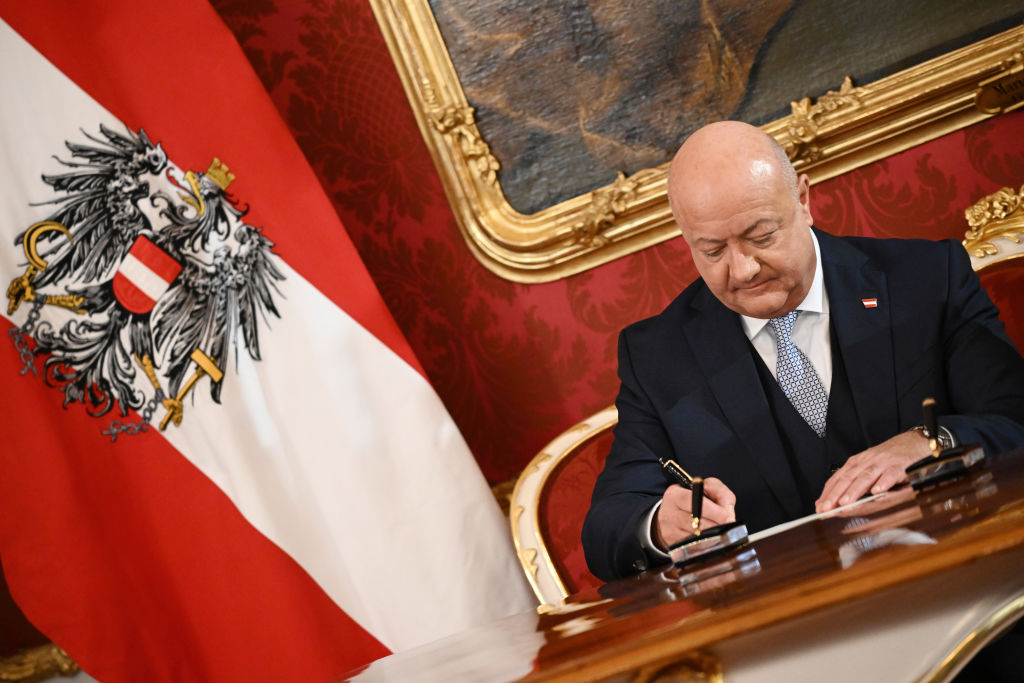
The Chancellor of Austria, Christian Stocker, has announced plans to hold a non-binding referendum on whether compulsory military service in the Alpine country should be extended.
Stocker’s surprise announcement on January 30 followed an earlier recommendation by a commission of military experts that the service should be lengthened from six to eight months.
Yesterday, he explained his reasoning on state broadcaster ORF.

According to Stocker, the referendum could be held in autumn of 2026.
He did not go into details about how he intended to phrase the questions on which Austrian will get to vote.
“The political decision-making process is still going on. When it is finished, we want to take the population with us for the discussion and final decision”, the Chancellor said.
Stocker’s announcement received mixed reactions.
The Federal Youth Council (BJV), an official body representing people under 30, said the planned referendum was not a good way to take the interests of young people into account. BJV chairwoman Anna Schwabenegger said: “If the referendum is to form the basis for government’s decision, this might not formally be a decision made over the heads of the population, but in fact it would very much be a decision made over the heads of those young people who are directly affected – as young people only constitute a rather small fraction of the voting population.”
Herbert Kickl, leader of the right-wing Austrian Freedom Party (FPÖ) accused Stocker of “staging a token event” with the non-binding referendum. Kickl instead demanded a series of binding referenda not just on military service, but also on other topics including Austria’s political neutrality and aid payments to Ukraine.
The FPÖ had previously welcomed an extension of military service as proposed by a board of experts earlier in January.
In June 2025, defence minister Klaudia Tanner (ÖVP) had set up a commission of 10 civil servants, primarily from the Austrian army and the defence ministry, to evaluate ways to reform the country’s military service system.
Currently, male Austrians have to serve in the army for six months – unless they opt for nine months of community service.
On January 20, the commission published its report. With a nine – one majority the members voted in favour of a model that extends compulsory military service to a total of eight months plus 60 days of compulsory military exercises. The community service alternative would be lengthened to 12 months.
This is largely a return to the system as it was before 2006. Then, young men could choose between eight months of military service or 12 months of community service.
Erwin Hameseder, the chairman of the commission, said the extension was necessary for a rapid restoration of the defensive capability of the army: “There are no more lead times. Mobilisation must be able to take place within days.”
Austria has a tradition of referenda on military matters. In 2013, the then-coalition government of ÖVP and Social Democratic Party (SPÖ) asked the populace whether they would prefer military conscription or switching to a professional voluntary army. Back then, 60 per cent of Austrians voted in favour of keeping the existing system of compulsory military service.
While the referendum was non-binding, the government chose to respect the apparent will of the people.