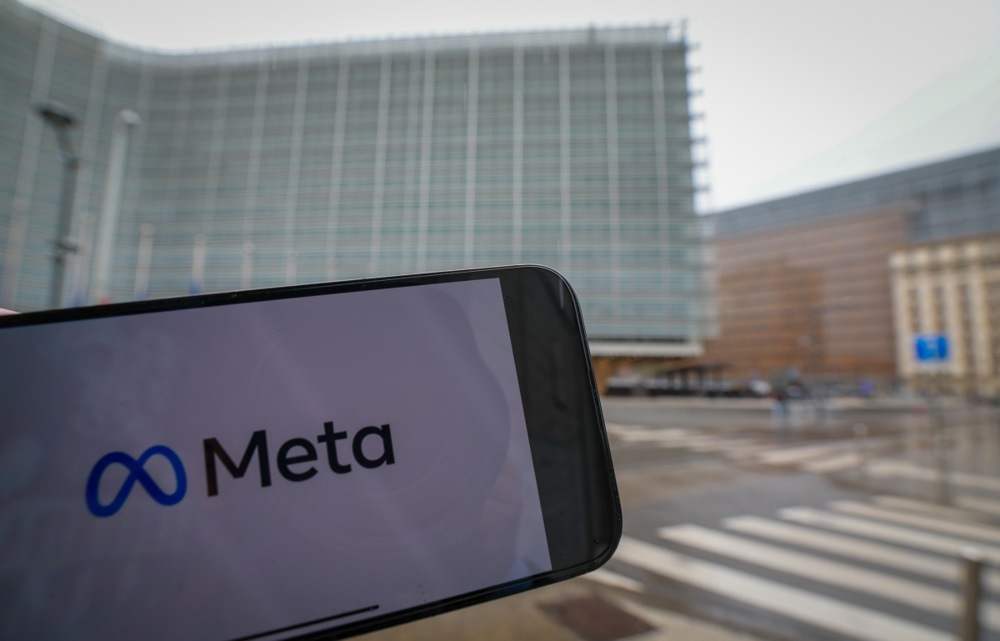
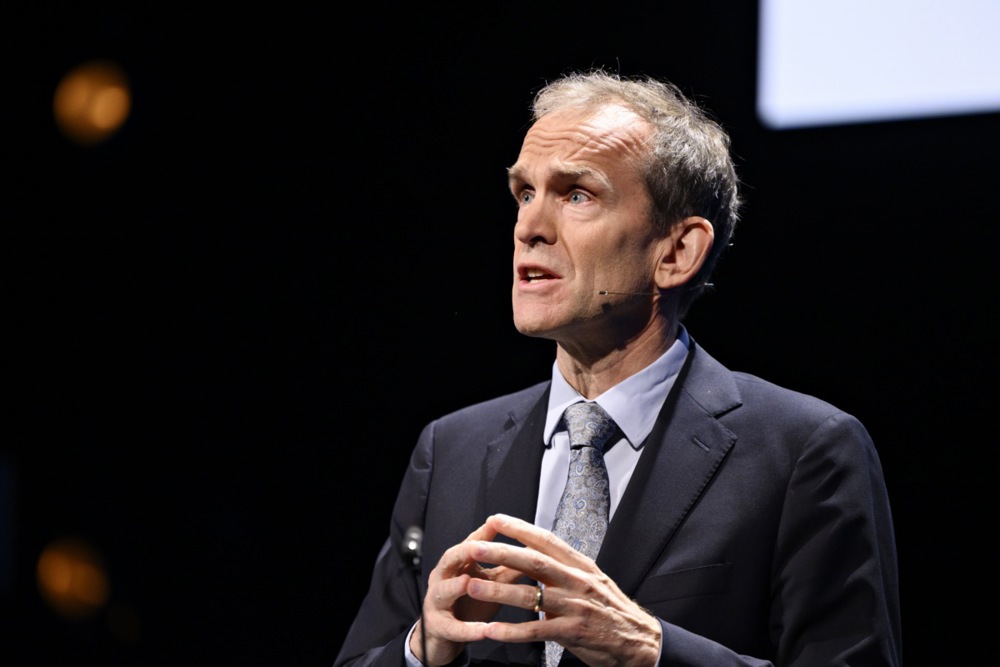
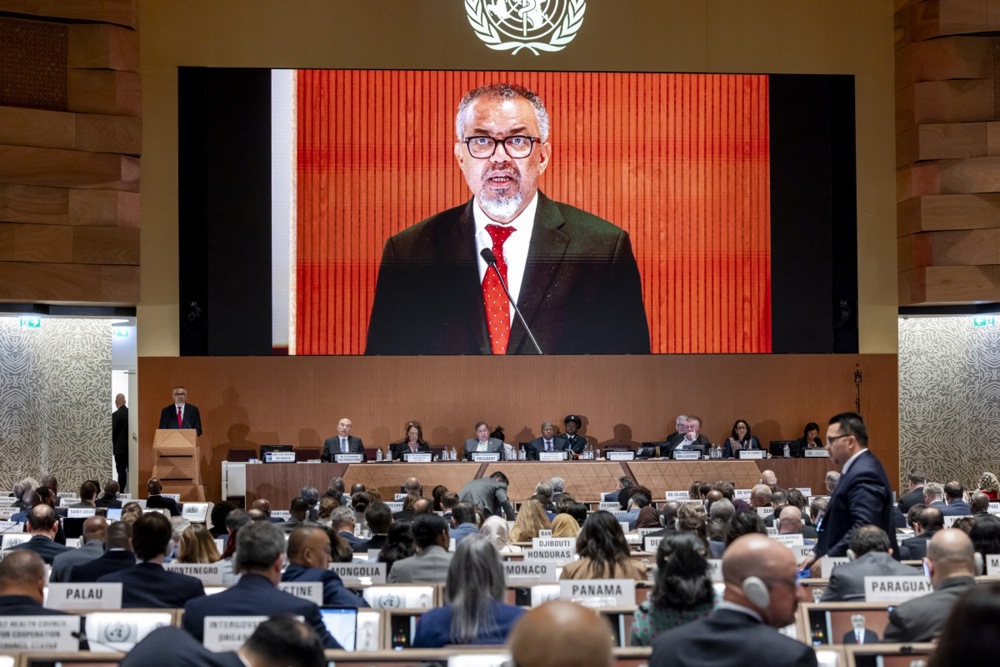
The US House Committee on the Judiciary has ramped up its accusations against the European Commission, accusing it of repeated election interference and censorship.
After reviewing documents and communications of European regulators regarding Brussels’ tech regulation, the Republican-led Committee published a report titled The EU Censorship Files, Part II.
It is accompanied by thousands of pages of internal Big Tech documents and communications with European regulators.

The committee, chaired by Republican Jim Jordan, describes the material as proof of a decade-long European campaign to impose global narrative control through pressure on social-media platforms.
The findings build directly on January’s exposure by the same committee of the EC’s first-ever fine under the Digital Services Act (DSA) – €120 million against X for “defending free speech”.
That decision, which the Republicans had made public, was described as a “secret censorship order”.
The new committee material extends the critique, saying the EC has gone far beyond content moderation to reshape the rules that govern what may or may not be said online worldwide.
European censorship poses a global threat.
Tomorrow, hosted by @JudiciaryGOP, we'll be testifying before the US Congress with the proof. https://t.co/oAq5OcsrR1
— ADF International (@ADFIntl) February 3, 2026
According to the documents, the pressure began as early as 2015 with ostensibly “voluntary” regulations. These included the EU Internet Forum, the Code of Conduct on Hate Speech, the Code of Practice on Disinformation.
In private, platform executives admitted they had “no real choice” but to comply.
The EC repeatedly demanded changes to global community guidelines, the policies that set the boundaries of acceptable speech for users everywhere, including in the US.
The House Representatives points towards pressure during the Covid-19 pandemic to remove or down-rank truthful content questioning vaccine efficacy in children or established narratives on lockdowns and virus origins.
There were also meetings in California in which EC Vice-President Věra Jourová made clear that US as well as European elections were on the agenda.
Former European Commissioner for Internal Market Thierry Breton is also mentioned, in particular his highly controversial letter threatening X in August 2024 with regulatory retaliation for hosting a live interview with now-US President Donald Trump.
Finally, and perhaps most explosive, the Republicans say there were at least eight sets of pre-election meetings with platforms ahead of elections in six European countries since 2023, with demands to suppress “disinformation” in the final days before polling.
Particularly striking, they say, is the case of Romania.
After the first round of the 2024 presidential elections, a court annulled the result on the basis of alleged but still unproven Russian interference via TikTok favouring candidate Călin Georgescu.
Internal platform records released by the committee show that TikTok informed the EC it had found “no evidence” of any such co-ordinated foreign campaign.
Subsequent public reporting indicated the supposed influence operation was in fact funded by a rival Romanian political party. The election was nevertheless rerun and the establishment candidate prevailed.
The report also documents how platforms altered their worldwide rules to satisfy DSA requirements.
TikTok, for instance, updated its global community guidelines in 2024 explicitly “to comply with the Digital Services Act”. It introduced new restrictions on “marginalising speech” and other categories that the committee argues adversely affect constitutionally protected speech in the US.
The committee said censorship was applied via “codes” and “forums” that were, initially, not legally binding but still felt imposed, as internal mails of tech companies showed “they don’t really have a choice” on whether to comply or not.
In 2015, the EU created the EU Internet Forum (EUIF), via the Directorate General for Migration and Home Affairs. By 2023, the EUIF had published a handbook for tech companies to moderate “lawful, non-violative speech”, also named “borderline content”.
With support of NGO’s and “trusted researchers”, these are supposed to moderate so-called populist rhetoric, anti-government or anti-EU content, anti-elite content, political satire, anti-migrant and Islamophobic content, anti-refugee or anti-immigration sentiment, anti-LGBTIQ+ content, anti-feminism, pro-Kremlin borderline content and meme culture.
Political satire is also part of this “borderline content” because, according to the EC, it is susceptible to “terrorist and violent extremist content” when it creates a “sense of collective identity and internal group cohesion” and is used to “avoid censorship [sic] based on delivery as a joke”.
Republican Senator Eric Schmitt declared: “Far-left Eurocrats want social media companies to censor Americans’ online speech through regulatory decree. We rejected European control of our speech in 1776.
“We’re not going to allow it in 2026.”
Committee chairman and fellow Republican Jim Jordan summarised the EC’s record as having “pressured social media platforms to censor true information in the United States, targeted US political content, and interfered in elections across Europe”.
The timing of the report’s release coincides with fresh action in France. Yesterday, the Paris prosecutor’s cybercrime unit, supported by Europol, raided X’s French offices and summoned the platform’s owner Elon Musk and former chief executive Linda Yaccarino for questioning in April.
The investigation, opened in January 2025 and recently widened, now encompasses alleged algorithmic bias, foreign interference, dissemination of child sexual abuse material, Holocaust denial and the functioning of X’s Grok AI.
Critics described the communiqué announcing the French moves as resembling the language of a “communist junta”. It was also pointed out that opposite the algorithms, there stood a legacy media that was even less nuanced than the new tech, with all traditional magazines fully embracing and supporting President Emmanuel Macron in his first bid for the post.
The House Judiciary Committee has scheduled a hearing for later today at which victims of the alleged European censorship campaign are due to testify. The committee says its investigation into foreign threats to US free speech continues.
In this exclusive Brussels Signal interview, three US Congressmen, @Jim_Jordan, @RepFitzgerald, and @RepKiley join us to discuss growing concerns over the EU’s Digital Services Act (DSA) and its global implications for freedom of speech. pic.twitter.com/Yge4hpo8u8
— Brussels Signal (@brusselssignal) July 29, 2025