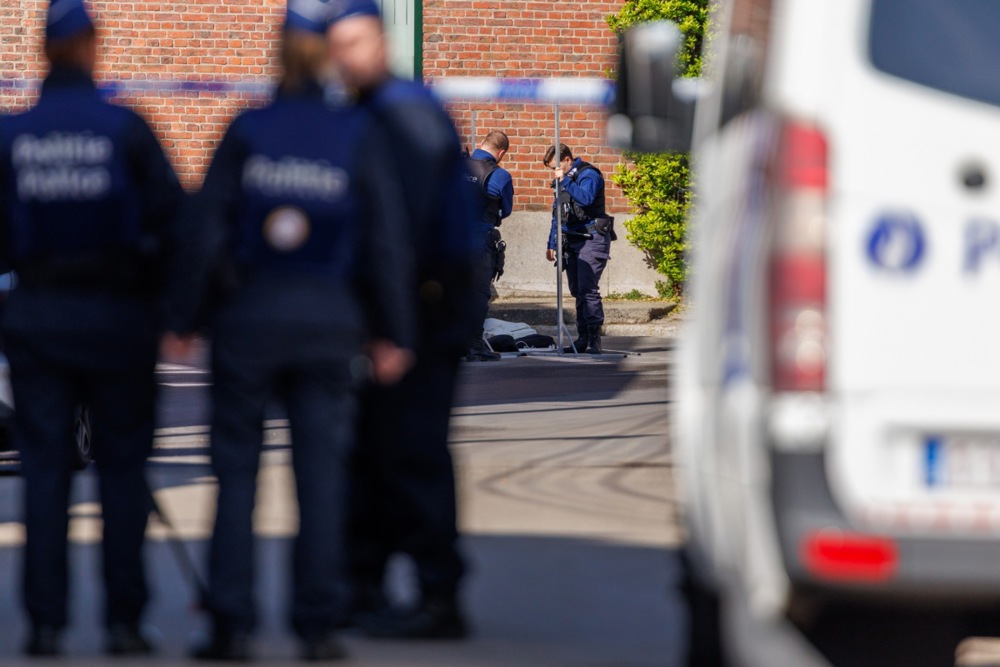
Belgium faces a grave threat from international drug crime that could destabilise society and transform the country into a “narco-state”, according to warnings from senior judicial figures in Antwerp.
Bart Willocx, President of the Antwerp Court of Appeal, and Guido Vermeiren, Prosecutor General for the Antwerp and Limburg regions, have sounded the alarm over escalating corruption, violence and intimidation tactics employed by mafia-like organisations.
This latest alert from Willocx and Vermeiren marks yet another high-profile caution from Belgium’s judiciary, highlighting a persistent and worsening crisis.

Speaking to The Guardian yesterday, Willocx emphasised the immense financial resources fuelling these networks: “The amount of money that is involved – to influence people, to corrupt people and to bribe – it is so big that it is really a danger for the stability of our society.”
He acknowledged Belgium’s efforts to avert such a fate but stressed the urgency: “We really have a problem and we should make more investments in staff and in other resources to cope with it … But it is an evolution and it is a pressure – it is a threat.”
Vermeiren concurred, stating: “We are becoming a state with a lot of corruption, with a lot of threats.”
Antwerp’s port, Europe’s primary gateway for cocaine smuggling, lies at the heart of the issue.
More than 70 per cent of cocaine entering the continent passes through Antwerp and Rotterdam, according to Europol.
Seizures hit a record 121 tonnes in 2023, dropping to 44 tonnes in 2024 amid shifts to smaller ports and improved concealment methods.
This influx has spawned a parallel economy worth billions, barely disrupted by law enforcement, with criminal networks stretching from Dubai to South America.
Drug mafias employ sophisticated tactics, including bribery and violence. Port workers are offered sums exceeding €250,000 to relocate a single container; refusals lead to intimidation.
Vermeiren highlighted: “They received letters, photos of their children. There were attacks at their homes with homemade explosives.”
Gangs groom young people, securing them port jobs before coercing co-operation and recruit children as young as 13 for smuggling tasks.
An Antwerp-based judge has written a damning letter to the Justice Committee about the emergence of a ‘narco state’ in Belgium, a country that is becoming synonymous with “dark money, corruption and violence”. https://t.co/CRj8UJDHAV
— Brussels Signal (@brusselssignal) October 27, 2025
The ripple effects extend to pervasive violence, including shootings, kidnappings, torture and money laundering. A foiled 2024 plot saw armed men attempt to steal more than 1,500 tonnes of seized cocaine from a customs warehouse.
Police and hospital staff have been bribed or threatened for confidential data, such as judges’ addresses.
Prisons are compromised, with inmates using smuggled devices to orchestrate crimes, including attacks in Antwerp.
Judicial personnel bear the brunt, with multiple magistrates under permanent protection.
Willocx described the ordeal: “From one day to another, you have to leave your house, you have to leave your family and you are going to live somewhere where nobody knows where you are.”
One anonymous judge queried: “How long before one feels forced to invent a procedural error just to avoid signing a conviction for their own safety?”
Vermeiren suggested the pressure might already unconsciously influence rulings.
This is not isolated; last July, Brussels’ Chief Prosecutor Julien Moinil was placed under police escort after “serious and credible” threats from drug gangs, following a major operation in Anderlecht’s Peterbos neighbourhood.
Moinil faced a €1 million bounty from the Albanian mafia in 2021 during the Sky ECC investigation, it was stated at the time.
In 2024, 101 individuals — including politicians, police and judges — received security due to professional threats.
Decades of underfunding have left courts vulnerable, with Willocx noting a “vicious circle” where inefficiencies invite further cuts.
Justice minister Annelies Verlinden has pledged an extra €1 billion by 2029 and measures such as anonymising judicial records but scepticism persists amid ongoing vulnerabilities.