Europol has coordinated a major cross-border effort, which led to the arrest of senior members of a Turkish criminal group suspected of trafficking firearms from the Western Balkans and Turkey into the EU in exchange for cannabis.
The network, which operated across Spain, Bulgaria, and Greece, imported firearms into Spain.
These included hybrid “Frankenstein” guns—homemade weapons built from original and crafted components, which are particularly difficult to trace.

Police also seized seven semi-automatic pistols, one war-grade firearm, multiple silencers, and over 660 kilograms of cannabis and hashish.
The total estimated value of the seizures came to €4.4 million, underlining the scale of the network’s activities.
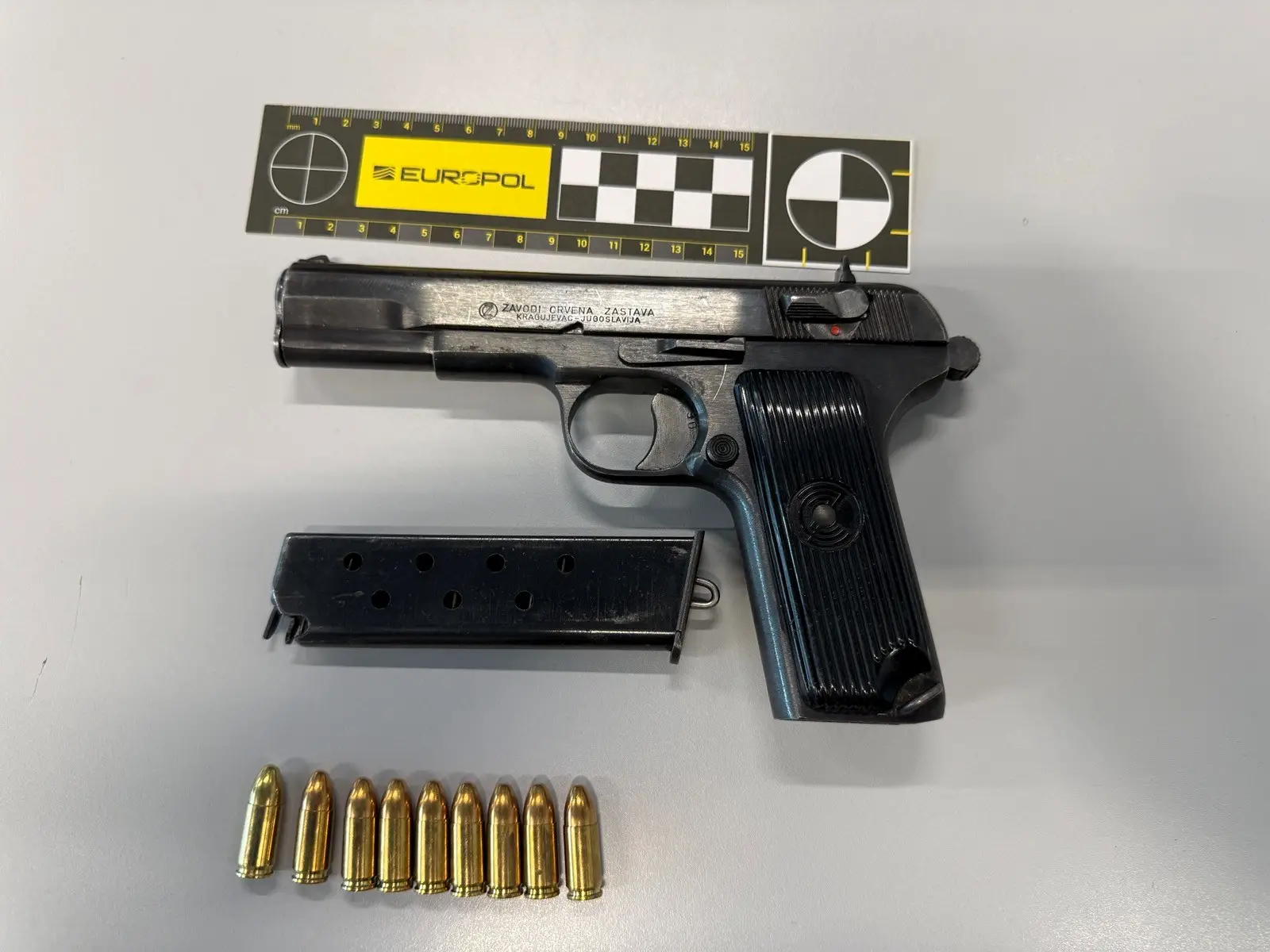
Authorities say the network was capable of transporting up to 1.5 tonnes of cannabis per month.
These drugs were sourced in Catalonia and then exported across Europe, particularly to Turkey and Greece, where their value rises significantly.
Spanish authorities arrested 18 individuals in Teià, Barcelona, Mataró, Sabadell, Tordera, Lloret de Mar, and Málaga.
The network’s leader and two associates were detained in Sofia.
Greece played a role also in operational coordination and intelligence sharing.
In total, 21 suspects were arrested across all three countries.
Agencies that were involved in the international effort included Spain’s Mossos d’Esquadra and National Police, Bulgaria’s General Directorate for Combating Organised Crime, and Greece’s Subdirectorate Against Organised Crime for Northern Greece.
Catalan police report Turkish organised crime is growing in the region, a pattern which follows trends previously observed with Albanian gangs.
The number of Turkish nationals in Catalonia’s prisons for drug trafficking has more than doubled between 2024 and 2025.
Authorities warn these networks do not just distribute drugs locally but export them across Europe.
Europol played a central role in facilitating cross-border intelligence sharing, operational coordination, and the mapping of trafficking routes.
Authorities say the agency’s support was essential in connecting the national investigations and building a full picture of the network’s operations.
They add that the operation demonstrates how European law enforcement agencies can, if they coordinate their efforts, succeed in dismantling transnational criminal networks – while seizing assets worth millions and reducing the flow of illegal arms and drugs across the continent.