Germany is especially vulnerable to energy price increases following the war in Iran and the closure of the Street of Hormuz – due to a mix of supposedly “green” domestic and EU-wide policies.
On March 19, Michael Lewis, the CEO of Uniper, warned that the country was badly protected against price shocks on international markets. Uniper is Germany’s largest natural gas importer. Lewis was speaking at a closed-door conference on energy issues organised by the Economic Council of Germany’s ruling Christian Democratic Union party (CDU).
“About half of our gas market depends on the spot market. Other countries have far more long-term contracts. Japan for example can now even sell surplus quantity”, Lewis said as reported by newspaper Welt.

In the past years, Germany has greatly reduced the quantity of natural gas bought through long-term contracts of 15 or 20 years. This was done because the country’s “green” transition foresaw a decarbonisation of the German economy by 2045 – and consequently politics refrained from committing to buying fossil fuels with such a long time horizon.
Now Germany has to buy a disproportionate amount of natural gas at greatly elevated prices. On March 20, the price for German natural gas rose to a new high of €63 per Megawatt hour (MWh), a plus of almost 90 per cent within just a month.
Additionally, German gas storage facilities are almost empty. In early March, levels of German gas storages had already dropped to below 20 per cent.
The pinch is already felt by consumers. The gas price for new customer has already risen by more than 20 per cent according to price comparison website Verivox.
Another looming issue according to Uniper’s Lewis is the EU’s methane regulation which puts the onus of extended emissions and reporting standards on gas suppliers.
“Many foreign suppliers do not want to be regulated by us”, Lewis said, adding that unless the EU revise its legislation it will be harder and more costly to find suppliers, especially in a crisis situation where consumers globally vie for an increasingly scarce supply of energy.
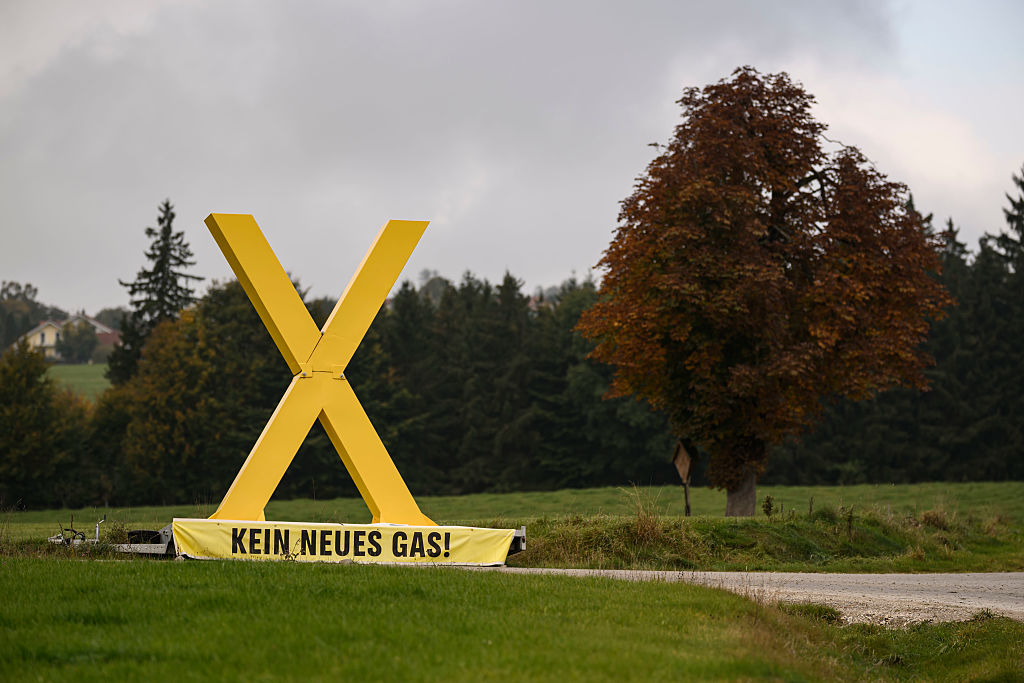
The CDU’s Economic Council is now demanding a bigger focus on expanding Germany’s domestic natural gas production.
The Council’s general secretary Wolfgang Steiger said: “Ensuring an adequate supply of energy and mineral resources is a matter of strategic survival for Germany. It is necessary to make more intensive use of domestic resources once again. This includes the exploitation of our own gas reserves, including unconventional extraction methods such as fracking.”
Experts estimate that Germany has natural gas reserves of at least 2,300 billion cubic metres in its soil, enough to cover more than 25 years’ worth of domestic gas demand.
However, the overwhelming majority of these reserves would have to be tapped via fracking, which has been banned since 2017 due to supposed environmental concerns.