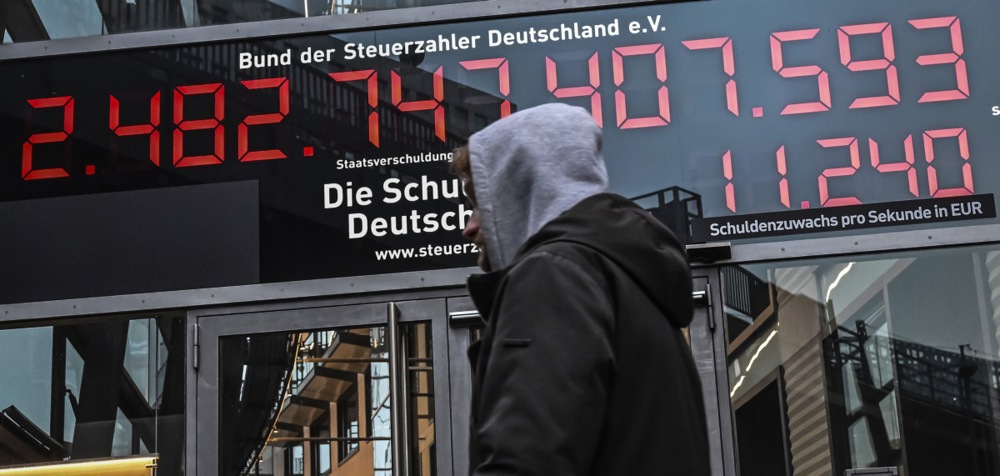
According to a new analysis by the ifo Institute, one of Germany’s most respected economic research organisations, 95 per cent of the €24.3 billion in new borrowing taken on in 2025 under the special fund for climate neutrality and infrastructure was not used for additional investments but instead diverted to cover shortfalls elsewhere in the federal budget.
The German government had justified its unprecedented borrowing spree under the special infrastructure fund (SVIK), enabled by a suspension of the constitutional debt brake, as a necessary response to the country’s urgent infrastructure needs.
Germany has been struggling with crumbling or outdated infrastructure and lags famously behind on technological innovation.

Roads, bridges, railways, and digital networks were all said to be in line for a historic cash injection.
Yet, the ifo Institute’s Investments monitoring report, authored by economists Kai Höslinger and Jann Lay, found that only a fraction of the new funds actually reached these projects.
It found that actual federal investment rose by only €1.3 billion compared to 2024.
Instead, the lion’s share was absorbed by rising costs in social welfare, energy subsidies, and other recurrent expenditures.
Ifo President Clemens Fuest was highly critical in a reaction to the report.
“We have found that politicians have used the debt-financed funds almost entirely for other purposes, i.e. to plug budget holes. That’s a big problem. The additional debt taken on should be used for additional investments that support economic growth in the long term.”
The IFO report highlights a deliberate shift in budgeting, where the government reduced its core investment total for 2025 while shifting budget items into the debt-financed Sondervermögen Infrastruktur und Klimatransformation (SVIK), the special fund created for long-term infrastructure and climate projects.
This manoeuvre created the appearance of increased infrastructure spending while using new debt to finance ongoing expenses.
The SVIK is part of a 12-year, €500 billion programme designed to overhaul Germany’s infrastructure and accelerate its transition to climate neutrality.
However, in its first major year of implementation, the programme’s real impact was minimal, with only a marginal increase in actual investment.
The report’s findings raise serious questions about the government’s fiscal discipline and its ability to deliver on its infrastructure promises.
The IFO Institute has called for immediate corrective action to ensure that future borrowing is strictly tied to its stated purpose: “Germany cannot afford to keep wasting borrowed money on short-term fixes,” Fuest warned.
COMMENT: Germany’s economic future hinges on infrastructure upgrades and overcoming its innovation-stifling corporatist culture, but even Merz’s proposed debt brake reforms may fall short of driving needed change, writes Karl Pfefferkorn. https://t.co/uVE2N6q6vR
— Brussels Signal (@brusselssignal) November 21, 2024