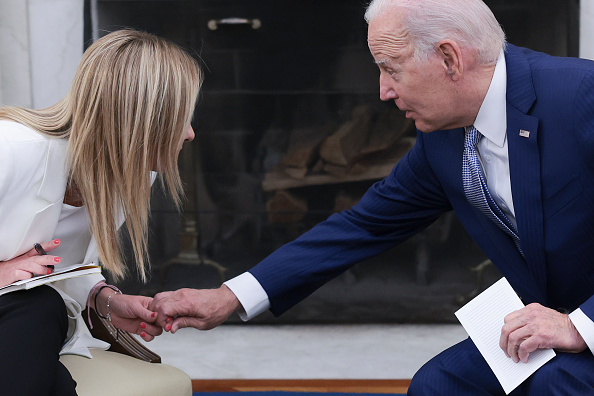
Italian Prime Minister Giorgia Meloni has sought to position herself as a privileged interlocutor of US President Donald Trump.
Leveraging her ideological proximity to the MAGA movement, while maintaining solid relations with European institutions, she had aimed to act as a bridge between Washington and European capitals, mediating between US priorities and often divergent European Union perspectives.
That strategy suffered a serious setback in early March 2026, when Italy was side-lined during the joint US–Israeli attack on Iran.

On the day the offensive began, defence minister Guido Crosetto was in Dubai on holiday with his family and reportedly stranded for several days, unable to return to Rome. More importantly, unlike Germany and France, Italy had not been warned in advance.
The episode highlighted Rome’s limited influence in Washington and cast doubt on Meloni’s claim of privileged access to Trump, revealing Italy as a peripheral player in US strategic decision-making.
Her self-assigned role as a mediator further weakened days later when she distanced herself from Trump over the war and moved closer to the prevailing European position.
On March 11, in a speech to the Italian Chamber of Deputies, she openly criticised the US–Israeli military campaign in Iran, arguing that key actions violated international law.
She specifically condemned a US airstrike on a school in Minab, southern Iran, which killed dozens of civilians, including children, describing it as “outside the perimeter of international law” and stressing that military operations must remain within legal limits.
By doing so, Meloni effectively aligned herself with a broader European stance that increasingly diverges from unilateral US military action.
Leaders such as Spain’s Prime Minister Pedro Sánchez, French President Emmanuel Macron and Netherlands Prime Minister Rob Jetten have also publicly challenged Washington’s approach or restricted US military use of bases on their territory.
Analysts note that Meloni’s earlier alignment with Trump — once seen as a political asset — now risks becoming a liability. The US–Israeli war is deeply unpopular across Europe, both among political elites and the broader public.
At the same time, the way Italy was side-lined by Washington has reinforced the perception that Meloni’s closeness to Trump has not translated into greater Italian influence within the Atlantic alliance.
In Italy, rising energy costs and public protests have intensified criticism of the government’s foreign policy, placing Meloni increasingly on the defensive. Public opinion is turning against the war, giving opposition parties additional ammunition.
Recent polls show that most Italians oppose the conflict. About 56 per cent are against the intervention, while 25 per cent support it and 19 per cent have no clear opinion, according to a YouTrend survey.
Other polls indicate even stronger opposition, with around 70 per cent rejecting the attacks.
Regarding Italy’s role, 48 per cent believe the country should remain neutral and act as a mediator, while 29 per cent think the government should openly condemn the intervention and call for a ceasefire.
The domestic implications are significant because Italy will hold a constitutional referendum on judicial reform on March 22–23. The vote concerns a reform promoted by Meloni’s government introducing a clearer separation between the careers of judges and prosecutors and restructuring the Superior Council of the Judiciary.
Although formally technical, the referendum has increasingly taken on political significance. Many observers now see it as a test of public support for the government itself.
In this context, Meloni’s alignment with Trump and the growing unpopularity of the war could influence voter sentiment, potentially turning the referendum into a broader judgement on her leadership and foreign policy strategy.